|
|
|
🗞️Diversity and inclusion news🗞️ |
|
|
|
🇪🇺Europe says racism is “structural.” The question is: what are you actually going to do about it? 🇪🇺
TL;DR: The EU admits racism is deeply embedded across Europe — but its response still looks more like policy maintenance than systemic change. 🧩
What happened
The EU’s anti-racism coordinator, Michaela Moua, has said the quiet part out loud: racism in Europe isn’t historical — it’s structural and ongoing. Speaking in Amsterdam, she pointed to data showing nearly half of people of African descent in the EU report discrimination, alongside persistent barriers to employment — even for degree holders. 📊
The EU has launched a refreshed anti-racism strategy (January 2026), focused on better enforcement of existing laws, stronger national action plans, and improving equality data collection — which currently varies widely across member states. 🏛️
That “nearly half” statistic isn’t just a social issue — it’s a labour market inefficiency baked into the system. Highly educated talent is being systematically underutilised. In a region obsessed with productivity, skills shortages, and AI competitiveness… that’s not just unjust, it’s economically irrational. 💸
The emphasis on “better data” is telling. Many European countries still don’t consistently collect race or ethnicity data, which conveniently limits accountability. You can’t fix what you refuse to measure — but equally, you can’t hide behind data gaps forever. 📉
NGOs have already criticised the strategy for lacking reparatory justice or meaningful redress — a polite way of saying: Europe is willing to diagnose the problem, but not pay the cost of fixing it. This is where policy meets power. ⚖️
So what?
For UK readers (yes, we’ve left the EU, but not the dynamics): this is a preview of where the conversation is heading. Expect:
- More scrutiny on hiring, pay gaps, and progression — not just representation
- Pressure on companies to prove impact, not just publish diversity reports
- A growing divide between organisations doing real structural work… and those doing comms 📣
For founders and operators: this is also a talent arbitrage opportunity. The market is still undervaluing diverse talent. The smartest companies won’t wait for policy to catch up — they’ll build systems that actually work. 🚀
Europe has finally agreed racism is structural. Now comes the harder bit: admitting who benefits from keeping it that way. 🧠
Read more:
https://www.yahoo.com/news/articles/eu-anti-racism-chief-says-174313079.html
|
|
|
|
⚽FIFA mandates women on the sidelines. Progress… or a lawsuit waiting to happen? ⚽
TL;DR: FIFA now requires women coaches in women’s football — a bold intervention that solves representation, but may spark backlash from the very men it displaces. 👀
What happened
In a landmark move, FIFA has ruled that all teams in women’s competitions must have at least one female head coach or assistant, alongside two female staff on the bench and a woman in medical roles. It kicks in from September and will apply across youth, senior, and club competitions globally. 🌍
The aim is simple: fix a pipeline problem that hasn’t fixed itself — despite the rapid growth of the women’s game. 📈
Explain with data (and what it really means)
Here’s the reality FIFA is responding to:
- Only 12 of 32 head coaches at the 2023 Women’s World Cup were women
- In the UK, just 4 of 12 Women’s Super League teams have female head coaches
- Even at peak moments (like the Euros), women still make up less than half of coaches
Translation: even in women’s sport, leadership is still disproportionately male. ⚖️
So FIFA has done what markets and meritocracy didn’t — intervened. This is effectively a quota system in practice, even if it’s framed as “pathways” and “visibility.”
And that’s where things get interesting. Because while this is clearly designed to correct structural imbalance, it also introduces a new dynamic: role-based exclusion.
Don’t be surprised if — somewhere down the line — we see legal challenges from male coaches arguing discrimination. Not because they’re right (that’s a different debate), but because this is exactly how equality law tends to evolve: progress → pushback → precedent. ⚖️
So what?
This isn’t tech — but the playbook is very familiar.
We’re watching a classic pattern:
- Identify structural inequality
- Introduce intervention (targets, quotas, mandates)
- Wait for backlash to test the limits
For UK tech, this matters more than it looks:
- The same debates have come and gone for leadership diversity in companies and boards
- “Pipeline problem” is increasingly being challenged with policy, not patience
- And yes — expect legal tests around positive discrimination vs positive action
For operators: this is your early signal. If your org still relies on “the best person will rise,” the market (or regulators) may soon disagree. 🚨
Read more:
https://www.skysports.com/football/news/11095/13521947/fifa-passes-landmark-rule-that-womens-national-teams-must-have-either-female-head-coach-or-assistant |
|
|
|
|
|
🧠Things that make you go hmmm🧠 |
|
|
|
🐹4chan trolls the UK regulator… and accidentally exposes the limits of online safety laws 🐹
TL;DR: Ofcom fined 4chan £520k — 4chan replied with memes and legal defiance, exposing a deeper fight between UK regulation and US free speech power. ⚖️
What happened
Ofcom hit 4chan with £520,000 in fines under the Online Safety Act — mainly for failing to introduce age checks to stop children accessing porn, plus missing risk assessments and safety protections.
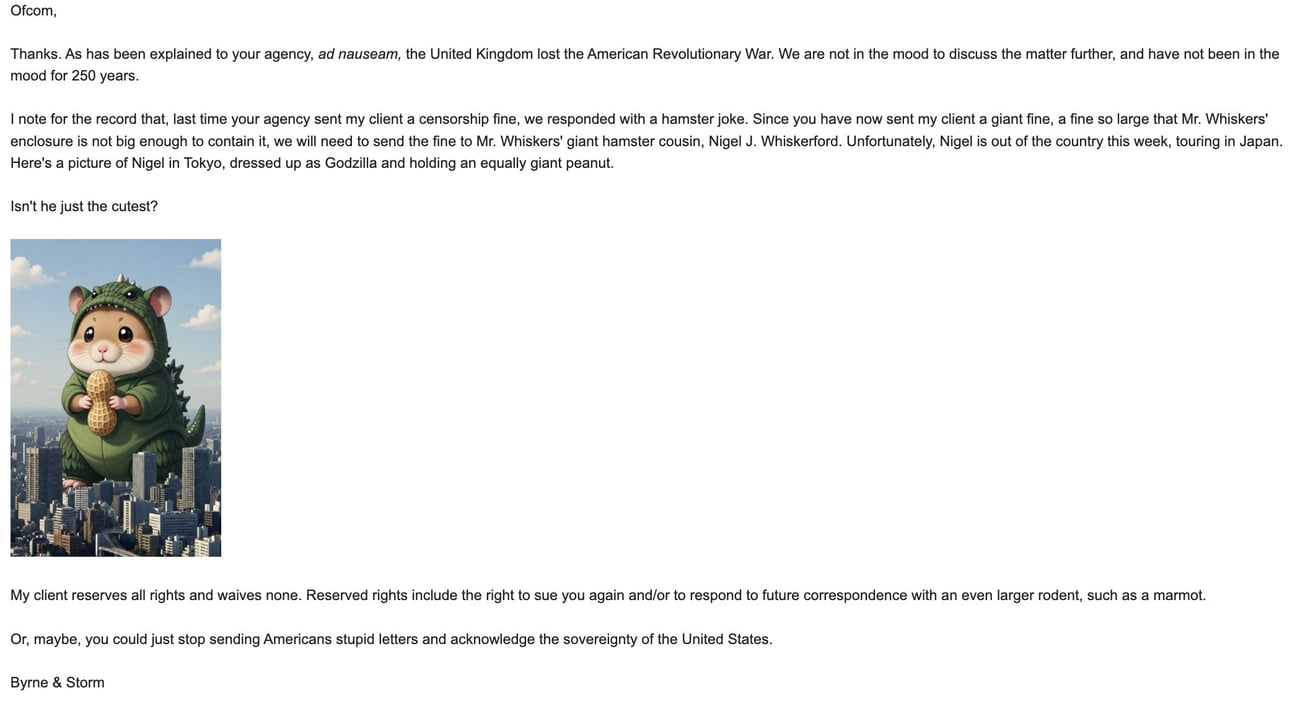
4chan’s response? An AI-generated hamster in a Godzilla suit and a message essentially saying: we don’t answer to you. Its US-based lawyer argued the platform operates under the First Amendment, not UK law — and hinted at potential legal action if pushed further. 🧑⚖️
This isn’t a one-off. 4chan has ignored previous fines and is continuing to do so. 📉
Explain with data (and what it really means)
Zoom out and the numbers tell a bigger story:
- Ofcom has issued ~£3m in fines under the Online Safety Act
- A significant portion hasn’t been collected
- Some platforms comply (age checks, geo-blocking)
- Others — like 4chan — simply opt out
Why? Because 4chan has no UK HQ, assets, or employees. Enforcement becomes… theoretical.
Meanwhile, parts of the US commentary are openly framing this as regulatory overreach — arguing American companies shouldn’t follow “foreign speech laws.” That’s not fringe — it’s rooted in constitutional protections around anonymity and free expression. 🇺🇸
So this isn’t just about online safety anymore. It’s a jurisdictional clash:
- UK: “If you serve our users, you follow our rules”
- US platforms: “If we’re based here, we follow ours”
And sitting in the middle? The internet — which doesn’t care about borders. 🌐
So what?
This is where it gets interesting (and messy):
- If Ofcom escalates → expect legal battles across jurisdictions
- If platforms keep ignoring → regulation risks becoming symbolic
- If the UK blocks access → we move into internet fragmentation territory
And yes — don’t rule it out: this could end in a test case lawsuit. Not just about 4chan, but about whether one country can meaningfully regulate another’s platforms.
For UK tech: this is a preview of the next decade. Regulation is coming — but enforcement will define whether it actually matters.
For builders: the winners won’t be the ones dodging rules with hamster memes — they’ll be the ones designing products that work across regulatory regimes without breaking. 🚀
Read more:
https://www.bbc.co.uk/news/articles/c624330lg1ko
So What🧠:The UK is trying to govern the internet. The internet just sent back a hamster. The courts might be next. 🧠
Check the actual email below |
 |
|
|
|
🍺An AI just called 3,000 pubs to price a pint. This is what “agentic AI” actually looks like. 🍺
TL;DR: One engineer built an AI that phoned pubs across Ireland to create a live pricing dataset — proving AI’s biggest impact isn’t replacing jobs, but owning the information layer around them. 🤖
What happened
Over Paddy’s weekend, an AI voice agent called “Rachel” rang 3,000+ pubs across Ireland, collecting over 1,000 verified Guinness prices to build the “Guinndex” — the most complete pint pricing dataset in over a decade.
Why? Because Ireland’s official stats body stopped tracking pint prices 14 years ago — leaving a data gap that one engineer filled with €200, Twilio, ElevenLabs, and some clever prompting. 💡
Most people didn’t realise Rachel wasn’t human. Some offered her a drink. One told her to get lost. Progress. 😂
Explain with data (and what it really means)
The outputs are fun — the implications are serious:
- National average pint: €5.95 (up 48% since tracking stopped)
- Dublin: €6.75 avg (most expensive)
- Cheapest county: €5.38
- Range: €3 → €10 per pint
But the real story isn’t beer — it’s data arbitrage.
A single builder recreated a national dataset that governments abandoned. Not by scraping — but by deploying an AI agent into the real world to collect structured information at scale.
This is the shift:
- AI doesn’t need APIs
- AI doesn’t need permission
- AI can just… call
And crucially, this sits neatly alongside Anthropic’s finding that hospitality roles have near-zero exposure to automation, while software jobs are among the most exposed.
Translation: the bartender is safe. The information layer around the bartender isn’t. 🧠
So what?
For UK tech readers, this is your signal:
- The next wave of AI isn’t chatbots — it’s agents doing tasks in the wild
- Any industry with poor or fragmented data is now fair game
- If your business relies on opacity (pricing, access, info gaps)… that’s now a vulnerability
For builders: this is a playbook. Find a broken dataset → deploy an agent → own the index.
For everyone else: expect a world where “calling around” becomes automated infrastructure. Quietly. At scale.
Also — let’s be honest — if AI can navigate Irish pub banter, your customer service flow doesn’t stand a chance. 😅
Read more:
https://tech.eu/2026/03/20/meet-rachel-the-ai-agent-that-phoned-3000-pubs-to-price-a-pint/
So What🧠: AI isn’t replacing the pub. It’s becoming the thing that tells you which one to go to — and how much you should be paying when you get there. 🍻 |
|
|
|
🤖OpenAI is hiring 12 people a day — and quietly turning London into an AI battleground 🇬🇧
TL;DR: OpenAI is doubling headcount to chase enterprise revenue while expanding its London research hub — a sign the AI war is now about talent, distribution, and who owns the enterprise stack. ⚔️
What happened
OpenAI plans to grow from ~4,500 to 8,000 employees by end of 2026, hiring across engineering, product, research and sales as it pivots harder into enterprise.
At the same time, it’s scaling its London office into its largest research hub outside the US, putting it in direct competition with Google DeepMind for UK talent.
Internally, the shift is blunt: fewer “side quests,” more focus on core products like ChatGPT and Codex — and making them indispensable for businesses. 💼
Explain with data (and what it really means)
The numbers reveal the pressure behind the strategy:
- ~900m users, but >90% don’t pay
- Target: 50% of revenue from enterprise (up from ~40%)
- Hiring pace: ~12 people per day
- Burn: projected $115bn by 2029, with >$8bn this year alone
Meanwhile, Anthropic is reportedly winning new enterprise customers at 3x OpenAI’s rate and scaling revenue rapidly through tools like Claude Code.
So OpenAI is doing three things at once:
- Buying speed (hiring aggressively)
- Buying distribution (embedding engineers into companies)
- Buying talent (expanding in London to compete with DeepMind + UK universities)
This is less “product roadmap” and more full-stack land grab — across users, enterprises, and talent pipelines.
And London matters here. This isn’t just office expansion — it’s a play to plug directly into Oxford, Cambridge, and the UK research ecosystem, creating a flywheel of talent → startups → influence. 🧠
So what?
For UK readers, this is big:
- London is now a frontline in the global AI talent war
- Expect salaries, competition, and brain drain dynamics to accelerate
- UK policy ambition (AI superpower rhetoric) is now being tested by US capital in real time
But zoom out — there’s a familiar pattern:
Aggressive hiring + massive burn + unclear monetisation = potential overhire cycle
If enterprise revenue doesn’t scale fast enough, don’t be surprised if today’s hiring spree becomes tomorrow’s layoffs. We’ve seen this in Big Tech before — just faster this time.
For talent: huge opportunity, but choose roles with real product-market fit, not just hype velocity.
For operators: the real question isn’t which model wins — it’s who embeds deepest into your workflows. That’s where the power (and money) will land.
Read more:
https://www.ft.com/content/7ffea5b4-e8bc-47cd-adb4-257f84c8028b
https://www.reuters.com/technology/openai-expects-business-burn-115-billion-through-2029-information-reports-2025-09-06/
https://www.wired.com/story/openai-expands-london-office-major-research-hub/
So What🧠: OpenAI isn’t just building models — it’s building presence. The question is whether the economics catch up before the hiring spree catches up with them. |
|
|
|
|
|
📈 The tools behind the tech📉
📦Product📦
📏Design📏
👩🏿💻Code👩🏿💻
🏢The business behind the tech🏢
|
|
|
|
|
|
🛍️Tech deal of the week🛍️ |
 |
|
|
|
All image credits to Amazon,
If you work from home this desk chair is ergonomic and comes in under £50
Link here and check out our other deals too
And view our shop with our whole collection here
|
|
|
|
|
|
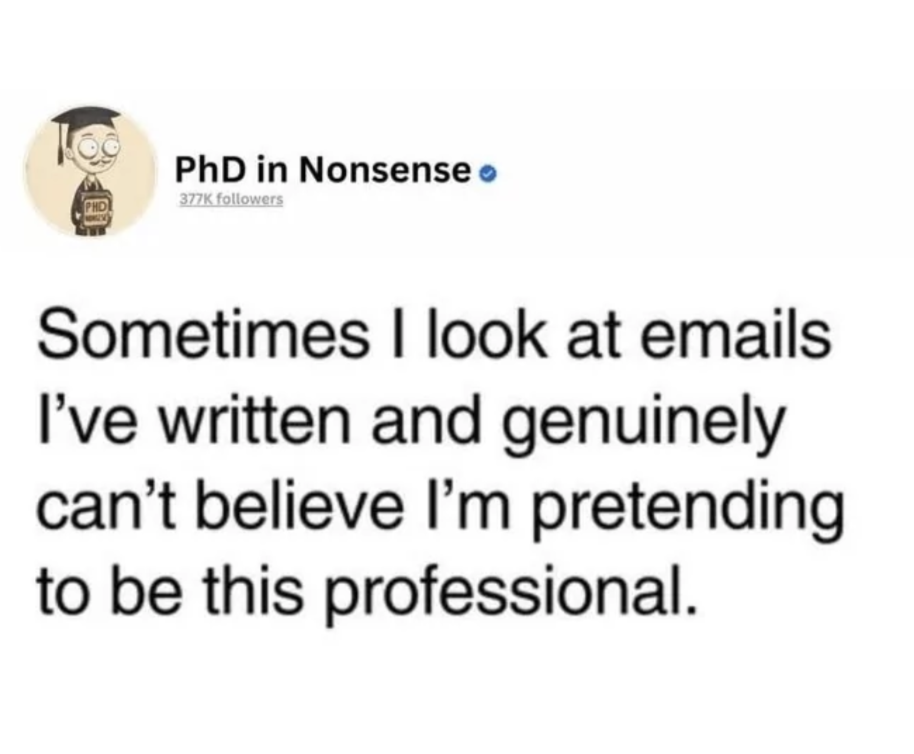
😅Meme/AI video of the week 😅 (the internet can be savage lol) |
 |
|
|
|
🌐Partner Events & Opportunties 🌐 |
|
Below are the top opportunities we want to highlight to you this week! If you want to see more, then check out our new website where we have a whole page dedicated to events and opportunities from us and our partners:
https://www.colorintech.org/events
|
|
|
|
🙌Colorintech // Canva🙌
Join us on Wednesday, 25th March, at 12:30pm GMT for our IWD event, a virtual event tailored to everyone interested in gender equity, data visualisation and cutting cutting-edge technology.
Hosted in collaboration with Colorintech and Flourish, this one-hour session will provide you with:
- An exclusive look into the groundbreaking stats on Gender equity
- Insights into the tools flourish use to bring data to life.
- An interactive q&A discussion featuring distinguished Tech professionals
Register here
|
|
|
|
|
|
🙌🏾The latest from the Colorintech team🙌🏾 |
|
|
|
|
|
|