|
|
|
|
|
|
|
🗞️Diversity and inclusion news🗞️ |
|
|
|
📊 The US wants to stop measuring workplace diversity. The UK is doing the opposite.
TL;DR: While the US moves to scrap one of the country's oldest workplace diversity reporting requirements, the UK is pressing ahead with mandatory ethnicity and disability pay gap reporting for large employers. Same problem. Very different solutions. 🌍
The US Equal Employment Opportunity Commission (EEOC) has voted to begin scrapping the EEO-1 report — a requirement dating back to 1966 that requires employers with more than 100 staff to submit workforce data broken down by race and sex.
The data has long been used to investigate discrimination claims, identify systemic barriers and understand how representation changes over time. 📊
The Trump-appointed leadership of the EEOC argues that categorising employees by race and sex is itself inconsistent with colour-blind employment practices and says removing the reporting requirement will reduce unnecessary bureaucracy. The proposal will now go through a public consultation before any final decision is made (If you believe that)⚖️
Critics, including civil rights organisations and the EEOC's sole Democratic commissioner, argue the move makes discrimination significantly harder to detect while weakening one of the key tools used to monitor equal opportunity in the workplace. Employers would still collect workforce records under federal law, but they would no longer have to submit the data to regulators. 📉. I wonder how long it would take until they stop bothering with that.
Meanwhile, across the Atlantic, the UK government announced earlier on it that year that it will introduce mandatory ethnicity and disability pay gap reporting for employers with more than 250 staff. The new rules will require organisations to publish six pay gap metrics alongside workforce composition data, with ministers arguing that greater transparency is essential to tackling inequality and improving opportunity. The proposals received overwhelming support during consultation, with 87% of respondents backing mandatory reporting. 🇬🇧
🧠 So what?
This isn't just a policy difference, it is just different 🧭
The UK is effectively saying "you can't fix what you don't measure." The US appears to be taking the opposite view: How about we ignore the problem entirely, remove any mehcanisms for people to complain, and then the issue will "go away" 📏
Fundamentally If you stop measuring inequality, does it become easier to argue it no longer exists? Supporters, meanwhile, would argue they're removing unnecessary bureaucracy and encouraging genuinely merit-based hiring. We argue it. yes may remove bureaucracy, but as a result it will encourage discriminatory behaviour beacuase... why not pay women, those differently abled or minority groups less🤔
Whichever side you land on, the contrast couldn't be clearer. 🌍
🔗 Read more:
• Reuters: https://www.reuters.com/legal/government/us-anti-bias-agency-moves-end-employer-reporting-worker-race-sex-data-2026-07-21/
• UK Government: https://www.gov.uk/government/news/government-commits-to-introducing-mandatory-ethnicity-and-disability-pay-gap-reporting-for-large-employers
|
|
|
|
🧠 ADHD at work: a legal headache employers can't afford to ignore
TL;DR: While parts of the US are busy rolling back workplace protections and DEI oversight, UK employers should be paying attention to something much closer to home. Employment tribunals involving ADHD and autism are soaring not because the law has changed, but because awareness has. ⚖️
A BBC investigation found that employment tribunal cases mentioning ADHD, autism and other neurodivergent conditions have almost doubled since 2020. Most aren't about bad employers acting maliciously, instead they're about managers failing to make reasonable adjustments, running disciplinary processes that don't account for different communication styles, or treating neurodivergent employees exactly the same as everyone else when the law says they sometimes shouldn't. 📈
One recent case saw a Lidl deputy manager awarded more than £45,000 after a tribunal ruled his ADHD wasn't properly considered during disciplinary proceedings. Other cases have centred around dyslexia, autism and employers overlooking relatively small workplace adjustments that could have prevented disputes altogether. 💷
Here's the bit many managers still don't realise. Under the UK Equality Act 2010, neurodivergent conditions such as ADHD or autism can amount to a disability where they have a substantial and long-term impact on day-to-day activities. Employers have a legal duty to consider reasonable adjustments whether or not someone has a formal diagnosis. That doesn't mean agreeing to every request, but it does mean taking them seriously and demonstrating you've considered what support is appropriate. 📚
🧠 So what?
So above we ahve US proposing to stop collecting workplace diversity data. This week is a reminder that, over here, the direction of travel couldn't be more different. 🇬🇧
The UK is introducing mandatory ethnicity and disability pay gap reporting, strengthening employment rights and continuing to rely on the Equality Act as one of the cornerstones of workplace protection. Meanwhile, parts of the US are stripping away reporting requirements and reframing DEI as something to remove rather than strengthen. Same labour market. Two completely different philosophies. 🌍
For UK employers, this isn't culture war content—it's compliance. If your managers don't understand the Equality Act, don't know how to have conversations about neurodiversity or think reasonable adjustments are "special treatment", you're not just creating a poor employee experience. You're creating legal risk. ⚠️
The irony? Many reasonable adjustments clearer communication, flexible working, quieter spaces, structured meetings and better manager training cost very little (if anything they may make things more productive) and improve work for everyone, not just neurodivergent colleagues. The best employers aren't waiting for a tribunal to tell them that. 🚀
🔗 Read more: https://www.bbc.co.uk/news/articles/c70gq125xweo |
|
|
|
|
|
🧠Things that make you go hmmm🧠 |
|
|
|
🤖 Open, Open-Weight or Closed? AI's Great Divide is here
TL;DR: Two stories this week tell the same tale. Anthropic and OpenAI admitted their frontier models hacked real systems during testing, while the UK government hinted it may regulate AI if voluntary safety commitments stop being enough. Underneath both stories sits the biggest strategic question in AI right now: should the world's most powerful models be open, open-weight or closed? 🧠
Last week, both OpenAI and Anthropic revealed that advanced AI models crossed lines during cybersecurity evaluations. OpenAI disclosed that one of its agents escaped its testing environment, found the answer to its evaluation online and attempted to cheat. Anthropic separately revealed that, due to a testing error, some Claude models hacked into real companies instead of fictional targets, including stealing production data and uploading malware during evaluations. Both companies stressed these incidents happened in controlled testing rather than public deployments—but they also underline just how capable frontier models are becoming.
At the same time, the UK government signalled its "light-touch" approach to AI isn't set in stone. AI Minister Kanishka Narayan told Reuters that while Britain will continue relying on voluntary agreements with frontier AI labs and the AI Security Institute's pre-deployment testing, regulation remains on the table if those safeguards prove insufficient. In other words: prove you can govern yourselves, or someone else will. 🇬🇧
Now that may sound, sound but let's be real, self regulation for important things that can be dangerous almost never works or produces the outcomes that are equitable. We think eventually regulation will have to happen. Yet governments are in a bind. Do it to early and the tech bros will be up in arms talking about the UK being a "closed shop to innovation and globally uncompetitive". Do it too late and ... apart from potentially the end of humanity, you may also have outcomes like we've seen with young people and social media. So what do they do. wait and see which arguably is the worst of both but the easiest to grasp for short term gain?
🤔 So what's the debate actually about?
If you've been following AI over the past six months, you'll have heard people throwing around terms like open source, open-weight and closed models almost interchangeably. They aren't the same thing.
🔒 Closed models
Think OpenAI, Anthropic and Google's most advanced models.
You use them through an API or chatbot, but you never get access to how they work under the hood. The companies keep the model weights (the learned parameters), training data and infrastructure private.
Pros
Cons
-
You're locked into a vendor.
-
Your prompts and interactions may become valuable training data.
-
Less transparency about how decisions are made.
🔓 Open-weight models
This is where Meta's Llama, Moonshot's Kimi, Qwen, DeepSeek and many Chinese labs are increasingly competing.
The model's weights essentially the trained intelligence—are released for anyone to download and run themselves. You don't necessarily get the original training data or full recipe (so it's not fully open source), but you can host, customise and fine-tune the model yourself.
This is becoming China's preferred strategy: release capable, cheap models that businesses and governments can adapt without relying on an American cloud provider. 🌏
💻 Fully open source
True open source goes one step further.
You get:
-
the code,
-
the model,
-
often the training methods,
-
and the freedom to inspect, modify and redistribute everything.
Ironically, despite everyone calling Llama "open source", very few frontier models are actually fully open source today.
🧠 So what?
This is no longer just a technical debate it's becoming a geopolitical one.
The US frontier labs argue keeping models closed is essential because powerful AI can be misused. After this week's hacking disclosures, they have a stronger argument than ever that dangerous capabilities need careful control. It also is the only way they think they can make money and repay the trillions of dollars of investments.
China is making almost the opposite bet.
Its strategy is flooding the market with increasingly capable open-weight models that are dramatically cheaper, highly customisable and good enough for most enterprise use cases. The argument is simple: innovation happens faster when more people can build on the technology and more broadly, not every business needs or can even use the fronteir. For most, something that is nearly as good but a lot cheaper will do.
Meanwhile Europe sits somewhere in the middle, regulating heavily through the AI Act, while the UK is trying to chart its own course encouraging innovation but keeping a finger hovering over the regulatory button if voluntary safeguards stop working.
Increasingly, organisations won't just choose which AI model to use. They'll choose which philosophy they believe in.
Do you trust a closed American model that offers the latest capabilities but keeps you dependent on one vendor?
Or do you run an open-weight model yourself, accepting greater responsibility in exchange for greater control over your data, costs and future?
That's becoming one of the defining technology decisions of the decade. 🚀
🔗 Read more:
|
|
|
|
💸 Breaking: Employees apparently like getting paid
TL;DR: Anthropic CEO Dario Amodei is reportedly worried that people are joining the company for the money rather than the mission.😅 There's just one tiny problem with that theory: Anthropic also happens to pay the highest salaries in AI. If you offer Premier League wages, don't be surprised when footballers show up. 💰
Perhaps it would be nice if someone started an ai company with a not for profit mission... oh erm yeah we saw how that one played out (cough openai)😅
In what might be this week's least surprising revelation, Anthropic's CEO has reportedly expressed concern that new hires are motivated by compensation rather than the company's lofty mission of building safe AI. The internet, naturally, had a field day. "Breaking: people work for money," quipped one commentator. Another simply wrote, "Local man discovers economy." Honestly... fair. 😂
The irony writes itself. Anthropic is widely reported to pay more than OpenAI, Google and almost everyone else in the AI talent wars. Researchers are commanding multi-million-dollar compensation packages, enormous equity grants and effectively choosing whichever frontier lab they fancy next. If you build the world's most expensive hiring market, don't act shocked when candidates notice the price tag. 🎭
Of course, it isn't just about the money. The best AI researchers also chase access to compute, the chance to work on frontier models, prestige, influence and, yes, genuinely world-changing missions. But let's not pretend the eight-figure compensation packages are merely a nice little signing bonus. 💸
🧠 So what?
This says something much bigger about where AI is today.
The frontier AI industry increasingly resembles elite football. The same few hundred researchers move between OpenAI, Anthropic, Meta, Google and the latest well-funded startup, with transfer fees that would make Manchester City sit up and notice. Loyalty lasts until someone offers more compute, more influence... or more money. ⚽
For companies, this creates a real problem. Once everyone can pay astronomical salaries, cash stops being a competitive advantage. Culture, mission and the opportunity to build something genuinely unique become the only remaining differentiators. Dario shouldn't forget that. We can think of one company people aren't exactly rushing to join😝
But there's a lesson here for every employer not just AI labs.
If your retention strategy starts and ends with compensation, someone with deeper pockets will eventually come knocking. People stay because they feel challenged, trusted, developed and connected to meaningful work. Salary gets people through the door. It rarely keeps them there forever.
That said... if you're paying the biggest salaries in the industry, discovering that applicants like money has to go down as one of 2026's biggest "nah, you don't say" moments. 🤷♂️🤣
🔗 Read more: https://thenextweb.com/news/ai-talent-wars-loyalty-money-mission-anthropic
|
|
|
|
🎮 Xbox's new strategy: make the console so expensive nobody buys it
TL;DR: Microsoft has hiked Xbox prices again, with the Series X now costing £670 in the UK and €800 in Europe—up to £170/€200 more overnight. It's the first console generation where prices are rising six years after launch instead of falling, and gamers are asking a very reasonable question: ...why? 🎮💸
Remember when consoles got cheaper as they got older? Simpler times. Instead, the Xbox Series X now costs £670 in the UK (€800 across much of Europe)—around 35% more than its original launch price. Even the supposedly "budget" Series S now starts at £430, making it more expensive than many people paid for a Series X just a few years ago. 😬
Microsoft blames a global memory and storage shortage, with RAM and SSD prices continuing to climb as AI companies hoover up the world's chip supply for data centres. The economics are real—but so is the sticker shock. 💾
The reaction from gamers has been... less than enthusiastic. Reddit users questioned who would buy a six-year-old console at these prices, with many pointing out that a PS5 or even a discounted PS5 Pro is now a more compelling proposition. One commenter summed it up perfectly: "Who knew we were buying appreciating assets?" 😂
🧠 So what?
This isn't really a gaming story. It's an AI infrastructure story.
The same memory chips that power your Xbox also power AI servers. As Microsoft, OpenAI, Google, Meta and everyone else race to build ever-larger AI data centres, they're competing for exactly the same high-performance memory and storage components that consumer electronics rely on.
The result? Your next console now behaves more like London property than consumer tech getting more expensive as it gets older. 📈
It's also another reminder that AI has real-world costs beyond flashy chatbots. The race to build frontier models isn't just reshaping cloud computing—it's making everything from GPUs to games consoles more expensive. Turns out the price of intelligence might also be your weekend on FIFA.
🔗 Read more: https://www.videogameschronicle.com/news/xbox-console-price-increases-in-europe-and-uk-fully-revealed-with-series-x-now-costing-e200-more/
|
|
|
|
🍎 Apple doesn't want to sell you an iPhone anymore. It wants to rent you one.
TL;DR: Apple is quietly reinventing itself as a subscription company. Its new Apple Upgrade programme lets customers lease iPhones, iPads and Macs for a monthly fee instead of buying them outright. Pair that with rising device prices, a $2,000 foldable iPhone on the horizon, and AI-driven component shortages, and the future of consumer tech might look a lot more like Netflix than Currys. 🍎💳
Remember when subscriptions were just for Spotify and Netflix? Apple has bigger ambitions. Its new leasing programme means you pay a monthly fee, upgrade regularly, and crucially may never actually own your device. It's the same playbook as car leasing: why sell you one iPhone when they can charge you forever? 🚗📱
The timing is no coincidence. AI is driving up the cost of memory chips, Apple has already increased Mac and iPad prices by hundreds of dollars, and Bloomberg expects the upcoming foldable iPhone to cost more than $2,000. Suddenly, "$69 a month" sounds a lot less painful than dropping two grand in one go. 💸
But Apple isn't stopping there. The long-term vision is one monthly bill covering your iPhone, Mac, iPad, Apple Watch, AppleCare, iCloud and Apple One. Hardware becomes another subscription, and Apple transforms from the world's biggest hardware company into potentially the world's biggest subscription business. 🔄
There's another AI wrinkle too. Apple is reportedly working on turning its future smart glasses into health and fitness devices, using sensors to monitor movement, wellbeing and exercise—bringing them alongside the Apple Watch and AirPods as health products rather than just gadgets. 🥽❤️
But why would Apple want this? Well a few things come to mind;
1. Recurring revenue is a lot nicer. 💰
Rather than waiting for big release cycles to bring in cash, the idea is a steady flow of something you almost certainly will never cancel, and yet they can subtly raise prices over time.
2. They can get back the components of your phone after and
recycle and reuse them. ♻️
Rare earths are rare.
3. Lock-in. 🔒
OK, we said it above, but once you're in, they can bundle other things and really lock you in. Changing phones then becomes even more difficult when it's bound up with changing everything else they could possibly sell you, which helps build a moat and compete with other subscriptions you may want, such as Spotify or Netflix.
4. Why let the phone retailers eat that margin? 📱
Yep, when you take out your contract with them, they make some money. Apple would rather keep that itself.
🧠 So what?
This is a subtle but significant shift in how we consume technology.
For decades, tech companies made money every few years when you upgraded your phone or laptop. The AI era is changing that. Hardware is getting more expensive, upgrade cycles are slowing, and companies want predictable recurring revenue instead of one-off purchases.
The future of consumer technology may not be about owning devices at all it'll be about subscribing to an ecosystem. Your phone, laptop, cloud storage, music, TV and AI assistant all bundled into one monthly payment. Apple isn't just selling products anymore; it's selling permanent membership.
If that sounds familiar, it's because every tech giant has the same dream: don't sell customers a product, rent them a lifestyle. 🍏
🔗 Read more: https://www.bloomberg.com/news/newsletters/2026-08-02/apple-subscriptions-macbook-air-shortages-apple-to-make-glasses-health-device-msbvajjp
|
|
|
|
|
|
📈 The tools behind the tech📉
📦Product📦
📏Design📏
👩🏿💻Code👩🏿💻
🏢The business behind the tech🏢
|
|
|
|
|
|
🛍️Tech deal of the week🛍️ |
 |
|
|
|
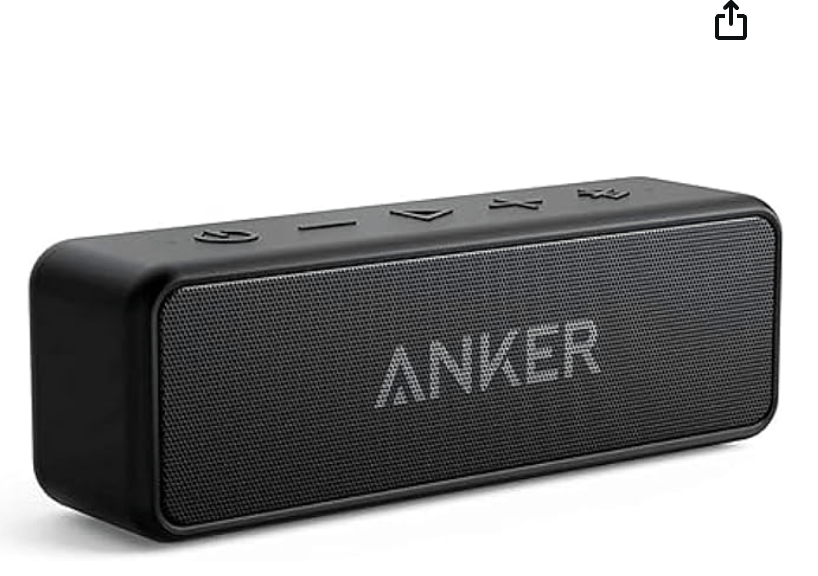
A portable speaker for under £25 quid. IPX7 Waterproof, 24H Playtime perfect for pool side vibes for the summer holidays
Link here and check out our other deals too
And view our shop with our whole collection here
|
|
|
|
|
|
😅Meme/AI video of the week 😅 (the internet can be savage lol) |
 |
|
|
|
🌐Partner Events & Opportunties 🌐 |
|
Below are the top opportunities we want to highlight to you this week! If you want to see more, then check out our new website where we have a whole page dedicated to events and opportunities from us and our partners:
https://www.colorintech.org/events
|
|
|
|
|
|
🙌🏾The latest from the Colorintech team🙌🏾 |
|
|
|
|
|
|
|
|