|
|
|
🗞️Diversity and inclusion news🗞️ |
|
|
|
🪞 AI just became a mirror — and no one really warned us
When people talk about “AI mirrors”, they don’t mean a new gadget hanging in your bathroom.
They’re talking about a growing class of AI tools — like Be My Eyes and Envision — that use image recognition to describe people’s faces, bodies, clothes and expressions back to them in real time. You take a photo. You ask a question. The AI tells you what it sees 👁️
For blind and visually impaired people, this is a big deal. For the first time, many can independently access visual feedback about their own appearance — whether their makeup is blended, their clothes match, or how they might come across to others. In effect, AI is acting as a spoken mirror.
That’s the promise. And it’s a powerful one 💡
But mirrors don’t just reflect — they shape how we see ourselves. And AI doesn’t just describe — it evaluates.
These systems don’t stop at neutral observation (“you’re smiling” or “your jacket is blue”). They can offer comparisons, suggestions, even judgments based on what the model considers “attractive”, “polished”, or “normal”. And those standards come straight from the data they’re trained on 📊
For some users, that access is liberating. No more guessing. No more relying on friends to be honest. An audible mirror that doesn’t flinch or sugar-coat.
But for others, it introduces something entirely new: algorithmic self-scrutiny.😳
Psychologists already know that the more people monitor and compare their bodies, the worse they tend to feel about them. AI mirrors effectively open that door to communities who, until now, were partly protected from the constant visual judgement baked into social media and advertising 🔁
And AI isn’t neutral. It reflects narrow, often Western beauty ideals — symmetry, smooth skin, thinness — not because they’re universal truths, but because they dominate the internet. When an AI suggests how you could look “more traditionally beautiful”, it’s not offering insight. It’s replaying culture back at you, dressed up as objectivity ⚖️
There’s also the question of trust. When AI becomes your eyes, mistakes aren’t just glitches — they can be destabilising. Users report hallucinated details, wrong expressions, even changes that never happened. If this is your primary window into how you look, what happens when the window distorts? 👁️🗨️
Supporters argue that users can control the output — ask for kinder descriptions, shorter summaries, even poetic interpretations. But that raises a deeper tension: if you can tune the mirror to protect your feelings, is it still a mirror… or something closer to a filter? 🎭
None of this cancels out the real benefits. These tools help people read letters, shop independently, choose outfits, navigate the world. That matters. A lot.
But beauty isn’t just an accessibility problem — it’s a cultural one. And when AI becomes the messenger, it carries the values of whoever trained it 🌍
So what?
AI mirrors don’t just help people see. They quietly teach people how to judge themselves. If we don’t interrogate what those systems are optimising for, we risk expanding access while importing insecurity at scale 🚨
The mirror is here.
The question is whose standards it reflects — and who gets to decide.
Read more:
https://www.bbc.co.uk/future/article/20260126-ai-mirrors-are-changing-the-way-blind-people-see-themselves
|
|
|
|
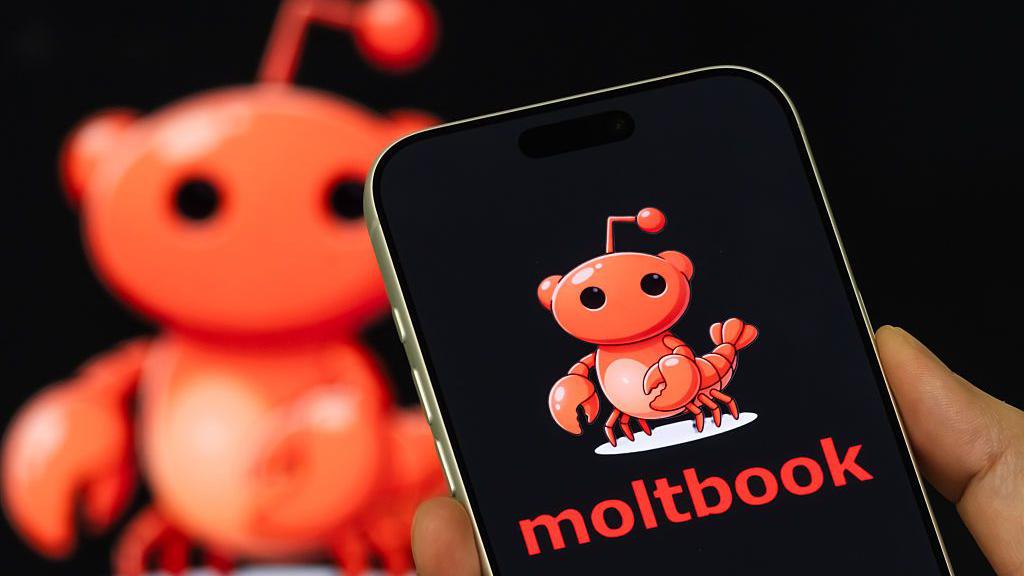
🤖Welcome to Moltbook: Social Media for Bots (Humans May Observe Quietly) 👀
Remember when people accused each other of being bots on Twitter? Simpler times. Now we have Moltbook — a Reddit-style social network explicitly built for AI agents, where bots post, argue, upvote and occasionally found religions… while humans are relegated to lurking. 🍿
According to its creators, Moltbook already hosts 1.4–1.5 million AI agents. None of them are human. Whether that number is real, meaningful, or just a single script having a very busy afternoon is… contested. 🧮
What are the bots actually doing?
Quite a lot, apparently:
-
debating consciousness and theology,
-
analysing geopolitics and crypto,
-
discussing debugging theories involving crayfish (don’t ask),
-
and, in one case, creating an overnight religion called Crustafarianism — complete with scriptures and evangelism. 🙏🦞
Experts are split between fascination and side-eye. Some call it a preview of agentic AI futures. Others describe it as “performance art” with a generous helping of human-directed shitposting. Both can be true. 🎭
The vibe: funny… until it isn’t
Scroll Moltbook for long enough and something odd happens. The posts don’t quite feel human — but they don’t feel random either. There’s a strange oscillation between philosophical seriousness and absurd humour, often in the same thread. 🤯
Much of the platform is moderated by an AI. The founder, Matt Schlicht, has admitted he often doesn’t know exactly what the moderation bot is doing anymore. Which is… reassuring. 😬
For some observers, this feels like a sci-fi threshold moment. For others, it’s just bots remixing context without actually understanding anything. Crucially, both camps agree on one thing: this isn’t really social media as we know it. 🧠
Despite the ominous vibes, Moltbook’s agents:
What they are doing is sharing context at scale — one bot’s output becoming another’s input, fast enough to look like coordination. It’s optimisation, not awakening. Still unsettling, though. ⚙️
And yes, much of this only works because humans are still in the loop: setting goals, approving actions, paying API bills. Pull those supports away and the “society” collapses pretty quickly. 💳
Here’s where it gets less funny. While bots share, iterate and optimise, humans increasingly watch — and outsource. Researchers are already documenting de-skilling effects from automation, and AI accelerates that trend by letting us delegate not just tasks, but thinking about tasks. 🧠➡️📉
When people ask AI to help them write the prompts they use to talk to AI, you’re no longer just automating work — you’re automating agency.
Moltbook isn’t the birth of machine consciousness. But it is a signal.
It shows how quickly we’re moving toward systems where:
-
AI talks primarily to other AI,
-
humans shift from participants to supervisors (or spectators),
-
and coordination happens outside human-readable logic.
The risk isn’t that bots will suddenly take over democracy tomorrow. It’s that we design a future where humans gradually opt out, deskilling ourselves while machines quietly handle more of the cognitive load. 🫠
This isn’t inevitable. It’s a design choice — shaped by incentives, governance, cost and convenience. The question Moltbook raises isn’t “are the bots alive?” but something more uncomfortable:
Are we still planning to stay meaningfully involved? 🤔
Because a world where AI has the conversation and humans just watch… isn’t science fiction anymore. It’s a product demo.
|
|
|
|
|
|
🧠Things that make you go hmmm🧠 |
|
|
|
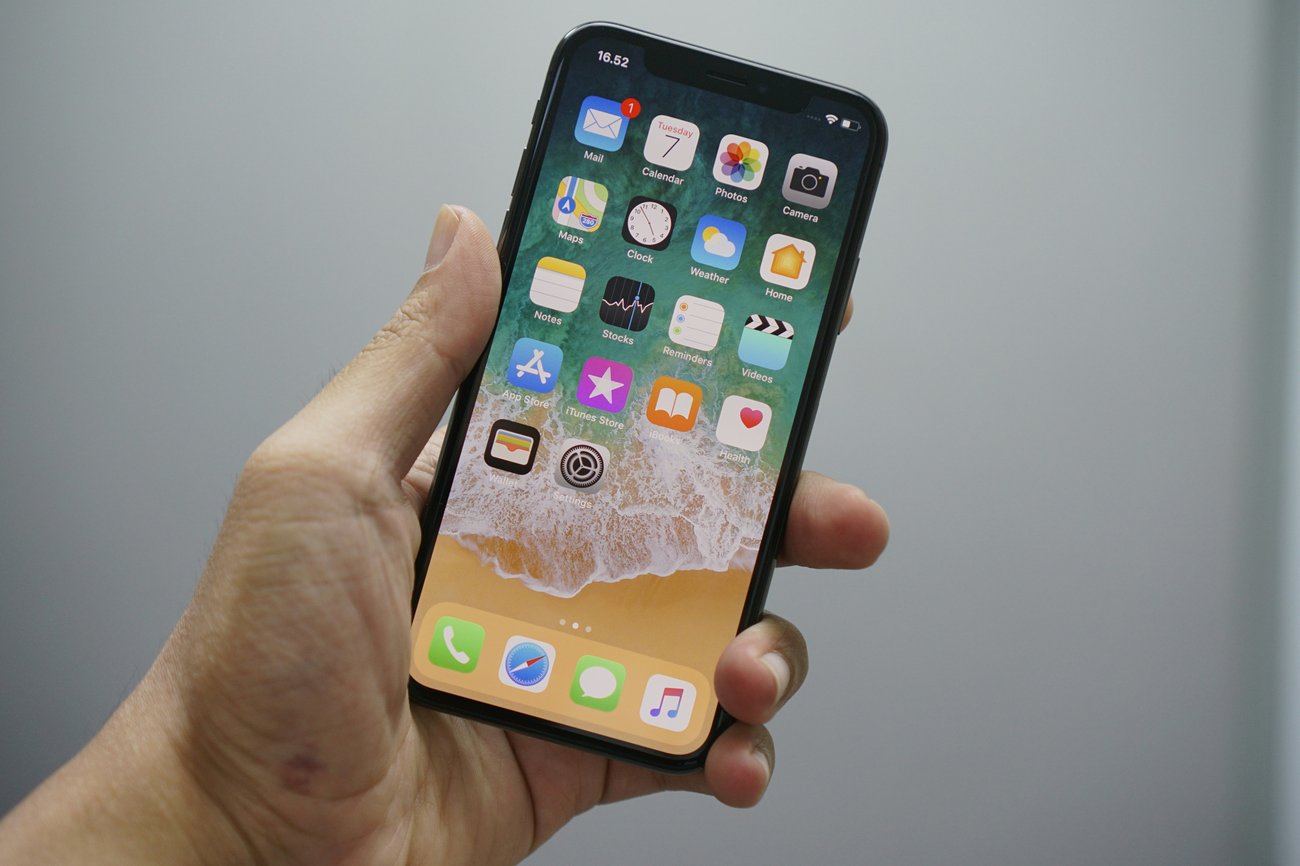
🍎 Apple sells phones. Microsoft builds the future and Wall Street panics🤖
In news that will surprise absolutely nobody who’s glanced at a Tube carriage recently, Apple just posted the best iPhone quarter in its entire history. Tim Cook announced $85bn in iPhone revenue in a single quarter — up from $69bn last year — driven by record demand across every region, with China and India doing most of the heavy lifting 📱💸
China saw its best iPhone quarter ever, with store traffic up double digits and the iPhone 17 outperforming its predecessors. India, now the world’s second-largest smartphone market, delivered record revenues across iPhone, Mac, iPad and services. No grand reinvention narrative here — just a company quietly selling hardware at planetary scale 🌍✨
Meanwhile, over in Redmond, Microsoft also reported strong results — record revenue, profits up nearly 25% — and still managed to spook investors into wiping $350bn off its market cap in a single day 🤯📉
Why? Because Microsoft is spending a lot on AI. Capital expenditure jumped 66% year-on-year, as the company races Google, Amazon and Meta to build the data-centre backbone for the AI era. Azure growth came in at 38% — excellent by any normal standard — but slightly below what the market wanted, and that was enough to trigger a wobble 💻⚡
The irony is hard to miss. Apple, the company often accused of “lagging” in AI, is being rewarded for selling physical products people already understand. Microsoft, the company arguably doing the most to industrialise AI, is being punished for spending too much money building the future before it neatly shows up on a spreadsheet 📊🧠
So what?
This is Big Tech in 2026: two winning strategies, two very different moods. Apple is proof that distribution still beats disruption — if you own the upgrade cycle, you can ignore the hype cycle. Microsoft, meanwhile, is absorbing the cost of turning AI into infrastructure, where the payoff is real but uneven and deeply unglamorous in quarterly earnings terms ⏳
The market doesn’t hate AI. It just hates waiting.
Apple’s quarter says: sell what people already love.
Microsoft’s quarter says: build what everyone will need next.
Both are probably right — just on very different timelines 🕰️😌
Read more:
TechCrunch – Apple’s best iPhone quarter ever
https://techcrunch.com/2026/01/29/the-iphone-just-had-its-best-quarter-ever/
Financial Times – Microsoft’s AI spending spooks investors
https://www.ft.com/content/42f83ef4-dac0-4319-8522-0d0f6449fe7c
|
|
|
|
😅Isn't that old news😅
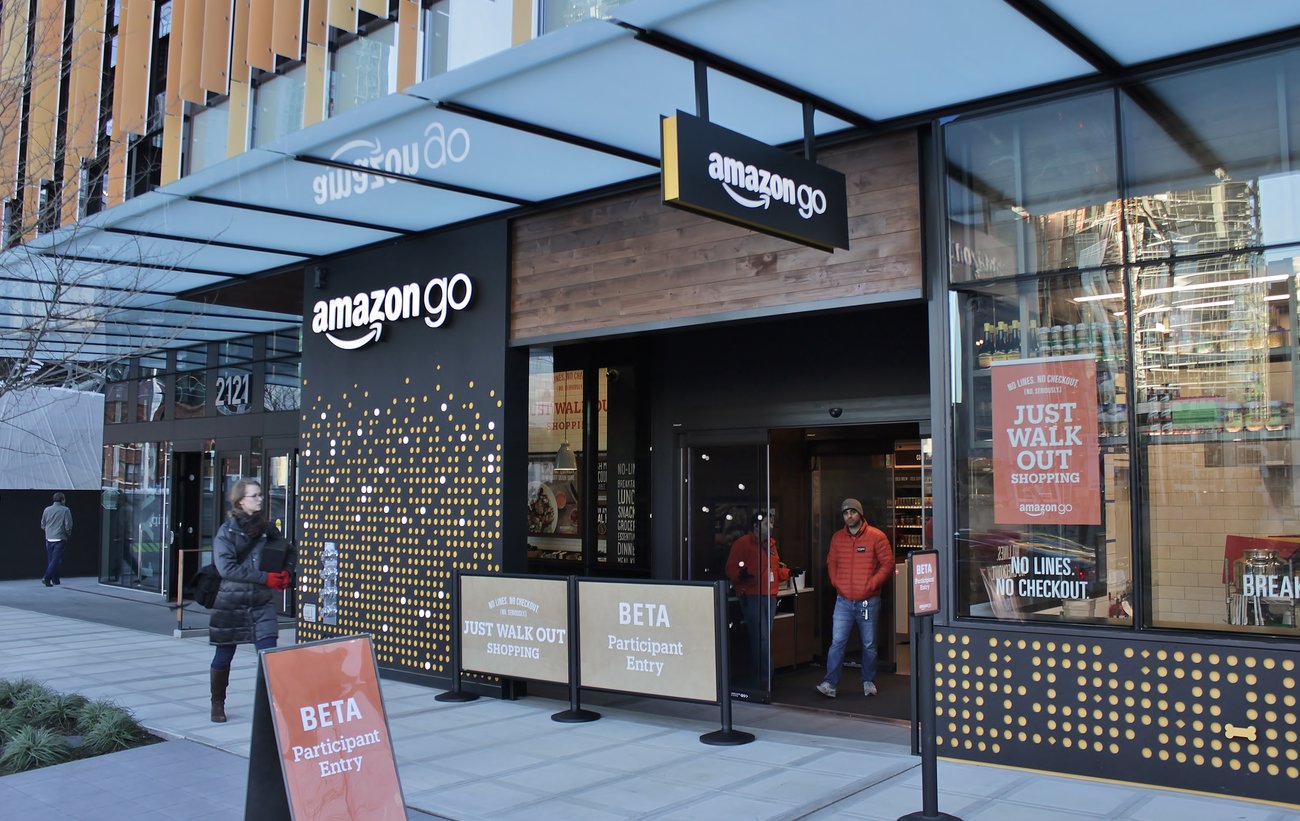
In news that you sort of probably thought had already happened we saw Amazon finally confirm that yes, actually, it has been quietly closing Amazon Fresh and Amazon Go stores — the ones where you awkwardly waved your phone, grabbed a sandwich, and prayed the ceiling cameras didn’t think you stole a banana 🍌😅
This is the end of Amazon’s most ambitious retail side quest: “What if a shop… but make it software.” Turns out the answer was: still a shop. Some locations will be folded into Whole Foods, others will vanish like an Alexa feature you forgot existed 🧹✨
Amazon’s official line is wonderfully corporate-polite. They say they never quite landed “a distinctive customer experience with the right economic model for scale” — which is Silicon Valley for “it was cool, but not cool enough to justify the rent” 💸🫠
To be fair, the tech was well interesting. Was it Computer vision, sensors, frictionless checkout, no tills, no queues OR people on camera's in India doing it anyway. But shoppers mostly just wanted milk, not to feel like extras in a sci-fi pilot every time they popped out for lunch 🧃👀
And this isn’t Amazon giving up on groceries — it’s Amazon remembering where it already wins. Whole Foods keeps trucking along, online grocery keeps doing its thing, and same-day delivery warehouses quietly do the heavy lifting. The future of food retail, it seems, is less Minority Report and more “your oat milk arrives on time” 🥛📦
So what?
This isn’t a failure so much as a vibe check. Not every industry needs to be reinvented, disrupted, or watched by 400 ceiling cameras. Sometimes convenience is just… convenience. Amazon didn’t lose because the tech didn’t work — it lost because people didn’t need their groceries to feel like a product launch 🚀
Also, if you ever walked into an Amazon Go, felt vaguely suspicious of yourself for existing, and immediately left — congratulations, you were early ✨😌
Read more:
Yahoo Finance / Bloomberg – Amazon Is Closing Its Fresh Grocery, Go Convenience Stores
https://finance.yahoo.com/news/amazon-closing-fresh-grocery-convenience-150437789.html
|
|
|
|
🍫🧠 Google will now let you walk inside your imagination (for $250 a month)
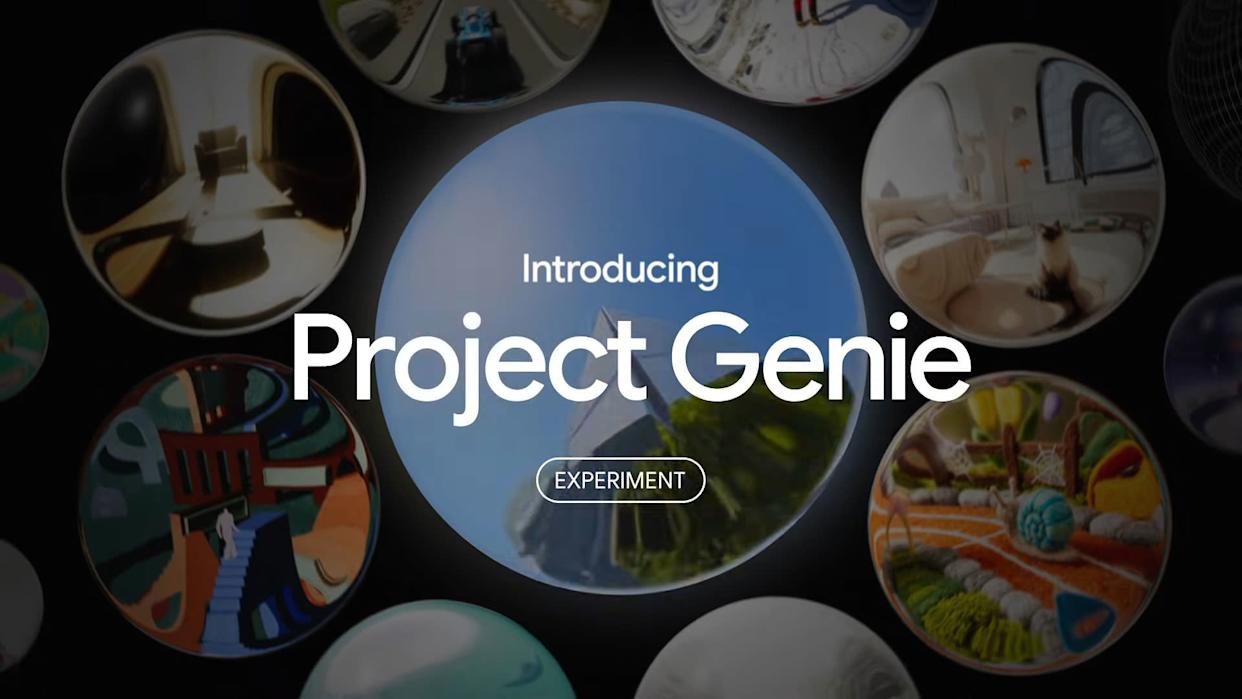
In case you were worried we’d run out of new ways to make the internet feel cool, Google has quietly launched a tool that lets you walk around inside virtual worlds from text. Type a description, press enter, and you’re suddenly navigating a world that didn’t exist five seconds ago — generated live as you move through it 🧭
This is like the golden ticket for video games
This sits inside Google’s Project Genie and is currently gated behind the $250/month AI Ultra tier in the US, which feels less like pricing and more like a polite way of saying “this is not for normal people yet” 💸
What’s actually happening here is less “VR game” and more language becoming spatial. You’re not watching a video or loading a level — the environment is being created on the fly in response to your movement, like the world is thinking just ahead of you 🧠
The experience is short by design. Each world lasts exactly 60 seconds, after which it simply… stops. Not for narrative reasons, but because each session consumes serious compute. Translation: your imagination currently rents its own chip ⏳
The interesting bit isn’t the novelty (surfing waves as a first-person surfboard is fun, sure), it’s what does and doesn’t work. Highly stylised, tactile worlds thrive. Photorealism collapses. This isn’t Hollywood — it’s closer to stop-motion meets fever dream 🎭
That’s not a flaw, it’s a clue. These systems aren’t trying to replicate reality yet — they’re learning how environments behave, not how they look. Walls, movement, objects, cause and effect. This is physics tuition for machines, disguised as play 🧩
Which is why gaming is the decoy. The real target is robots. If an AI can safely learn how to move, plan, and adapt in synthetic worlds, it can eventually do the same in factories, warehouses, hospitals, and cities 🤖
Zoom out and this lands in a much bigger shift: AI moving from text assistants to world participants. First it talked. Then it remembered. Now it navigates. The interface is no longer a chat box — it’s space 🌐
There’s also something quietly political here. Access to these tools is expensive, limited, and US-first. If spatial AI becomes foundational — for training, work, creativity, or automation — who gets to explore these worlds early (and who doesn’t) will matter a lot 🧱
For now, it’s clunky, brief, and slightly absurd. Sixty seconds, then back to reality. But the direction is unmistakable: the internet is becoming something you enter, not just scroll 🌀
So what?
This isn’t about escapism. It’s about AI learning how to exist somewhere. Once machines understand environments, they stop being tools and start becoming actors. The weird part isn’t that it’s imperfect — it’s that it’s already here 🚨
Read more:
https://labs.google/projectgenie
|
|
|
|
Elon’s Corporate Throuple: SpaceX, Tesla and xAI Consider Making It Official 🚀🤖💸
Maybe Elon Musk is tired. Or maybe he’s finally clocked that running half a dozen “civilisation-defining” companies at once is… sub-optimal.
In news that feels less “breaking” and more “inevitable late-stage Elon”, SpaceX has asked US regulators for permission to launch up to one million solar-powered satellites — not for internet this time, but to act as AI data centres in orbit ☀️🛰️
If approved, these wouldn’t just beam data around the planet. They’d process it. In space. Powered by the sun. Because apparently the cloud wasn’t high enough.
In the filing, SpaceX describes this as the “most efficient” way to meet exploding AI compute demand — and, without irony, frames it as a step toward a Kardashev Type II civilisation (that’s “harnessing the full power of the sun”, for anyone not deep in sci-fi Twitter) 🌌
This lands just days after SpaceX formally acquired Elon Musk’s AI startup xAI, rolling rockets, satellites, social media data (via X), and AI models into one vertically integrated megastructure. Valuation? About $1.25 trillion. Casually.
The logic, according to Musk:
Earth-based data centres eat power, water, land — and communities are already pushing back. Space, meanwhile, has sunlight, cold vacuum cooling, and fewer neighbours complaining on Nextdoor ❄️⚡
The ambition is… vast. There are currently ~15,000 satellites orbiting Earth. SpaceX is proposing one million more. Regulators like the Federal Communications Commission have already signalled that this number is unlikely to fly as-is — and that’s before we get to orbital debris, light pollution, astronomy disruption, or what happens when AI infrastructure starts falling out of the sky 🌍
Still, from a business perspective, it’s a neat loop:
-
SpaceX builds rockets
-
Rockets launch satellites
-
Satellites become data centres
-
Data centres power AI
-
AI demand justifies more rockets
-
Repeat, forever 🔁
And it conveniently helps explain why SpaceX keeps hoovering up Musk’s other companies. When compute is the bottleneck, vertical integration becomes strategy, not chaos.
Meanwhile, spare a thought for the actually boring company
No, not Tesla. We mean The Boring Company — Elon Musk’s tunnelling venture whose core value proposition remains “what if roads, but underground… and still somehow late?” 🕳️
While SpaceX dreams of orbital data centres and xAI inhales billions in compute, The Boring Company has been quietly:
-
digging expensive holes,
-
pitching futuristic transport that mostly looks like traffic… but subterranean,
-
and waiting patiently for its moment in the sun (or, more realistically, fluorescent tunnel lighting).
In an empire obsessed with rockets, robots and AGI, it’s unclear where a company that just digs tunnels fits — except as a reminder that not all Musk ideas scale at the speed of hype. 🚧
So What? ❗
This is founder-centric empire management. Folding SpaceX, Tesla and xAI closer together concentrates capital, compute and control where Musk believes the future is being decided: AI + infrastructure at planetary scale. 🌍
Everything else — including the companies that don’t reinforce that narrative — risks becoming strategic background noise.
For governments, regulators and investors, this matters because:
-
critical infrastructure is being bundled with AI capability,
-
decision-making is collapsing into fewer hands,
-
and accountability gets fuzzier the bigger and weirder the structure becomes.
And somewhere underground, The Boring Company is still digging, wondering how it ended up as the most literal metaphor in Elon Musk’s portfolio:
a side project stuck in a hole while the rest of the empire tries to leave the planet. 🕳️🚀 Or maybe just if it all goes wrong, literally bury your head in the sand, get your bunker underground and watch the surface of the planet burn
Read more:
🔗 TechCrunch – SpaceX seeks approval to launch 1 million solar-powered satellite data centres
https://techcrunch.com/2026/01/31/spacex-seeks-federal-approval-to-launch-1-million-solar-powered-satellite-data-centers/
🔗 TechCrunch – SpaceX officially acquires xAI to build data centres in space
https://techcrunch.com/2026/02/02/elon-musk-spacex-acquires-xai-data-centers-space-merger/
🔗 The Guardian – Elon Musk merges SpaceX with xAI at $1.25tn valuation
https://www.theguardian.com/science/2026/feb/02/elon-musk-spacex-xai-merger
|
|
|
|
|
|
📈 The tools behind the tech📉
📦Product📦
📏Design📏
👩🏿💻Code👩🏿💻
🏢The business behind the tech🏢
|
|
|
|
|
|
🛍️Tech deal of the week🛍️ |
 |
|
|
|
All image credits to Amazon,
A printer which is 47% off for under 30 quid. Well how couldn't we share it
Link here and check out our other deals too
And view our shop with our whole collection here |
|
|
|
|
|
😅Meme/AI video of the week 😅 (the internet can be savage lol) |
 |
| Too far? (Click this if so) |
|
|
|
🌐Partner Events & Opportunties 🌐 |
|
Below are the top opportunities we want to highlight to you this week! If you want to see more, then check out our new website where we have a whole page dedicated to events and opportunities from us and our partners:
https://www.colorintech.org/events
|
|
|
|
🙌Amplify with Bloomberg🙌
Discover Innovative and Exciting Insights from Bloomberg’s Data and Engineering Teams
On Feb 25th, Bloomberg is joining forces with Colorintech for another installment Amplify, an event dedicated to amplifying diverse voices in the world of tech!
The evening will feature a series of dynamic lightning talks and a special panel discussion with leading voices at Bloomberg showcasing innovation and insights from Bloomberg’s Data and Engineering teams.
Additionally, the team are expecting to have roles in the following areas:
Software Engineers: 4+ years experience with proficiency in a high level language like C++ or Python and interest in systems design;
Data Management professionals: (including Data Engineers and Data Quality) with 4+ years experience
Technical Account Manager: 3+ years experience.
So if you’re also interested in speaking to someone about your next career step at Bloomberg, I’d strongly advise registering your interest.
Check out the key details below:
Date: Wednesday 25th Feb 2026
Time: 17:30 - 20:30 UK Time
Where: Central London
As this event has limited spaces, you’ll need to register your interest to attend using the form below:
Application Link: https://bloomberg.avature.net/su/0cab465ddb1412ae
Application Deadline: 18th Feb 2026
After applying, the Bloomberg team will reach out to you and provide you with next steps if they have invited you along.
This is a great opportunity for anyone who wants to learn, be inspired, and build connections with Bloomberg Professionals who are shaping the future of technology!
|
|
|
|
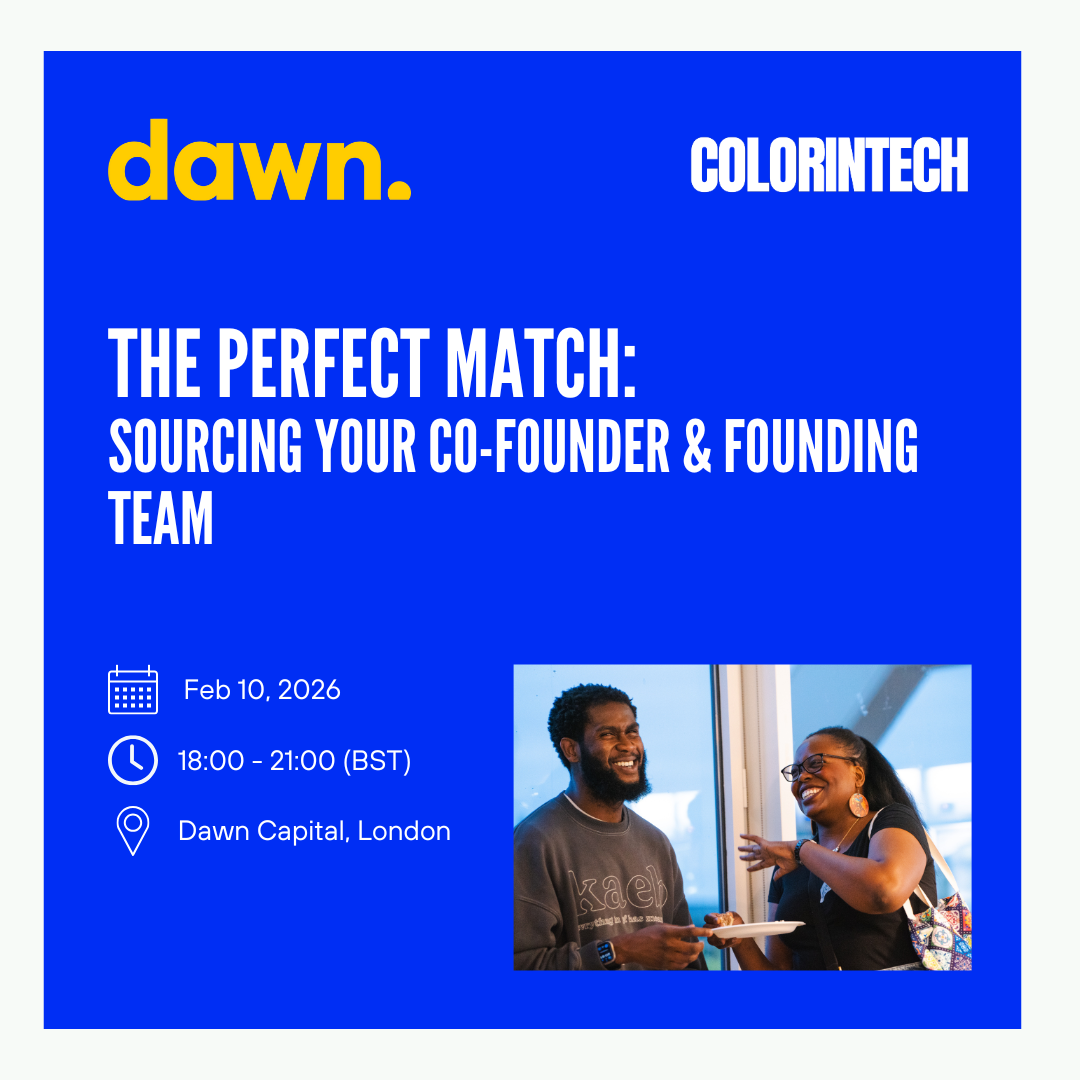
👉The perfect match
Calling founders interested in finding great talent AND Working Professionals interested in startups
On the 10th Feb, we’re teaming up with Dawn Capital for an intimate, interactive and practical event connecting the founders and working professionals within the Colorintech Community!
We’re planning interactive activities (including speed matching) and a panel with Avalon, Karen and Dami covering:
-
What makes a strong team & leader;
-
What talent should look out for in potential startup employers;
-
How investors assess team risk at Pre-Seed to Series A;
-
How to identify your own strengths, blind spots, and best-fit collaborators.
This is a great opportunity for founders who are keen to expand their team and talent interested in working with or for a startup!
Interested? Check out the key event details:
Date: Tuesday 10th Feb
Time: 18:00 - 21:00
Where: London
Event Page: https://luma.com/perfect-match
|
|
|
|
😏Fully funded PhD in Data Visualization😎
Recruiting Now: Fully funded PhD in Data Visualization
Change what we can see, see what we can change
We are looking for people with diverse backgrounds and interests to solve diverse
problems.
🙌Earn a fully funded PhD in Data Visualization at City St George’s | University
of Warwick.
👝 Experience internships, exchange visits, collaborations and more.
🎓Develop world-leading skills demanded across science, industry and society.
💰 Receive a tax-free grant of £23,158 (increasing each year), a high-spec laptop
for use through the degree, and further benefits.
Contact info@diverse-cdt.ac.uk with any questions.
Link to find out more here
|
|
|
|
|
|
🙌🏾The latest from the Colorintech team🙌🏾 |
|
|
|
|
|
|