|
|
 |
|
Hey
Its been a celebratory time over the last few weeks with Eid and Easter in close proximity along with many other festivals. If you celebrate, we hope you are having a good one, and if not, we hope you are good either
|
|
Check out the AI Podcast version of this newsletter or the Video version on our Socials
This newsletter is free, but if you do want to get us a New year's treat as a thank you for 290+ editions grab us one here🎁
Oh and if you missed an edition, you can find it here or this platform, here |
|
|
|
|
|
|
🗞️Diversity and inclusion news🗞️ |
|
|
|
Equal Pay Day 2026: women are still working “extra months”… but the real gap is hiding in plain sight 💰
TL;DR: The gender pay gap isn’t just about salaries anymore — it’s increasingly about bonuses, bias, and systems quietly doing exactly what they were designed to do. 👀
Equal Pay Day landed on March 26 this year — which means women effectively had to work nearly three extra months to earn what men did in 2025.
That gap? About $13,570 a year on average. And yes — it’s getting worse again, after briefly improving.
Not exactly the “progress narrative” you’ll see on LinkedIn. 🫠
But here’s where it gets interesting (and slightly more uncomfortable): the gap isn’t just about salary anymore.
Because even when you control for role, education, and experience, a chunk of the gap remains unexplained — widely understood to be down to discrimination. And then there’s the bit companies really don’t talk about: bonuses.
Turns out, even when base pay looks equal, women are:
- Less likely to receive bonuses
- And when they do, they’re smaller
Why? Because bonuses are often subjective — based on “potential,” “performance,” or “impact.”
In other words: exactly the kind of things bias loves to hide inside. 😬
And this starts early. We’re not talking about mid-career mothers navigating childcare. This shows up just a few years out of uni — long before the usual explanations kick in.
Which slightly undermines the classic “it’s just choices” argument.
Zoom out, and the system looks… coherent:
- Women overrepresented in lower-paid roles
- Caregiving still disproportionately theirs
- Workplaces still not designed around that reality
- And “performance-based” pay quietly reinforcing it
Not a bug. A feature.
🧠 So what?
If you work in tech (or any knowledge industry), this is where the conversation is heading next.
We’ve spent years focusing on salary transparency. That’s step one.
Step two — and the harder one — is interrogating everything around salary:
- bonuses
- promotions
- performance reviews
- who gets “high potential” labels
Because that’s where inequality is now hiding.
For companies: publishing pay bands isn’t enough if the real money sits in discretionary compensation.
For operators and leaders: if your bonus process relies on “manager judgment,” you probably have a gap — whether you’ve measured it or not.
And for everyone else: the idea that the pay gap is a solved (or even mostly solved) problem?
That’s the biggest myth of all.
Read more:
https://www.forbes.com/sites/hollycorbett/2026/03/26/equal-pay-day-2026-the-bonus-gap-and-more-wage-gap--contributors/ |
|
|
|
|
|
🧠Things that make you go hmmm🧠 |
|
|
|
Social media just lost in court. The real risk? It might lose how it’s built. 📱
TL;DR: A US jury ruled Meta and YouTube harmed a child through addictive design — opening the door to a wave of lawsuits that could force platforms to rethink how they work. ⚖️
There’s been years of debate about whether social media is harmful. This week, a jury basically said: yes — and you designed it that way.
In a landmark case, Meta and YouTube were found liable for harming a young user via addictive features like infinite scroll and algorithmic feeds, with $6m in damages awarded.
For companies making billions every quarter, $6m is pocket change. But legally? This is a big deal. Because for the first time, a court has agreed that these platforms aren’t just neutral tools — they are products engineered to hook users.
And once that idea lands, things escalate quickly. 🚨
There are already thousands of similar cases lining up behind this one. The legal framing is also doing something very intentional — it’s borrowing from Big Tobacco. The argument is simple: you knew your product was harmful, you optimised it anyway, and you profited from it.
If that sticks, this doesn’t stop at fines. It starts to look like:
- mandated product changes
- stricter protections for young users
- limits on engagement mechanics
- and potentially very large settlements
Which is awkward… because engagement mechanics are the business model. 😬
Zoom out, and you can feel the pressure building. Governments are circling (the UK is already exploring under-16 restrictions), public sentiment has been shifting for years, and now the courts are catching up. This isn’t one case — it’s the start of a pattern.
And here’s the irony: for years, platforms argued they were just hosting content.
This case flips that entirely.
It says the problem isn’t just what people post —
it’s how the system is designed to keep them there.
🧠 So what?
For anyone building in tech, this is the shift to watch.
The next wave of regulation isn’t just about content moderation — it’s about product design accountability. The features that drove growth (infinite scroll, autoplay, algorithmic feeds) could now become legal liabilities.
For founders: “engagement” is no longer a neutral metric — it’s a potential risk surface.
For policymakers (especially in the UK): this gives serious momentum to go further, faster. Once US courts move, global regulation tends to follow.
And for Big Tech: the real threat isn’t this verdict.
It’s what happens when ten more land the same way.
Because once courts decide your product is the problem…
you don’t just tweak it. You rebuild it. 🧩
Read more:
https://www.bbc.com/news/articles/c747x7gz249o
https://www.nytimes.com/2026/03/25/technology/social-media-trial-verdict.html
|
|
|
|
SoftBank just borrowed $40bn on vibes. OpenAI is already cutting the expensive stuff. 💸
OpenAI is having a very 2026 kind of moment: one investor is borrowing tens of billions to get even more exposure to it, while the company itself is shutting down one of its most hyped products because it was too expensive to keep alive. If you were looking for a neat summary of the AI market right now, honestly, that’s probably it. 🤹
SoftBank has taken on a new $40bn unsecured loan with a 12-month term to help fund its latest OpenAI investment. In plain English: this is short-dated, very large, and based on a fair amount of confidence that OpenAI will either go public or remain easy to refinance against in fairly short order. That is why people are reading it as an IPO signal. You do not structure debt like that unless you believe there is a very large liquidity event somewhere on the horizon. Or unless you enjoy stress as a hobby. 🏦
At the same time, OpenAI has shut down Sora, its flashy AI video tool, after just a short run in the market. And the explanation is much less mysterious than some people hoped. It was not a grand consumer-data conspiracy. It was not some secret masterplan. It was, apparently, a product with huge hype, weak usage retention, and brutal economics. Sora peaked at around 1mn users, then fell to under 500,000, while reportedly losing about $1mn a day. Even a planned $1bn Disney tie-up did not save it.
That matters because it tells you where the real pressure is. OpenAI is not behaving like a company with infinite room to experiment. It is behaving like a company rationing compute, chasing enterprise revenue, and trying to look disciplined ahead of a possible public listing. In other words, the AI industry is growing up — or at least being dragged there by its burn rate. The vibe is shifting from “look what this model can do” to “which of these products actually deserves the chips?” 🎭
There is also a bigger market signal here. SoftBank’s loan suggests investors still believe OpenAI could become one of the biggest listings in tech history. But Sora’s shutdown is a reminder that underneath the hype, this is still a company making hard trade-offs about cost, monetisation, and where to place its bets. The future may be agentic, cinematic, and world-changing. The present, sadly, is spreadsheets. 📉
For readers in tech, the takeaway is pretty simple: AI is no longer just a race to build the coolest demo. It is a race to build the most valuable one. And those are not always the same thing. Sometimes the shiny consumer product gets killed so the coding tools can eat. Brutal, but coherent. 🤖
Read more:
https://techcrunch.com/2026/03/27/why-softbanks-new-40b-loan-points-to-a-2026-openai-ipo/
https://techcrunch.com/2026/03/29/why-openai-really-shut-down-sora/
https://www.bbc.com/news/articles/c3w3e467ewqo
So What🧠: OpenAI may still get its blockbuster IPO. But right now, the strongest signal is not unlimited momentum — it is ruthless prioritisation dressed up as vision. 🧠 |
|
|
|
Google built a “vibe design” tool — and Figma’s valuation caught a vibe (downwards) 🎨
TL;DR: Google dropped an AI design agent and Figma’s stock dropped 12% in two days — because in 2026, you don’t need to launch, you just need to hint at disruption. 😬
What happened
Google unveiled Stitch, a new AI design tool that turns prompts into UI, critiques your work, and responds to voice — basically Figma, but with vibes.
Markets didn’t wait for a product roadmap, pricing, or even a launch timeline. Figma stock fell 12% in 48 hours, and is now down ~35% this year.
Google isn’t charging. It’s still in beta. But apparently that’s enough to knock billions off your market cap. Tough crowd. 📉
Explain with data (and what it really means)
Let’s be clear: this isn’t about who has the better design tool.
This is about who owns the ecosystem.
- Figma = product excellence, community, workflow dominance (for now)
- Google = distribution, bundling, and the ability to casually absorb entire categories into Workspace
If Stitch becomes “good enough” and lives inside tools people already use, then suddenly design becomes… just another feature.
And here’s the slightly awkward bit: Figma already uses Google’s AI stack. So yes — this is one of those “we’re partners… until we’re competitors” situations. Silicon Valley’s favourite genre. 🎭
The market reaction tells you everything: investors aren’t betting on better tools — they’re betting on who gets embedded deepest into the workflow.
So what?
For founders and operators, here’s the uncomfortable truth:
- If you’re building a SaaS tool on top of a platform, you are permanently at risk of becoming a slide in their keynote
- AI is accelerating the shift from products → bundled capabilities
- “Feature risk” is now existential risk
For designers: congrats, everyone can now “design.” Unfortunately, that just means the value shifts to taste, judgment, and knowing what not to build. 🎯
For investors: welcome to the new normal — where a beta product with no pricing can still wipe out billions in perceived value overnight.
Read more:
https://www.cnbc.com/2026/03/19/figma-stock-drops-11percent-after-google-releases-vibe-design-product-stitch.html
Closing thought: In 2026, disruption doesn’t need traction — it just needs a demo and a big enough company behind it. 🧠
So What🧠: OpenAI isn’t just building models — it’s building presence. The question is whether the economics catch up before the hiring spree catches up with them. |
|
|
|
🤖ARM's chips🇬🇧
TL;DR: Arm has launched its own chip (with Meta as its first customer), moving from neutral supplier to competitor — and quietly reshaping the power dynamics of the entire AI stack. ⚔️
What happened
Arm Holdings has launched its first-ever in-house CPU — the AGI chip — marking a huge shift from licensing designs to actually building silicon. Meta is the first customer, with others (including OpenAI and SAP) already lined up.
This is a big deal because Arm has spent decades as the “neutral” backbone of the chip industry — powering everyone from Apple to Google without competing with them.
Now? It’s doing both. Bold. Slightly chaotic. 🍿
Explain with data (and what it really means)
This isn’t just a product launch — it’s a business model pivot with consequences:
- Arm is moving from royalties → revenue capture
- Meta is spending up to $135bn on AI infrastructure this year
- CPUs are now seen as a “bottleneck” in AI systems, not GPUs
- Analysts say even 5% of Meta’s spend flowing to Arm would be a “game changer”
The deeper shift: AI is becoming a full-stack problem.
- GPUs (Nvidia) → training
- CPUs (Arm, Intel, AMD) → coordination + inference
- Data centres → power constraints
And that last one matters most. Arm is betting on performance-per-watt, because in AI, energy is now the real currency.
Also: let’s not ignore the politics. Arm is a UK-origin company stepping into a market dominated by US giants — but manufacturing still relies heavily on Taiwan. Global supply chain, meet geopolitical tension. 🌍
So what?
For UK tech, this is quietly huge:
- Arm moving up the stack = more value captured, not just enabled
- The UK has a rare foothold in the AI infrastructure layer, not just applications
- But… it’s now competing with its own ecosystem (and customers). Risky.
For the industry:
- The “everyone builds on Arm” era is shifting to “everyone competes with everyone”
- Big Tech is vertically integrating (Meta building chips, OpenAI exploring hardware, etc.)
- The AI race is no longer just models — it’s compute, energy, and supply chains
And here’s the slightly ironic bit:
Arm spent decades being neutral to win. Now it’s giving that up… to win bigger.
Read more:
https://www.cnbc.com/2026/03/24/arm-launches-its-own-cpu-with-meta-as-first-customer.html
So What🧠: In AI, neutrality is starting to look like a luxury no one can afford. 🧠 |
|
|
|
|
|
📈 The tools behind the tech📉
📦Product📦
📏Design📏
👩🏿💻Code👩🏿💻
🏢The business behind the tech🏢
|
|
|
|
|
|
🛍️Tech deal of the week🛍️ |
 |
|
|
|
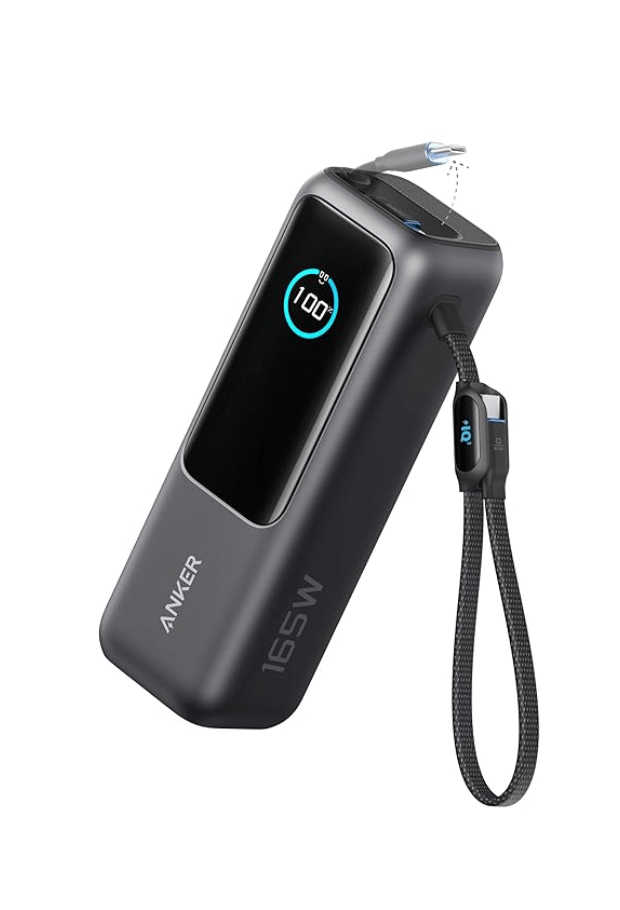
All image credits to Amazon,
A laptop charger with 25,000mAh of juice that spits out power across 3 ports with Triple 100W USB-C Ports. Under £70.
Link here and check out our other deals too
And view our shop with our whole collection here
|
|
|
|
|
|
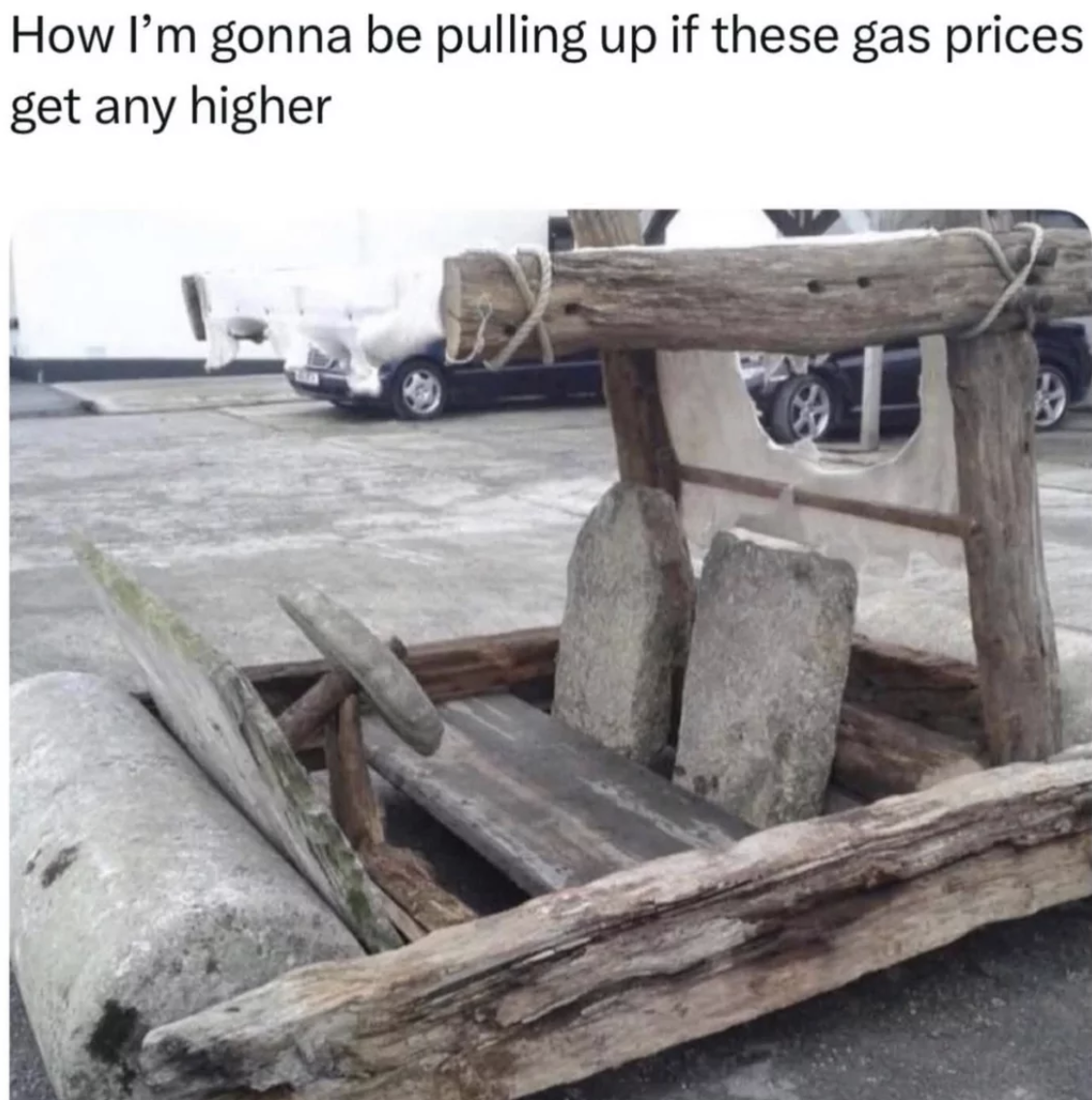
😅Meme/AI video of the week 😅 (the internet can be savage lol) |
 |
|
|
|
🌐Partner Events & Opportunties 🌐 |
|
Below are the top opportunities we want to highlight to you this week! If you want to see more, then check out our new website where we have a whole page dedicated to events and opportunities from us and our partners:
https://www.colorintech.org/events
|
|
|
|
|
|
🙌🏾The latest from the Colorintech team🙌🏾 |
|
|
|
|
|
|