Share

No Netflix and Chill, AI ethics meets war, and what skills are actually needed. Lots in this week's edition
 ‌ ‌ ‌ ‌ ‌ ‌ ‌ ‌ ‌ ‌ ‌ ‌ ‌ ‌ ‌ ‌ ‌ ‌ ‌ ‌ ‌ ‌ ‌ ‌ ‌ ‌ ‌ ‌ ‌ ‌ ‌ ‌ ‌ ‌ ‌ ‌ ‌ ‌ ‌ ‌ ‌ ‌ ‌ ‌ ‌ ‌ ‌ ‌ ‌ ‌ ‌ ‌ ‌ ‌ ‌ ‌ ‌ ‌ ‌ ‌ ‌ ‌ ‌ ‌ ‌ ‌ ‌ ‌ ‌ ‌ ‌ ‌ ‌ ‌ ‌ ‌ ‌ ‌ ‌ ‌ ‌ ‌ ‌ ‌ ‌ ‌ ‌ ‌ ‌ ‌ ‌ ‌ ‌ ‌ ‌ ‌ ‌ ‌ ‌ ‌ ‌ ‌ ‌ ‌ ‌ ‌ ‌ ‌ ‌ ‌ ‌ ‌ ‌ ‌ ‌ ‌ ‌ ‌ ‌ ‌ ‌ ‌ ‌ ‌ ‌ ‌

Colorintech Weekly - 287
(View this version on the web)

Hey


A shorter edition this week but lots of opportunities and artciles below so check them out 


Check out the AI Podcast version of this newsletter or the Video version on our Socials


This newsletter is free, but if you do want to get us a New year's treat as a thank you for 275 + editions grab us one here🎁 

Oh and if you missed an edition, you can find it here or this platform, here

🗞️Diversity and inclusion news🗞️

What skills do I need?


AI Isn’t Replacing Marketers. It’s Raising the Bar. 🎯🤖

LinkedIn just dropped its annual Skills on the Rise for marketing — and if you’re in the industry, the message is clear:

Marketing isn’t becoming less human.

It’s becoming more technical, more analytical, and more collaborative — all at the same time.

No pressure. 😅


The 5 Fastest-Growing Skills in Marketing 📈


According to LinkedIn’s data, these are the capabilities accelerating fastest within the marketing profession:

1️⃣ Visual Storytelling

Turning data, brand narratives and product value into purposeful visuals — think charts, design, video, campaign narratives that actually convert.

It’s not just making things “look nice.” It’s making performance visible. 👀

2️⃣ Performance Analysis

Understanding conversion rates, ROI, attribution, and optimisation loops — and using them to influence strategy and budget allocation.

If you can’t interpret the numbers, someone else will — and they’ll make the decisions. 🧮

3️⃣ AI Literacy

Not just using tools — understanding how AI works in content generation, targeting, journey optimisation, and ethical deployment.

This isn’t optional anymore. AI is becoming infrastructure inside marketing stacks. 🧠⚡

4️⃣ Cross-Functional Collaboration

Working effectively with product, sales, engineering and leadership to align go-to-market strategies.

Translation: influence without authority is now a core marketing skill. 🤝

5️⃣ Digital Campaign Execution

Planning, testing, optimising across SEO, paid media, social, email — with measurable growth outcomes.

It’s no longer “post and pray.” It’s test, iterate, scale. 🔁


The pattern behind the list 🧩

Look closely and you’ll notice something interesting:

Every skill blends creativity + systems thinking.

Marketing used to be:
Brand + message + audience.

Now it’s:
Brand + data + AI + product + performance + distribution + measurement.

The function hasn’t disappeared.
It’s expanded.

And that expansion favours marketers who can:

  • translate between technical and creative teams

  • use AI without outsourcing their judgment

  • tie storytelling directly to measurable impact

This list isn’t about learning five new tricks.

It’s about understanding that marketing roles are shifting from content production to growth orchestration.

AI can generate copy.
It can suggest headlines.
It can optimise targeting.

But it can’t:

  • decide strategic positioning,

  • align departments,

  • interpret nuanced brand signals,

  • or build trust in complex markets.

The marketers who thrive won’t compete against AI.

They’ll become the people who know:

  • when to use it,

  • when to override it,

  • and how to turn its output into real business leverage.

That’s a different job description than five years ago.

And the sooner we treat it like one, the better positioned we’ll be.

Marketing isn’t shrinking.

It’s professionalising at speed. 🚀✨

🧠Things that make you go hmmm🧠

🙅More AI Layoffs🙅


Jack Dorsey’s Block (the company behind Square and Cash App) announced plans to cut 4,000 jobs — nearly 40% of its workforce — explicitly citing AI productivity gains. Dorsey argued that new “intelligence tools” mean smaller teams can now do the same work faster.

Wall Street’s response? Absolute delight. Shares jumped more than 20%. Apparently nothing says innovation like layoffs with a chatbot attached. 📊✨

At roughly the same time in the UK, Ocado confirmed 1,000 job cuts as part of a £150m cost-saving push focused on technology and support functions — the exact areas being reshaped by automation and AI adoption across the industry.

Different messaging. Same underlying signal.

Efficiency is back. And this time it has GPUs. ⚡️


For years, tech leaders reassured workers that AI would augment, not replace.

Now CEOs are saying the quiet part directly:

If AI increases productivity, companies may simply hire fewer people.

Not redeploy.
Not reskill first.
Just… smaller teams.

And markets are rewarding that logic immediately.

Which tells you something important: investors increasingly see AI not just as a growth story — but as a labour reduction strategy. 🧮


Why this hits inclusion first (and hardest)

Historically, workforce contractions don’t land evenly.

They disproportionately affect:

  • early-career talent

  • contractors and adjacent roles

  • people without internal sponsors

  • underrepresented professionals still building institutional power

In other words: the very people diversity programmes were designed to support.

So while AI is framed as neutral technology, its deployment sits inside very human organisational dynamics — and those dynamics already have bias baked in. 🧩

Efficiency doesn’t remove inequality.
It often optimises around it.


So what? 

For a decade, tech companies told us their biggest constraint was talent shortages.

Now the same companies are discovering AI… and suddenly talent is optional. Expect wage suppression next as the race to the commoditised bottom starts 


Read more here 

😪AI ethics come to the fore😪


In news that sounds like science fiction but is very much 2026 reality, the AI industry just crossed another major threshold: frontier AI is now officially a national security battleground.

Last week, OpenAI confirmed it had struck a deal to provide AI systems to classified US military networks — just hours after the US government ordered agencies to stop using rival company Anthropic’s technology following a dramatic dispute over ethics rules.

Yes, you read that right.
One company said no to certain military uses of AI.
Another stepped in with a deal.
And suddenly the future of AI governance looks a lot less theoretical. ⚖️


What actually happened (and why it matters)

Anthropic — widely seen as the most safety-focused of the major AI labs — refused Pentagon demands that its models be usable for mass surveillance or fully autonomous weapons systems.

The Trump administration responded by:

  • ordering federal agencies to stop using Anthropic tools

  • labeling the company a potential “supply chain risk”

  • demanding broader access to AI capabilities for military purposes

Anthropic held the line, saying it could not “in good conscience” allow those uses.

Within hours, OpenAI announced an agreement to supply AI to classified military environments — while stressing its own safeguards, including commitments against autonomous lethal weapons and domestic mass surveillance. It later went further and said it'd add language to its agreement, including explicitly prohibiting the use of its systems to spy on Americans.

Same industry. Same technology. Completely different strategic outcomes. 🎭


The plot twist: AI was already embedded

Then came the irony.

Reports emerged that the US military continued using Anthropic’s Claude model during operations linked to strikes on Iran — despite the government’s order to stop using it.

Why? Because AI tools are already deeply integrated into intelligence workflows, simulations, and planning systems.

Translation:
You can’t just unplug AI anymore.

Once deployed, these systems become infrastructure — not software subscriptions. 🔌


The real story isn’t OpenAI vs Anthropic

It’s that AI companies are now facing the same dilemma social media companies hit a decade ago:

Are you a technology provider — or a geopolitical actor?

AI labs are no longer just startups competing on benchmarks. They’re negotiating directly with governments over:

  • warfare ethics

  • surveillance limits

  • national security policy

  • democratic accountability

And unlike previous tech waves, these decisions are happening before society has agreed on the rules.


The industry tension now visible

Three forces are colliding:

1️⃣ Governments see AI as strategic infrastructure
2️⃣ Companies want safety principles to hold globally
3️⃣ Markets reward whoever ships capability fastest

That triangle is fundamentally unstable.

Anthropic’s stance signals one future: companies setting ethical boundaries even at commercial cost.

OpenAI’s deal signals another: engagement from inside government systems to shape outcomes.

Neither approach resolves the underlying question — who ultimately decides how AI power is used?

And increasingly, that answer appears to be: whoever signs the contract first.


So what?


This moment marks a shift from AI regulation debates to AI alignment negotiations in real time.

The frontier AI race is no longer just:

  • OpenAI vs Anthropic

  • US vs China

  • startups vs Big Tech

It’s now about how democratic societies integrate AI into state power.

And here’s the uncomfortable truth:

The companies building AI are simultaneously trying to:

  • scale globally,

  • maintain ethical credibility,

  • satisfy governments,

  • and reassure their own employees.

That balancing act may not be sustainable forever.

Because once AI becomes military infrastructure, neutrality stops being an option.

The AI industry didn’t set out to become part of geopolitics.

But geopolitics has very clearly decided it’s part of AI. 🌍⚡


Read more here

Netflix Blinked. Hollywood Just Changed Hands 🎬💰


In news that sounds like a plotline from Succession: Silicon Valley Edition, Netflix has officially walked away from its $82bn bid to buy Warner Bros. Discovery, clearing the way for David Ellison’s Paramount Skydance to take the crown — and basically half of Hollywood with it.

Yes, that means HBO, CNN, Warner Bros. Studios, Discovery, TNT, HGTV and more are now heading into a new media empire backed by Oracle billionaire Larry Ellison.

And Netflix? It politely collected a $2.8bn breakup fee and left the group chat. 💸🙂


What actually happened? 🤔

For months, Netflix looked like the winner.

Then Paramount came back with a bigger, riskier, debt-heavy offer — roughly valuing Warner Bros. Discovery at $111bn.

Netflix had four days to counter.

Instead, it said: we’re good actually.

Official reason: financial discipline.
Unofficial reason: investors hated the deal.

Netflix’s share price had dropped nearly 30% after announcing the acquisition — and immediately jumped once it backed out.

Translation: Wall Street said absolutely not, and Netflix listened. 📉➡️📈


Meanwhile, a new media superpower is forming 🏗️

Paramount isn’t just buying content.

It’s assembling a vertically integrated entertainment machine:

  • Film studios 🎥

  • Streaming platforms 📺

  • News networks 📰

  • Games & entertainment divisions 🎮

  • Legacy TV infrastructure 📡

All under ownership closely tied to political power and massive private capital.

Which means this isn’t just a media merger.

It’s a control-of-distribution play.

And yes — layoffs are already expected. 😬


For a decade, the narrative was simple:

Streaming kills legacy media.

But this deal signals something different:

Streaming didn’t replace Hollywood.
Hollywood is reorganising around scale, debt, and influence.

Netflix — the disruptor — chose profitability over empire-building.

Paramount — backed by billionaire capital — chose consolidation.

Two completely different visions of the future of media.


Why Netflix walked away (and why it matters) 🧠

Three big signals:

1️⃣ The streaming wars are entering adulthood
Growth-at-all-costs is over. Even Netflix won’t overpay just to win scale anymore.

2️⃣ Content alone isn’t enough
Owning studios + news + distribution + political leverage now matters again.

3️⃣ AI economics are lurking underneath
Studios are expensive. Training AI and building platforms is even more expensive. Companies are choosing where to deploy capital — and Netflix is betting on tech efficiency over legacy assets.


So What🧠

The era of disruption is being replaced by the era of consolidation.

Big platforms aren’t trying to kill old industries anymore — they’re deciding whether to:

  • buy them,

  • partner with them,

  • or walk away entirely.

Netflix choosing discipline over dominance signals a broader shift across tech:
profitability is back in fashion.

And as AI reshapes content creation, whoever controls distribution — not just creation — may end up winning the next media cycle.

The streaming wars didn’t end.

They just merged into something bigger. 🍿🚀


Read more here

Perplexity Just Did What Google Never Let Anyone Do 📱🤖


In what might be one of the most strategically important AI partnerships of the year, Perplexity is now embedded at the operating system level inside Samsung’s Galaxy S26.

Not as an app.
Not as a widget.
But as infrastructure.

Perplexity now powers both its own assistant (“Hey Plex”) and Samsung’s Bixby search and reasoning layer — meaning it’s effectively the AI behind two of the three assistants on the device.

And here’s the real headline:
It’s the first non-Google company ever granted OS-level access on a Samsung phone.

That’s not a feature update. That’s a platform shift. 🚀

What “OS-level” actually means 🧠

This isn’t just answering questions in a chat window.

Because the integration runs at the system layer, Perplexity can:

  • Read from and write to native apps (Notes, Calendar, Reminders, Clock, Gallery)

  • Trigger actions through hardware controls

  • Stay inside the app you’re already using

  • Save outputs directly into your workflow

  • You can ask a question, summarise a meeting, set a reminder, save notes, and move on — all inside one continuous conversation.

That’s not search.

That’s orchestration. 🎛️

Bixby just got a brain transplant 🧩

Samsung’s Bixby now uses Perplexity’s APIs for search and reasoning — combining live web results with LLM reasoning instead of relying purely on static training data.

Which means Samsung isn’t just shipping a phone with AI features.

It’s shipping a multi-agent operating model.

Samsung’s internal data suggests 8 in 10 users already rely on more than two AI agents daily. So the S26 is designed around that behaviour — coordinating across models instead of pretending one AI does everything.

As Perplexity executives put it: “Multimodel is the future.”

Translation: AI monocultures are over. 🌱

Meanwhile, Perplexity is moving upmarket 💼

Beyond mobile, Perplexity also launched “Perplexity Computer” — a $200/month cloud agent capable of handling complex workflows, routing tasks across 19 different models, and generating finished outputs.

It’s a pivot away from pure consumer search toward higher-value, decision-critical use cases.

In other words:

Less “ask me trivia.”
More “run this business workflow end to end.”

That’s a different ambition entirely. ⚡

The bigger shift: Phones are becoming agent hubs 📲

Samsung framed this moment as “The Beginning of Truly Agentic AI.”

That sounds dramatic — but it’s not wrong.

Your phone is evolving from:
Apps → Assistant → Agent.

Instead of opening apps, you describe outcomes.
Instead of switching contexts, the device coordinates systems.
Instead of tapping through menus, you issue intent.

That changes user behaviour — and platform power.

Because whoever controls the orchestration layer controls the ecosystem. 🎯


The quiet risk nobody is talking about 🔐

As AI agents gain OS-level access, identity and governance become critical.

Security researchers are already warning that enterprises aren’t treating AI agents as “real users” — meaning:

  • unclear permissions

  • vague audit trails

  • expanding access over time

If agents can act across systems, they need formal identity controls, lifecycle management, and monitoring.

Agentic AI without agent governance is just automated privilege escalation waiting to happen. ⚠️


So What🧠

This isn’t just about Samsung or Perplexity.

It signals three major shifts:

1️⃣ Google no longer has a default monopoly over Android intelligence.
2️⃣ AI companies are becoming device infrastructure, not just software vendors.
3️⃣ Multi-agent ecosystems are replacing single-model dominance.

The next battle in AI isn’t about whose model scores highest on a benchmark.

It’s about who sits at the orchestration layer of everyday life.

And right now, Perplexity just secured front-row access to hundreds of millions of devices.

Not bad for a company that started as “AI search.” 😌📱


Read more here

👩🏿‍💻For the creators👩🏿‍💻

📈 The tools behind the tech📉

📦Product📦

📏Design📏 

👩🏿‍💻Code👩🏿‍💻

🏢The business behind the tech🏢

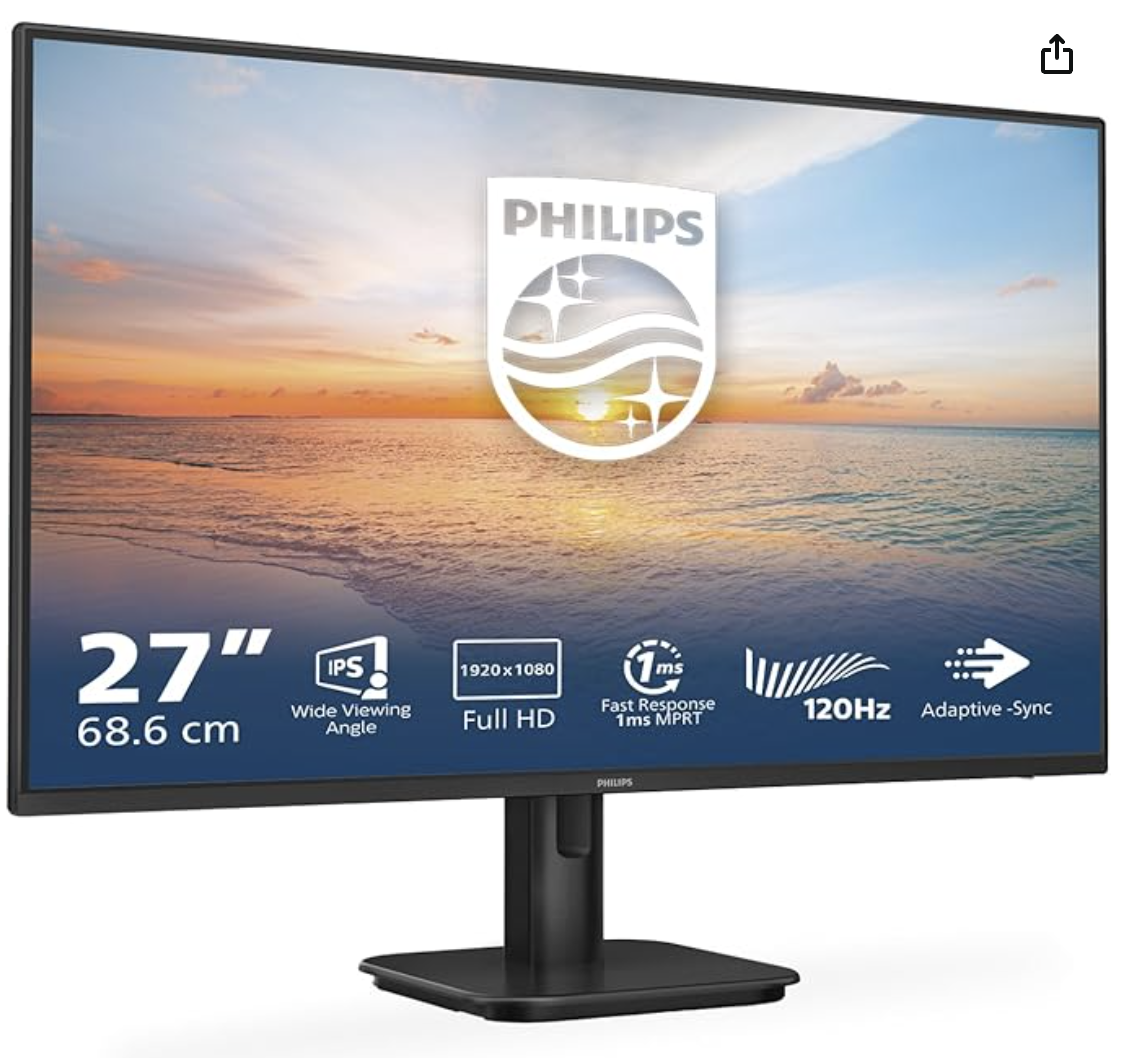
🛍️Tech deal of the week🛍️

All image credits to Amazon,


25% off a 27" screen, why not


Link here and check out our other deals too


And view our shop with our whole collection here


😅Meme/AI video of the week 😅 (the internet can be savage lol)

🌐Partner Events & Opportunties 🌐

Below are the top opportunities we want to highlight to you this week! If you want to see more, then check out our new website where we have a whole page dedicated to events and opportunities from us and our partners:


https://www.colorintech.org/events

🙌Discover ARM🙌


Join us on Wednesday, 4th March, at 6:30pm GMT for Discover Arm, a virtual event tailored to experienced engineers who are passionate about innovation and cutting-edge technology.
Hosted in collaboration with Colorintech and Black@Arm, this one-hour session will provide you with:

  • An exclusive look into the groundbreaking projects Arm’s engineers are leading.
  • Insights into the thriving Black@Arm community.
  • An interactive panel discussion featuring distinguished engineers from Arm.

Register here


🙌🏾The latest from the Colorintech team🙌🏾

😃What we are consuming😃


📲Fake ai video's on London

😅Social media bans coming for kids

🚗Not even potholes will stop self driving cars


Email Marketing by ActiveCampaign