Share

If you can't work out who the exit liquidity is... it's probably you.
 โ€Œ โ€Œ โ€Œ โ€Œ โ€Œ โ€Œ โ€Œ โ€Œ โ€Œ โ€Œ โ€Œ โ€Œ โ€Œ โ€Œ โ€Œ โ€Œ โ€Œ โ€Œ โ€Œ โ€Œ โ€Œ โ€Œ โ€Œ โ€Œ โ€Œ โ€Œ โ€Œ โ€Œ โ€Œ โ€Œ โ€Œ โ€Œ โ€Œ โ€Œ โ€Œ โ€Œ โ€Œ โ€Œ โ€Œ โ€Œ โ€Œ โ€Œ โ€Œ โ€Œ โ€Œ โ€Œ โ€Œ โ€Œ โ€Œ โ€Œ โ€Œ โ€Œ โ€Œ โ€Œ โ€Œ โ€Œ โ€Œ โ€Œ โ€Œ โ€Œ โ€Œ โ€Œ โ€Œ โ€Œ โ€Œ โ€Œ โ€Œ โ€Œ โ€Œ โ€Œ โ€Œ โ€Œ โ€Œ โ€Œ โ€Œ โ€Œ โ€Œ โ€Œ โ€Œ โ€Œ โ€Œ โ€Œ โ€Œ โ€Œ โ€Œ โ€Œ โ€Œ โ€Œ โ€Œ โ€Œ โ€Œ โ€Œ โ€Œ โ€Œ โ€Œ โ€Œ โ€Œ โ€Œ โ€Œ โ€Œ โ€Œ โ€Œ โ€Œ โ€Œ โ€Œ โ€Œ โ€Œ โ€Œ โ€Œ โ€Œ โ€Œ โ€Œ โ€Œ โ€Œ โ€Œ โ€Œ โ€Œ โ€Œ โ€Œ โ€Œ โ€Œ โ€Œ โ€Œ โ€Œ โ€Œ โ€Œ

Colorintech Weekly - 304

(View this version on the web)

Hey


If you can't work out who the exit liquidity is... it's probably you. A lesson on meme coins below


Check out the AI Podcast version of this newsletter or the Video version on our Socials


This newsletter is free, but if you do want to get us a summer ice cream๐Ÿฆ as a thank you for 300+ editions grab us one here๐ŸŽ

Oh and if you missed an edition, you can find it here or this platform, here

๐Ÿ—ž๏ธDiversity and inclusion news๐Ÿ—ž๏ธ

๐Ÿ’ทYour CV Might Never Reach A Human. And Now The Courts Are Paying Attention.


TL;DR A landmark lawsuit against Workday's AI hiring software is moving forward, putting every company using AI recruitment tools on notice. The message from the courts? "The algorithm rejected them" may not be much of a legal defence. โš–๏ธ


A US federal judge has ruled that Workday must face discrimination claims over its AI-powered recruitment software, in what could become the most significant AI hiring case to date.

The lawsuit was brought by Derek Mobley, a Black man over 40 with a disability, who says he was rejected from more than 100 jobs using Workday's platformโ€”often within minutes of applying.

Workday maintains its software only assesses job qualifications and does not make hiring decisions. But the court has allowed key claims around race, age, gender and disability discrimination to proceed. ๐Ÿ‘ฉ๐Ÿฟโ€โš–๏ธ

The stakes are enormous.

Court filings suggest 1.1 billion job applications were rejected through Workday's systems during the relevant period, while more than 80% of US employers now use some form of AI in


For years we've been told AI would reduce bias from hiring.

Reality appears to be a little more... complicated. ๐Ÿ˜ฌ

The problem isn't that AI suddenly becomes discriminatory.

It's that AI learns from historical hiring data.

If the past wasn't fair, there's a risk the algorithm simply learns to automate yesterday's biases at today's speed.

Even more concerning, research has shown that AI can discriminate without ever knowing someone's race, age or disability.

  • Employment gaps can become proxies for disability.

  • Years of experience can become proxies for age.

  • Postcodes, universities and career histories can quietly become stand-ins for socioeconomic background or ethnicity.

  • Congratulations.

You've reinvented discrimination... but with better UX. ๐Ÿคฆ๐Ÿพโ€โ™‚๏ธ


The irony is that AI hiring tools were supposed to make recruitment more objective. Instead, they may simply be making rejection faster. Instant rejection isn't necessarily fairer rejection and that's the uncomfortable question facing employers.

If AI rejects a qualified candidate before a human ever sees their CV, who's actually responsible?

The software vendor?

The employer?

Or the algorithm that technically made neither decision but influenced all of them?

As AI becomes embedded into hiring, that question is rapidly moving from ethics panels to courtrooms. โš–๏ธ


This case isn't just about Workday.

It's about every organisation that has quietly outsourced the first stage of recruitment to an algorithm.

For employers, "the vendor said it was bias-free" is unlikely to be enough.

For candidates, it's a reminder that sometimes the hardest part of getting a job isn't impressing the hiring manager.

It's convincing the algorithm to let you meet one.

The promise of AI in hiring was better decisions.

The challenge now is proving they're actually betterโ€”and not just faster. ๐Ÿš€


๐Ÿ“š Read More

HCAmag

CIO mag

๐Ÿ’ท Is Ai actually replacing jobs.


TLDR: Fresh research suggests companies investing heavily in AI are actually hiring more peopleโ€”not fewer. The catch? They're hiring people who know how to work with AI, while everyone else risks being left behind. ๐Ÿ“ˆ


For the past two years, the dominant AI narrative has been simple: AI is coming for your job.๐Ÿค”

New data suggests reality is a little more complicated.

Research from Ramp and Revelio Labs, analysing more than 21,000 US companies, found that businesses adopting AI most aggressively actually grew their workforce by around 10% over two years. Even more surprisingly, entry-level hiring grew by 12%.

The researchers argue these firms aren't hiring fewer graduatesโ€”they're hiring different graduates. Employers increasingly want people who know how to work alongside AI, rather than compete against it.

At almost the same time, Ford admitted it had to rehire more than 300 experienced quality engineers after AI systems failed to match their expertise. The company says AI remains valuableโ€”but only when trained by the people it was supposed to replace. ๐Ÿš—


The conversation has become unnecessarily binary.

Either AI destroys all jobs or AI creates a productivity utopia.

As it often is, the reality, is much messier. ๐Ÿคท๐Ÿพโ€โ™‚๏ธ


AI is automating tasks, not entire professions (yet).

As workers become more productive, many companies are discovering they actually need more peopleโ€”not fewerโ€”to supervise AI, review its output and redesign how work gets done.

The winners won't necessarily be the companies with the biggest AI budgets. They'll be the ones that redesign work around AI instead of simply replacing people with it (and have the budgets to do that).


There's a growing list of companies quietly rowing back the "AI replaces humans" narrative.

Ford has rehired engineers after AI quality checks fell short.

Some businesses that rushed into layoffs are discovering automation created new bottlenecks elsewhere.

Even Mark Zuckerberg recently admitted Meta's AI progress "hasn't really accelerated" in the way the company expected.

Turns out replacing humans is considerably harder than replacing PowerPoint slides. ๐Ÿ“‰


So What?๐Ÿง 

The real divide isn't going to be between humans and AI.

It's going to be between people who know how to use AI effectively and people who don't.

That's why programmes focused on AI literacy, digital skills and workforce retraining matter more than ever.

The future of work isn't looking increasingly human or increasingly automated.

It's increasingly collaborative.

The bad news? AI probably isn't taking your job.

The good news? Neither is the graduate who knows how to use it better than you... unless you let them. ๐Ÿ˜‰


๐Ÿ“š Read More

๐Ÿ“ˆ Yahoo Finance: After Laying Off 8,000 Employees, Zuckerberg Admits Meta's AI 'Hasn't Really Accelerated' As Expected
https://finance.yahoo.com/technology/ai/articles/laying-off-8-000-employees-121545621.html

๐Ÿ‡ฌ๐Ÿ‡ง BBC News: Ford rehires human engineers after AI fails to match quality checks
https://www.bbc.co.uk/news/articles/cgrkd41n2v9o

๐Ÿ“Š Exponential View: Why AI isn't showing up on your bottom line
https://www.exponentialview.co/p/why-ai-isnt-showing-up-on-your-bottom-line?utm_source=substack&utm_medium=email


๐Ÿง Things that make you go hmmm๐Ÿง 

๐ŸŽฎ Sony Presses Eject on Physical Games

TL;DR Sony has confirmed it will stop supporting physical PlayStation discs from January 2028, signalling the end of an era for console gaming. While many expected retailers like GameStop to suffer, they've quietly reinvented themselves. The bigger question is what happens to ownership, preservationโ€”and the people making gamesโ€”as the industry becomes increasingly digital and AI-driven. ๐ŸŽฎ


What happened; If you grew up blowing into PlayStation discs (don't pretend you didn't), this one might sting.

Sony has announced that from January 2028 it will end support for physical PlayStation game discs, paving the way for what many expect to be an all-digital PlayStation 6.

The company says the decision simply reflects reality: most PlayStation players already buy their games digitally.

On paper, it makes sense.

No manufacturing.

No shipping.

No retailers taking a cut.

No second-hand sales eating into new purchases.

For Sony, it's a cleaner, more profitable business model.

For everyone else? It's a little more complicated. ๐Ÿ“€


Why it matters The move marks another step away from actually owning the things we buy.

When you buy a physical game, you can lend it to a friend, sell it, collect it or keep it on a shelf for twenty years.

Buy a digital game and you're often buying a licence instead.

If a platform removes it, changes the terms or eventually shuts down the servers, there's very little you can do about it.

That has huge implications for:

  • Game preservation

  • Consumer rights

  • Independent retailers

  • Collectors

  • The second-hand games market

It's another reminder that convenience often comes at the expense of ownership. ๐ŸŽฎ


The games industry has been moving towards this for years.

Publishers love digital because it gives them complete control over pricing, distribution and resale.

No lending your mate a game.

No CEX trade-ins.

No ยฃ70 release suddenly appearing for ยฃ25 six months later.

No second-hand market competing with new sales. ๐Ÿ’ธ

Yet the businesses many assumed would be hit hardest have already adapted.

Following Sony's announcement, GameStop's share price actually rose.

Why?

Because selling games is no longer really its business.

For the quarter ending May 2026:

  • Collectibles made up 41.8% of revenue

  • Hardware and accessories accounted for 39.9%

  • Software represented just 18.3%

GameStop has quietly transformed itself from a games retailer into a collectibles and hardware business.

Retailers aren't going quietly either.

Industry groups representing video game stores have publicly criticised Sony's decision, arguing physical games remain important for consumer choice, competition and preservation. Rather than accepting defeat, many are doubling down on serving collectors and enthusiasts.

The real disruption isn't happening on the high street.

It's happening inside the studios.๐Ÿ‘€


Just days after Sony's announcement, Microsoft confirmed around 4,800 layoffs, including approximately 1,600 roles across Xboxโ€”the largest restructuring in Xbox's history.

Executives insist AI isn't directly replacing employees.

At the same time, they're flattening management structures, concentrating investment around blockbuster franchises like Minecraft and Candy Crush, and increasingly embedding AI throughout development workflows.

Sound familiar?

It's the same playbook we're seeing across tech.

  • More AI.

  • More automation.

  • Fewer people.

  • Greater efficiency.

  • Less room for experimentation.

Physical media may not be perfectโ€”many modern discs still require downloadsโ€”but removing discs entirely shifts power further towards platform owners and away from players, developers and preservationists.

That's the bit worth paying attention to. ๐Ÿ‘€


So what?๐Ÿง 

Gaming isn't dying. It's becoming a subscription. A platform. An ecosystem. Increasingly, an AI business (because who isn't)

The question isn't whether we'll still be playing games in twenty years.

It's who will own those gamesโ€”and how many people will still have jobs making them. ๐ŸŽฎ


๐Ÿ“šRead more

๐Ÿ“บ If You Can't Beat Netflix, Buy ITV


TL;DR Sky is buying ITV's broadcasting business for ยฃ1.6 billion, creating Britain's biggest commercial broadcaster. It's less a victory lap than an admission that competing with Netflix, YouTube and Amazon is now a team sport. ๐Ÿ“บ


What happened?

After months of speculation, Sky owner Comcast has agreed a ยฃ1.6bn deal to buy ITV's broadcasting and streaming business, including ITV's free-to-air channels and ITVX.

ITV Studiosโ€”the production powerhouse behind Love Island, I'm A Celebrity..., Mr Bates vs the Post Office and countless international hitsโ€”will remain a separate publicly listed company.


Sky says the move will create a "UK-focused national streaming champion" capable of competing against global giants like Netflix, YouTube and Amazon Prime Video.

To calm viewers, Sky has promised that flagship shows including Coronation Street, Emmerdale, Love Island, I'm A Celebrity and major sporting events won't disappear behind a paywall.

The deal will now face 12โ€“18 months of scrutiny from UK regulators, including the Competition and Markets Authority and Ofcom and they may not like a British insitution being sold to an American owned one๐ŸŽฌ


Why it matters

This isn't just another media merger.

It's an acknowledgement that Britain's biggest broadcasters can no longer out-compete Silicon Valley on their own.

Think about it.

Netflix spends billions on content every year.

YouTube has become the world's biggest television network without ever calling itself one.

TikTok is competing for attention with Coronation Street.

And increasingly, creators with an iPhone are competing with broadcasters that have been around for 70 years.

Heritage doesn't buy attention anymore.

Algorithms do. ๐Ÿ“ฑ


The bigger picture

For decades, ITV competed with Sky. Now they're joining forces because the real competition isn't each otherโ€”it's the platforms quietly eating everyone's lunch.

This deal mirrors what's happening across almost every industry. Banks are building sovereign AI.

Car manufacturers are partnering with technology companies.

Publishers are licensing content to AI models.

Broadcasters are consolidating because scale has become a survival strategy.

The irony?

Britain helped invent commercial television.

Now its biggest broadcasters need to merge simply to stay relevant in a world dominated by American streaming platforms and social media algorithms. ๐Ÿ‡ฌ๐Ÿ‡ง


There's also an AI angle lurking beneath the headlines.

As generative AI makes video production, localisation, editing and content discovery dramatically cheaper, owning large libraries of trusted content becomes even more valuable.

The battle isn't just over who makes programmes.

It's over who owns the audience, the recommendation engine and the data behind what billions of people watch next.

That's increasingly the business model.

Content gets you in the door.

Platforms keep you there. ๐ŸŽฏ


So what?

This deal isn't really about ITV.

It's about an attempt to build enough scale to compete in a world where entertainment is increasingly controlled by a handful of global technology platforms.

Whether that's enough remains to be seen.

After all, Netflix has over 300 million subscribers.

YouTube reaches billions every month.

And TikTok has convinced an entire generation that 45 seconds counts as a documentary.

The future of British media may not depend on making better television.

It may depend on building platforms capable of competing with the ones that already own our attention. ๐Ÿ“บ


๐Ÿ“š Read More

๐Ÿ“ฐ The Guardian: Sky owner announces ยฃ1.6bn takeover of ITV's broadcasting arm

https://www.theguardian.com/business/2026/jul/06/sky-owner-announces-16bn-takeover-of-itvs-broadcasting-arm

๐Ÿ“บ The Guardian: Sky makes ยฃ2bn spending pledge as it prepares takeover of ITV broadcasting arm

https://www.theguardian.com/business/2026/jun/28/sky-makes-2bn-spending-pledge-as-it-prepares-takeover-of-itv-broadcasting-arm


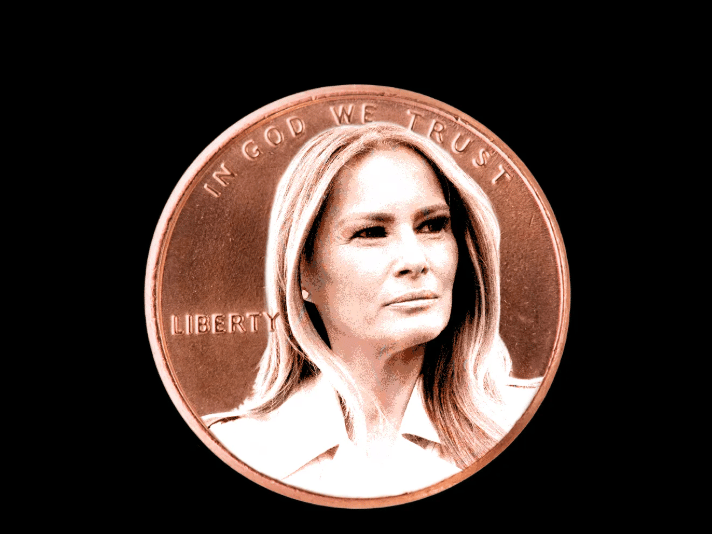
๐Ÿ“ฑ๐Ÿ‘‹ Trump and Melania coin, the last Laugh is on...


TLDR; Nearly one million people who bought Donald Trump's $TRUMP memecoin have collectively lost around $3.8bn. Meanwhile, Trump has reportedly made more than $1bn from crypto through royalties, token sales and transaction fees and even Melania Trump joined the party, pulling in around $6m from her own memecoin. It turns out the safest way to invest in a meme coin... was to selling it yourself. ๐Ÿคท๐Ÿ’ธ


Remember when every financial expert on Earth said "don't buy meme coins"?

Well... about a million people decided to treat that as more of a suggestion.

New blockchain analysis shows 988,905 wallets have lost a combined $3.8bn on the Official Trump ($TRUMP) memecoin after it crashed 97% from its peak. ๐Ÿ“‰

The token briefly reached a valuation of around $15bn, fuelled by hype, speculation and the age-old investment thesis of "what could possibly go wrong?" Quite a lot, as it turns out.

Meanwhile, President Trump appears to have done rather well out of the whole thing.

Financial disclosures show he earned over $1.4bn from crypto-related businesses in 2025, including roughly $635m linked to the $TRUMP token and more than $500m from World Liberty Financial.

And it wasn't just him.

Melania Trump also launched her own $Melania memecoin, reportedly earning around $6m from token sales as part of a broader income surge that saw her total earnings jump to over $17m in 2025.

Almost as if selling shovels during a gold rush is better than buying the gold. โ›๏ธ


Why it matters; This wasn't really an investment story.

It was a lesson in who actually makes money during speculative frenzies.

Spoiler: it usually isn't the people arriving after the headlines.

Blockchain analysis found that while almost one million wallets lost money, a relatively small number of early buyers captured roughly $4bn in gains before the music stopped.

Meanwhile, the people launching and promoting the coins โ€” including both Donald and Melania Trump โ€” were able to monetise the hype directly through token sales, licensing deals and fees.

Turns out "buy high, hope higher" isn't a recognised investment strategy after all. ๐ŸŽฐ


The bigger picture, There's something almost poetic about this.

The internet spent years laughing at people buying Dogecoin because a Shiba Inu looked funny. Then along came political meme coins. The joke got rebranded. People kept buying. The outcome stayed remarkably consistent.  They're internet sentiment wrapped in a token and sprinkled with FOMO.

The irony is that this wasn't even hidden.

It's literally called a meme coin.

Not a retirement plan. Not an index fund. Not "Financial Security Coin." A meme. And now it's not just one coin โ€” it's a family franchise.

Melania's token, launched through her company MKT World LLC, reached a market value of around $75m, showing just how easily hype can be replicated when there's a recognisable name attached.

Some buyers weren't even chasing returns.

Large holders gained access to dinners and VIP events with the President, meaning for some investors the token functioned more like an expensive networking ticket than a serious financial asset.

If you bought access, maybe you got what you paid for.

If you bought expecting generational wealth... well... your portfolio has become the meme instead. ๐Ÿซ 


So what?๐Ÿง  There's an old saying in crypto:

If you can't work out who the exit liquidity is... it's probably you.

The biggest winner wasn't the blockchain.

It wasn't retail investors.

It wasn't decentralised finance.

It was the people whose names were on the coins.

Who could possibly have seen that coming? ๐Ÿ™ƒ


๐Ÿ“š Read More๐Ÿ’ฐ BBC: Trump made more than $1bn from crypto in first year back in office

https://www.bbc.co.uk/news/articles/cvgmv98ez3zo

๐Ÿ“ฐ New York Times: Nearly One Million Buyers Lost Money on Trump's Meme Coin

https://www.nytimes.com/2026/07/04/us/politics/trump-coin-crypto-investors-loss.html

๐Ÿ“ˆ Yahoo Finance: Nearly 1 million $TRUMP coin buyers lost $3.8 billion

https://finance.yahoo.com/markets/crypto/articles/nearly-1-million-trump-coin-201500577.html

๐Ÿ’ธ ABC News: How Trump made more than $1 billion on crypto when most of his coin's investors lost money

https://abc7ny.com/story/how-trump-made-more-1-billion-crypto-when-most-coins-investors-lost-money/19457452/


๐Ÿ‘ฉ๐Ÿฟโ€๐Ÿ’ปFor the creators๐Ÿ‘ฉ๐Ÿฟโ€๐Ÿ’ป

๐Ÿ“ˆ The tools behind the tech๐Ÿ“‰

๐Ÿ“ฆProduct๐Ÿ“ฆ

๐Ÿ“Design๐Ÿ“ 

๐Ÿ‘ฉ๐Ÿฟโ€๐Ÿ’ปCode๐Ÿ‘ฉ๐Ÿฟโ€๐Ÿ’ป

๐ŸขThe business behind the tech๐Ÿข

๐Ÿ›๏ธTech deal of the week๐Ÿ›๏ธ

Prime day may be long and gone but this Fitbit 6 has 44% off at under ยฃ80 so check it out


Link here and check out our other deals too


And view our shop with our whole collection here


๐Ÿ˜…Meme/AI video of the week ๐Ÿ˜… (the internet can be savage lol)

๐ŸŒPartner Events & Opportunties ๐ŸŒ

Below are the top opportunities we want to highlight to you this week! If you want to see more, then check out our new website where we have a whole page dedicated to events and opportunities from us and our partners:


https://www.colorintech.org/events

๐Ÿ™Œ๐ŸพThe latest from the Colorintech team๐Ÿ™Œ๐Ÿพ

๐Ÿ˜ƒWhat we are consuming๐Ÿ˜ƒ


๐Ÿ’ฐThe cost of AI

๐Ÿค–Open AI's new chip

๐Ÿ’ปWhat is Mistral

๐Ÿ–ฅ๏ธThe Best browsers


Email Marketing by ActiveCampaign