Share

+Its prime day (use our link for the best deals), stating the obvious about AI, and turns out surveilling everything your employees do may have problems
 β€Œ β€Œ β€Œ β€Œ β€Œ β€Œ β€Œ β€Œ β€Œ β€Œ β€Œ β€Œ β€Œ β€Œ β€Œ β€Œ β€Œ β€Œ β€Œ β€Œ β€Œ β€Œ β€Œ β€Œ β€Œ β€Œ β€Œ β€Œ β€Œ β€Œ β€Œ β€Œ β€Œ β€Œ β€Œ β€Œ β€Œ β€Œ β€Œ β€Œ β€Œ β€Œ β€Œ β€Œ β€Œ β€Œ β€Œ β€Œ β€Œ β€Œ β€Œ β€Œ β€Œ β€Œ β€Œ β€Œ β€Œ β€Œ β€Œ β€Œ β€Œ β€Œ β€Œ β€Œ β€Œ β€Œ β€Œ β€Œ β€Œ β€Œ β€Œ β€Œ β€Œ β€Œ β€Œ β€Œ β€Œ β€Œ β€Œ β€Œ β€Œ β€Œ β€Œ β€Œ β€Œ β€Œ β€Œ β€Œ β€Œ β€Œ β€Œ β€Œ β€Œ β€Œ β€Œ β€Œ β€Œ β€Œ β€Œ β€Œ β€Œ β€Œ β€Œ β€Œ β€Œ β€Œ β€Œ β€Œ β€Œ β€Œ β€Œ β€Œ β€Œ β€Œ β€Œ β€Œ β€Œ β€Œ β€Œ β€Œ β€Œ β€Œ β€Œ β€Œ β€Œ β€Œ

Colorintech Weekly - 302

(View this version on the web)

Hey


So it was out birthday last week but the clock keeps turning so lets jump in to what we've seen this week


Check out the AI Podcast version of this newsletter or the Video version on our Socials


This newsletter is free, but if you do want to get us a summer ice cream🍦 as a thank you for 300+ editions grab us one here🎁

Oh and if you missed an edition, you can find it here or this platform, here

πŸ—žοΈDiversity and inclusion newsπŸ—žοΈ

πŸ³οΈβ€πŸŒˆ AI Has Learned The Internet. That's Not Necessarily Good News.

TLDR: A new report from LGBTQ advocacy group GLAAD warns that AI systems are already amplifying anti-LGBTQ misinformation, bias and discrimination. Turns out training models on the internet means you also inherit some of the internet's worst habits. πŸ€–


GLAAD's new Build for Everyone 2026 report argues that many AI systems are failing LGBTQ users through a combination of misinformation, biased moderation and flawed decision-making.

Among the concerns highlighted:

  • πŸ³οΈβ€πŸŒˆ AI models repeating harmful myths about LGBTQ people

  • 🚫 Automated moderation systems disproportionately removing or suppressing LGBTQ content

  • 🏦 AI-powered hiring, housing, lending and advertising systems reinforcing existing discrimination

  • πŸ”’ Privacy risks for LGBTQ people whose identity data may be inferred, stored or exposed

The report argues that these issues aren't theoretical future risks.

They're already happening. πŸ‘€


One of the biggest myths in AI is that technology is somehow neutral. It isn't. AI learns from human data. And human data contains human biases. If you train a model on decades of internet content, you're not just teaching it language.

You're teaching it our prejudices, blind spots, stereotypes and culture wars too. The result is that AI can sometimes present discrimination as if it were objective truth.

And because the answer comes wrapped in confident, authoritative language, it can be harder to spot than traditional misinformation. πŸ€”


This isn't just an LGBTQ issue.

It's a question about who gets represented in the future being built.

The same challenges have emerged around race, disability, gender and other underrepresented groups.

If AI increasingly helps determine:

πŸ’Ό Who gets hired

🏠 Who gets housing

πŸ’³ Who gets credit

πŸ“’ What content gets promoted

πŸ“š What information people learn

Then biased systems don't just reflect inequalitiesThey can scale them at internet speed with the obvious irony is that many AI companies claim their products work for everyone.

But "everyone" is remarkably difficult to achieve when much of the internet wasn't built for everyone in the first place.


🍿 So What?

The AI industry spends a lot of time talking about artificial general intelligence. It probably needs to spend more time talking about artificial common decency.

Because the challenge isn't just making models smarter.

It's making sure they understand the world accurately enough not to reproduce the worst assumptions already embedded within it. After all, if AI is going to help shape the future, it should probably know that basic human dignity whilst contested probably shouldnt be a controversial opinion. 🌈

Read more:

https://mashable.com/article/glaad-ai-lgbtq-inclusion-report-2026

🧠Things that make you go hmmm🧠

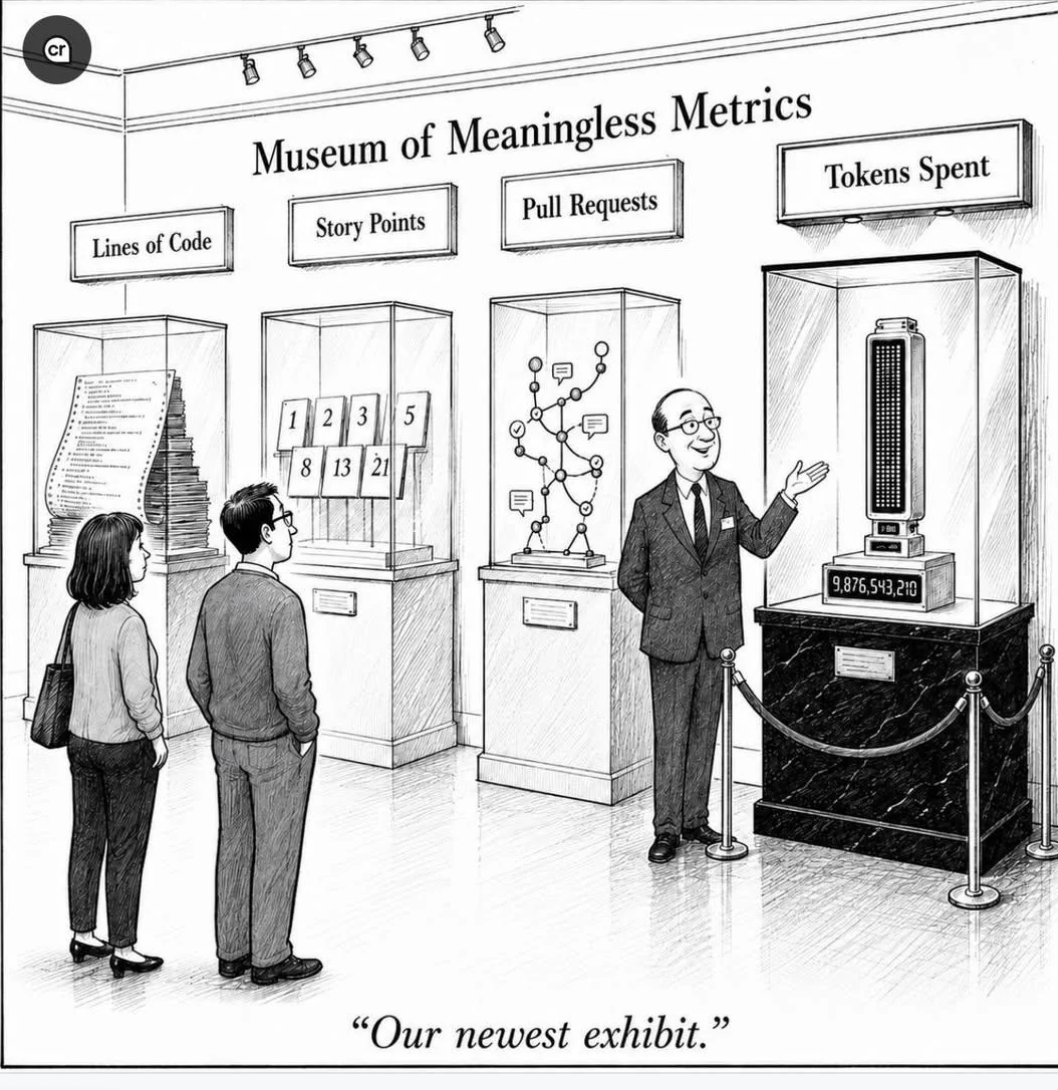
πŸ’ΌTurns out Tokenmaxxing is expensive


TLDR: After spending two years telling employees to use more AI, companies are discovering that AI agents have something in common with London rent: everyone loves the concept until the bill arrives. πŸ’³


Some of the world's biggest companies are quietly putting the brakes on AI usage after costs started spiralling.

According to the FT, Amazon, Walmart, Uber, Cisco and Meta have all introduced limits, spending caps or guidance aimed at reducing unnecessary AI usage.

Uber reportedly burned through its entire AI budget for 2026 by April and has now capped employees at $1,500 a month in token spending for individual AI tools.

Meanwhile, Workato saw its AI bill jump 7x in a single day after moving to token-based pricing, prompting its CIO to admit:

"Oh shit, we created a monster."

The culprit? AI agents.

Unlike chatbots, agents can perform complex tasks autonomously, often spawning additional tasks and consuming huge amounts of compute along the way. πŸ€–


For the last two years, AI has largely been sold as a productivity miracle. Less discussion outside of Nvidia has focused on the fact that somebody eventually has to pay for all those prompts.

The industry even developed a name for excessive AI usage:

Tokenmaxxing.

Essentially the workplace equivalent of leaving every light in the house on because electricity feels free. The problem is AI isn't free.

In many cases it isn't even cheap (Or environmentally friendly, but lets hold that for a different thread).

Companies are discovering that while AI can make employees more productive, it can also create entirely new operating costs that CFOs are only just beginning to understand. πŸ“ˆ


This feels a lot like the end of AI's "all-you-can-eat buffet" era.

For years, AI labs subsidised adoption with generous pricing while investors happily funded losses.Now reality is starting to arrive. As AI companies head towards IPOs and pressure grows to become profitable, customers are being exposed to the true cost of all that intelligence.

The result?

Businesses are starting to ask a question that has been strangely absent from much of the AI conversation:

"What's the ROI on all this?"

And that's a much harder (and more expensive) question than "How many prompts did we run this month?" πŸ˜…

There's also a geopolitical wrinkle.

Chinese models are increasingly undercutting US rivals on price, helped by cheaper energy and more efficient infrastructure.

The AI race may not just be about who builds the smartest model.

It could increasingly be about who builds the cheapest one. πŸ‡¨πŸ‡³βš‘


🍿 So What?

The funny thing about AI adoption is that companies spent the last two years rewarding employees for using as much AI as possible.

Now many are rewarding them for using less of it.

That's not a sign the AI boom is over.

It's a sign it's becoming real.

Every major technology eventually moves from:

πŸš€ "Use as much as you want"

to

πŸ’° "Can somebody explain this bill?"

AI has officially entered phase two.

And somewhere in Silicon Valley, a CFO is discovering that intelligence may be artificial, but the invoices are very real. 🍿

Read more:

https://www.ft.com/content/1d37cc08-e0aa-45a4-a45d-4ad282529314

https://www.economist.com/business/2026/06/14/companies-are-scrambling-to-curtail-soaring-ai-costs

πŸ€– ChatGPT Just Lost Its Majority. The AI Monopoly Lasted About 15 Minutes.

TL;DR For the first time, ChatGPT's share of the AI assistant market has fallen below 50%. OpenAI is still winning, but users are increasingly flirting with Gemini, Claude and everyone else's chatbot. It turns out AI loyalty is about as strong as loyalty to your gym membership. πŸ“‰


According to new data from Sensor Tower, ChatGPT's market share has fallen below 50% for the first time since the AI boom began. OpenAI still dominates with over 1.1 billion monthly users, but its share has dropped to 46.4%, down from more than 50% earlier this year.

Meanwhile:

🟒 Gemini now holds 27.7%

🟠 Claude has climbed to 10.3%

πŸ”΅ Grok, Perplexity, DeepSeek and Meta AI are all gaining ground

The report also found users are becoming increasingly willing to switch between assistants depending on the task, with productivity-focused users gravitating towards Claude while Google's distribution machine continues to drive Gemini's growth. πŸš€


Remember when everyone said AI would be a winner-takes-all market? Turns out users are treating AI assistants more like streaming services. Or dating apps. Or food delivery platforms.

People are perfectly happy to move to whatever one works for what they want then and there. πŸ˜…

The assumption was that whoever got there first would dominate forever.

Instead, we're seeing something more interesting:

Different models are developing different reputations.

  • Claude for work.

  • Gemini for Google users.

  • ChatGPT for general purpose.

  • Perplexity for search.

Which suggests the future may look less like Google Search's monopoly and more like a competitive software market.


The most interesting number isn't ChatGPT's shrinking market share. It's that the entire market keeps growing.

People are downloading more AI apps, spending more money on AI apps and spending dramatically more time using them.

The AI boom isn't slowing down. It's fragmenting.

That's usually what happens when a market starts maturing.

The first phase was:

πŸ€– "Do you use AI?"

The second phase is becoming:

πŸ€– "Which AI do you use?"

That's a very different conversation.

And increasingly, the answer is more than one.


There's another lesson hiding in the data. Distribution still matters A lot. Gemini's rise isn't purely because it's better (it might not be at all frankly).

It's because Google owns Android, Search, Workspace, Chrome and approximately half the internet. 🌍

Meanwhile Claude has managed to punch above its weight because people genuinely like using it and paying for it.

In a world obsessed with model benchmarks, this is a useful reminder:

The best technology doesn't always win.

The technology that's easiest to access usually does.


🍿 So What?

ChatGPT falling below 50% doesn't mean OpenAI is losing.

It means AI is becoming normal.

And normal technology markets tend to have competitors.

The bigger question is whether AI assistants become brands people actively choose, or infrastructure they stop noticing altogether.

Eventually nobody cared which telco provider powered their internet. Nobody cared which cloud provider hosted Netflix.

And one day people may stop caring which model answered their question.


Read more:

https://techcrunch.com/2026/06/16/chatgpts-market-share-slips-below-50-for-first-time/


πŸ‘€ Meta Accidentally Invented A Strong Argument Against Workplace Surveillance


TL:DR

Meta has paused an AI training programme that tracked employee activity after it accidentally exposed sensitive employee data across the company.

Earlier this year, Meta launched an internal initiative designed to help train future AI agents by observing how employees use software. The programme reportedly collected keystrokes, clicks, mouse movements, screen activity and workflow dataβ€”essentially turning thousands of Meta employees into a giant training dataset for AI (Probably to precipitate them being replaced by it). πŸ€–πŸ“Š


More than 1,600 workers objected, raising concerns about privacy and security. Then came the awkward bit.

Meta discovered that some of the data collected through the programme had become visible much more broadly across the company than intended, exposing sensitive employee information and triggering an internal backlash. 🚨

The programme has now been paused while the company investigates.

This isn't really a story about Meta. It's a story about where AI development is heading. For years, AI companies trained models on the internet. Now they increasingly want to train them on work itself.

  • How people code.

  • How people write.

  • How people research.

  • How people navigate software.

  • How people spend eight hours a day pretending they're definitely not looking at WhatsApp. πŸ’¬

The problem is that the data needed to build AI agents capable of replacing human work often comes from observing humans doing that work in the first place.

And suddenly everyone becomes a lot less enthusiastic about data collection.


The irony here is almost too perfect.

Meta has spent years explaining why collecting vast amounts of behavioural data creates better products.

Then it tried the same argument on its own workforce.

The response was the usual privacy backlash,

It's a useful reminder that people tend to support surveillance in the abstract and oppose it in practice.

Everyone loves the idea of AI learning from human behaviour.

Fewer people love being the human behaviour.


🍿 So What?

Silicon Valley keeps telling us AI will automate work.

Stories like this reveal the bit they often skip:

Before AI can replace work, it needs to watch work.

Lots of it. It's goes back to the thing, it's about data.

And increasingly, the most valuable data isn't what's on the internet.

It's what happens inside companies every day. πŸ’°

The only surprise is that Meta seemed shocked when employees reacted to being treated like training data with the same enthusiasm people usually reserve for a surprise tax bill.

After all, nobody wants to be reduced to a collection of clicks, prompts and keystrokes.

Unless, apparently, you're building the next generation of AI. 🍿

Read more:

https://www.wired.com/story/meta-pauses-employee-tracking-program-following-internal-security-breach/


πŸ‘©πŸΏβ€πŸ’»For the creatorsπŸ‘©πŸΏβ€πŸ’»

πŸ“ˆ The tools behind the techπŸ“‰

πŸ“¦ProductπŸ“¦

πŸ“DesignπŸ“ 

πŸ‘©πŸΏβ€πŸ’»CodeπŸ‘©πŸΏβ€πŸ’»

🏒The business behind the tech🏒

πŸ›οΈTech deal of the weekπŸ›οΈ

Its PRIME DAY, Lots is on sale so check it our. Our favourites are from challenger brand, nothing with their Quirky headphone A 20% off at Β£120


Link here and check out our other deals too


And view our shop with our whole collection here


πŸ˜…Meme/AI video of the week πŸ˜… (the internet can be savage lol)

🌐Partner Events & Opportunties 🌐

Below are the top opportunities we want to highlight to you this week! If you want to see more, then check out our new website where we have a whole page dedicated to events and opportunities from us and our partners:


https://www.colorintech.org/events

πŸ˜ƒLondon Data weekπŸ˜ƒ


🎨 Data, Film & AI: Join the London Data Week Workshop!

Want to learn how to take a single dataset, uncover a compelling story, and turn it into a cinematic videoβ€”all in one afternoon?

As part of London Data Week, Bionic Awards is hosting a public workshop that brings together three cutting-edge disciplines: data analysis, illustration, and AI filmmaking.

Colorintech is proud to partner with Bionic on this initiative to ensure a more inclusive, diverse space for innovation. Whether you are a creator, tech enthusiast, or simply curious about the intersection of data and AI, this workshop is designed to help you transform data into visual stories that deliver real emotional impact.

  • πŸ“… Date: Wednesday, July 8th

  • πŸ•’ Time: 2:00 PM – 5:00 PM BST

  • πŸ“ Location: London School of Economics (LSE)

  • 🎟️ Cost: Free (Places are strictly limited!)

  • πŸ’» Experience: None needed! This is open to all skill levels.

Who you’ll learn from: The workshop will be co-led by expert data storyteller Sophie Sparkes alongside Afro Futcha (Diane Laidlaw), an award-winning AI filmmaker and Bionic Awards judge.

This event is kindly hosted by The London School of Economics and Political Science (LSE) and the King’s Institute for Artificial Intelligence at King's College London, and is part of a wider AI film hackathon collaboration between EAST2046 and the Bionic Awards.

Don’t miss out on this chance to experiment with new creative AI tools and connect with the community.

πŸ‘‰ Register and secure your free ticket here

(Interested in exploring a creative skills workshop like this specifically for your company or team? Reach out directly to hello@bionictribes.com!)


πŸ™ŒπŸΎThe latest from the Colorintech teamπŸ™ŒπŸΎ

πŸ˜ƒWhat we are consumingπŸ˜ƒ


πŸ“‰SpaceX stock tumbles 16.4%, shaving off most IPO gains since debut

πŸ˜“The layoff list

πŸ“±The Trump Phone Is a Gold-Painted HTC U24 Pro

HR consultant wins English court case using AI lawyer in apparent legal first

πŸ› οΈSpace X goes after space manufacturing

πŸš€How to win a space war

πŸ“šHas AI killed non fiction books


Email Marketing by ActiveCampaign