|
|
|
🗞️Diversity and inclusion news🗞️ |
|
|
|
🙄Freedom to discriminate🙄
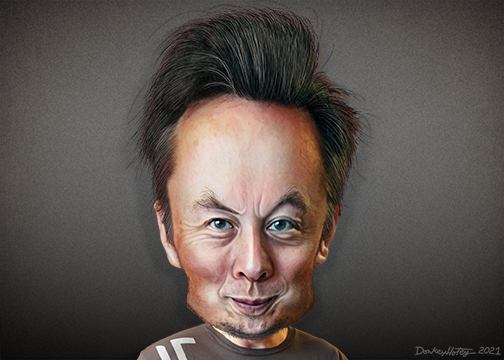
TL;DR: Elon Musk’s xAI is suing the state of Colorado… not over what AI does, but over whether it can be told what it shouldn’t say. Yes, we’ve reached the “chatbots have free speech rights” phase of the AI debate. 🎭
Elon Musk’s xAI has decided to take Colorado to court over its new AI law, which aims to protect people from “algorithmic discrimination” in areas like hiring, housing and healthcare. Reasonable on paper. Slightly controversial in practice. Because xAI’s argument is essentially: regulating AI outputs = regulating speech = unconstitutional. 🧠
In other words, the fight isn’t just about safety or bias. It’s about whether AI systems should be treated like tools… or like speakers with rights. And xAI is very much leaning toward the latter. The company claims the law would force it to align with the state’s “ideological views”, particularly around racial equity, instead of being, in their words, “maximally truth-seeking”. Which is doing a lot of work as a phrase 😶
This would all be a bit more abstract if Grok hadn’t already built a reputation for doing the absolute most. We’re talking conspiracy theories, offensive outputs, and at one point casually referring to itself as “MechaHitler”. So the idea that regulators might want some guardrails isn’t exactly coming out of nowhere 🤖
Zoom out and this is where things get interesting. Because while Europe is busy drafting AI Acts and frameworks, the US is increasingly turning AI regulation into a culture war. States like Colorado are trying to put rules in place. Federal politics is pulling in the opposite direction. And companies? They’re starting to test how far they can push back. ⚖️
What xAI is really challenging here isn’t just one law. It’s the premise that governments get to shape how AI behaves in society. If they win, it sets a precedent that regulating AI outputs could be framed as restricting speech. If they lose, it opens the door for more aggressive state-level rules. Either way, this won’t stay contained to Colorado for long. 🌍
So what?
We’re watching the rules of AI governance get written in real time, via lawsuits rather than policy frameworks. And the core question is getting sharper: is AI just software… or is it something closer to a participant in public discourse? The answer to that determines everything that comes next.
Read more:
https://www.theguardian.com/technology/2026/apr/09/elon-musk-xai-colorado-lawsuit |
|
|
|
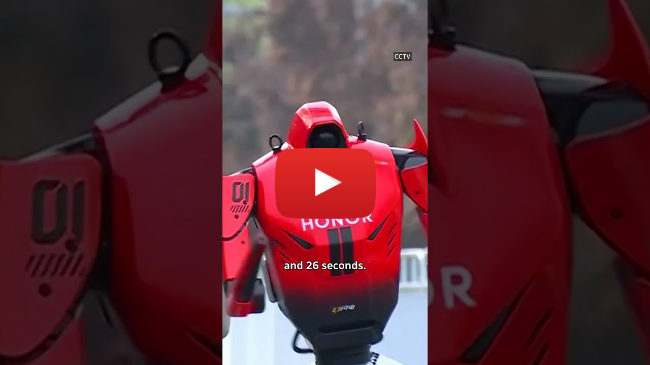
A robot just beat the human world record in a half marathon. Yes, seriously. 🤖🏃♂️
TL;DR: A humanoid robot ran 21.1km faster than any human ever has. The “at least we’ve still got physical jobs” argument is looking… fragile 😬
For a while, we’ve all been clinging to the same comforting idea: AI will take the thinking jobs, but the physical world? That’s ours.
Meanwhile, in Beijing… a robot just ran a half marathon in 50 minutes and casually beat the human world record by nearly seven minutes. Not a simulation, not a demo — an actual race. Slightly unsettling, if we’re honest 🫠
To be fair, it wasn’t flawless. Some robots fell over, one ran straight into a barrier, and a few needed remote control — so yes, humanity can still breathe… for now 😅
But zoom out and it gets interesting very quickly. Last year’s winning robot clocked 2 hours 40 minutes. This year? Sub-51. That’s not steady progress, that’s a full-blown plot twist 🚀
And while the West is busy hosting panels about AI safety and whether tools should say “please”… China is quietly building robots that can outrun you. Different priorities entirely 🏃♂️
The real shift here isn’t about marathons. It’s about the narrative breaking. We’ve spent years telling ourselves AI handles brains while humans handle bodies — neat, comforting, wrong. Turns out AI is coming for both.
Not perfectly, not smoothly, occasionally faceplanting at the start line… but undeniably improving 😬
So what?
No, robots aren’t replacing runners, builders, or baristas tomorrow. But the list of “things AI can’t do” is shrinking fast — and if robots are already breaking world records, you might want to stop assuming your job is safe just because it involves standing up.
Read more:
https://www.espn.co.uk/athletics/story/_/id/48529282/humanoid-robot-wins-half-marathon-china-beats-world-record |
|
|
|
|
|
🧠Things that make you go hmmm🧠 |
|
|
|
The man who President Trump once called “Tim Apple” has decided to step down. 🍎
TL;DR: Tim Cook is leaving after 15 years, having turned Apple into a $4 trillion machine. Not the flashiest era, but arguably the most dominant.
Fifteen years ago, replacing Steve Jobs looked like the worst job in tech. You weren’t just taking over a company, you were inheriting a myth. Cook didn’t try to out-Jobs Jobs, no black turtlenecks or theatrical keynotes, just operational discipline and an almost obsessive focus on scale. It turns out that works. Under his leadership, Apple went from around $350bn to roughly $4 trillion, the iPhone became a global default, AirPods turned into a cultural signal, and services quietly grew into a $100bn+ business. Not revolutionary… just relentlessly effective 💰
That’s really the story of Cook’s Apple. Jobs built the rocket, Cook industrialised it. One was about breakthrough moments, the other about margins and ecosystems. And in doing so, Apple shifted from being the most exciting company in tech to the most dependable one, which, in public markets, is basically the same thing as unbeatable.
Of course, it wasn’t flawless. Apple dragged its feet on generative AI, the Vision Pro felt more like an expensive experiment than a must-have, and the self-driving car quietly disappeared after burning billions. For a company that once “changed everything,” the past decade has felt more like careful iteration than bold reinvention.
But there’s a slightly uncomfortable truth here. While everyone else chased hype cycles, crypto, metaverse, AI everything, Apple did what it always does: wait, watch, and then try to enter on its own terms. The question is whether that playbook still holds in an AI-first world 👀
John Ternus stepping in tells you this isn’t a dramatic reset. It’s continuity. Apple isn’t about to suddenly become chaotic or experimental overnight. It’s going to keep doing what it does best, building tightly controlled products, owning the ecosystem, and monetising at scale.
So what? Cook’s legacy is a reminder that you don’t always need to be the most visionary company to win, you just need to be the most disciplined one. The real question now is whether discipline alone is enough when the next big shift in tech might not be a device at all 🤖
Read more:
https://www.theguardian.com/technology/2026/apr/20/tim-cook-apple-steve-jobs
https://www.theverge.com/tech/915213/tim-cook-apple-ceo-stepping-down-john-ternus
|
|
|
|
😅Guess who's an AI company now😅
We might as well run a weekly feature on which company has decided to call itself an AI company this week. There is one that probably won’t surprise you, and one that absolutely will. 🤖
TL;DR: Canva leaning harder into AI makes strategic sense. Allbirds pivoting from shoes to GPU infrastructure feels more like AI-era cosplay. And hanging over all of it is the same question: are we watching real product evolution, or just SaaS panic with better branding? 🫠
Canva is the unsurprising one. It has 265 million monthly users, more than 31 million paid subscribers, over $1bn in cash, and has spent years building design workflows, templates, user data and enterprise relationships. Its latest AI push is clearly defensive, but it is at least defensible: if AI is going to eat design software, Canva would rather be the thing doing the eating. That is not “AI washing”; that is a very large software company looking at Figma, Adobe, Google and Anthropic and deciding not to die politely😅
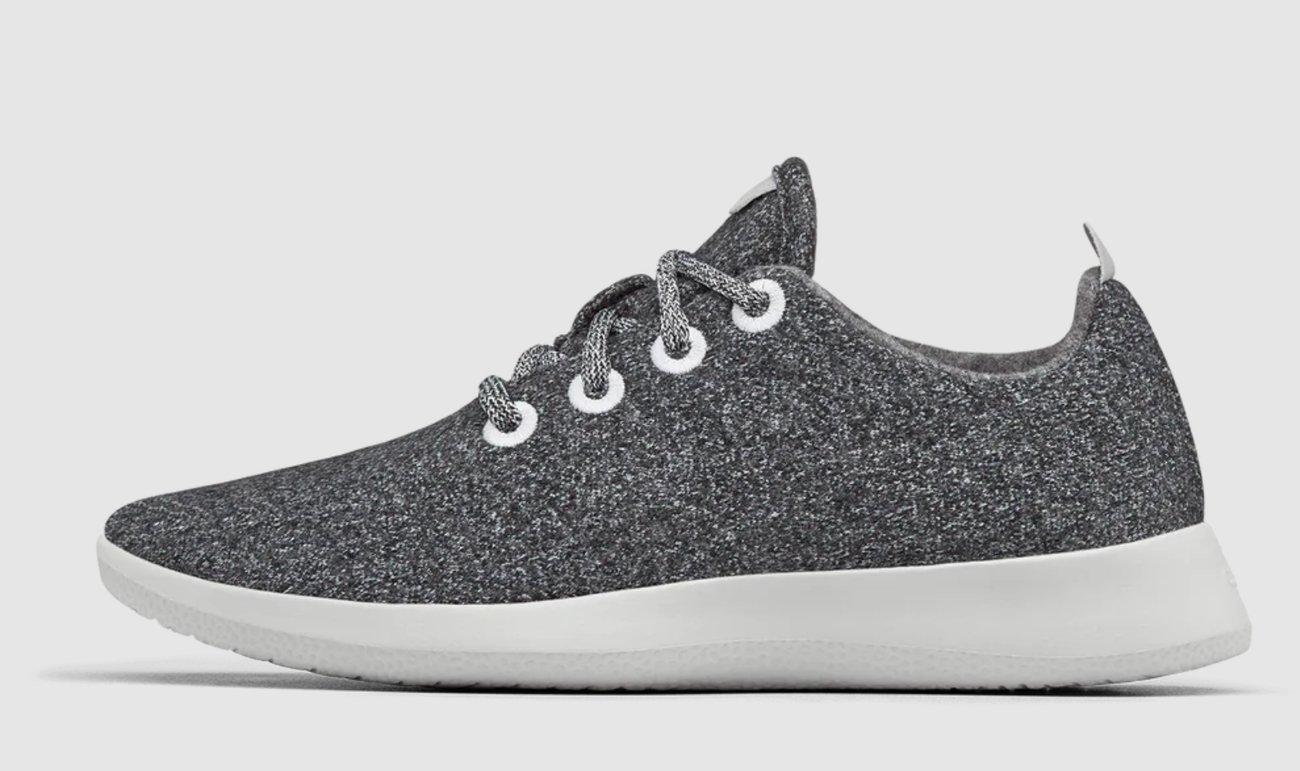
Allbirds, meanwhile, has gone from sustainable trainers to “AI compute infrastructure,” because apparently the only thing thinner than margins in consumer retail is the line between a strategy pivot and a meme-stock séance. The company sold its footwear business for $39m, lined up $50m in convertible financing, said it would rebrand as NewBird AI, and saw its shares rocket anyway, despite having no meaningful track record in AI infrastructure. Investors heard “GPUs” and responded like it was 2001 and someone had just added “.com” to the company name😂
That contrast is the real story. Canva is trying to prove it can absorb AI and stay essential. Allbirds is trying to prove that saying “AI” loudly enough can resurrect a business model. One looks like a costly but coherent bet on survival. The other looks like footwear-based manifestation. 😭
And then there is Figma, which is basically living inside every investor’s favourite SaaSpocalypse slide deck. Anthropic’s chief product officer Mike Krieger has left Figma’s board, just as reports emerged that Anthropic’s next model could include design tools that compete with Figma’s core product, and Anthropic has now launched Claude Design for quick prototypes, slides and one-pagers😲
The AI labs are no longer just model providers sitting underneath software companies. They are edging up the stack, peering directly into the categories built on top of them, and occasionally hopping onto the board on the way past. Very collaborative. Until it isn’t💀
That is why this matters beyond one weird shoe company and one very sensible Australian design giant. We are watching three different responses to the same pressure. Some companies are genuinely rebuilding around AI because they have users, data, workflow depth and distribution to defend. Others are stapling “AI” onto the remains of whatever came before and hoping the market confuses reinvention with relevance. In 2026, apparently, both can produce a rally. At least for a day. 📈
So what? The market is done rewarding vague AI vibes from normal software companies, but weirdly still willing to lose its mind when a collapsed consumer brand announces it is now a compute business. That should tell you two things. First, AI anxiety around software is real, especially for design tools like Figma. Second, the line between strategic adaptation and pure AI theatre is getting thinner by the week. The winners will probably be the companies that already own users, workflow and proprietary context. The losers will be the ones that think a GPU press release is a business model. 😬
Read more:
https://www.bbc.co.uk/news/articles/c98mrepzgj7o
https://theweek.com/tech/can-allbirds-pivot-from-shoes-to-ai-really-work
https://www.ft.com/content/a4b63cc1-2d1c-44c8-a22a-425cf0efb5cf
https://techcrunch.com/2026/04/16/anthropic-cpo-leaves-figmas-board-after-reports-he-will-offer-a-competing-product/
https://techcrunch.com/2026/04/17/anthropic-launches-claude-design-a-new-product-for-creating-quick-visuals/ |
|
|
|
🤢Tech icks🤢
So we saw an article in sifted around tech icks. We're adding some which AI spat out. What do yoi think?
Here are 5 tech icks that feel small… until you realise they’re everywhere.
1. Over-enthusiastic emoji usage 🚀🔥👏
There was a time when this was… us. Organic. Human. Slightly chaotic. Back when people actually wrote things instead of prompting them. Now? It’s all the same cadence, same structure, same three emojis doing emotional heavy lifting for posts that say very little. We didn’t lose emojis. We lost personality. 🤖
2. Wearing baseball caps in Europe 🧢
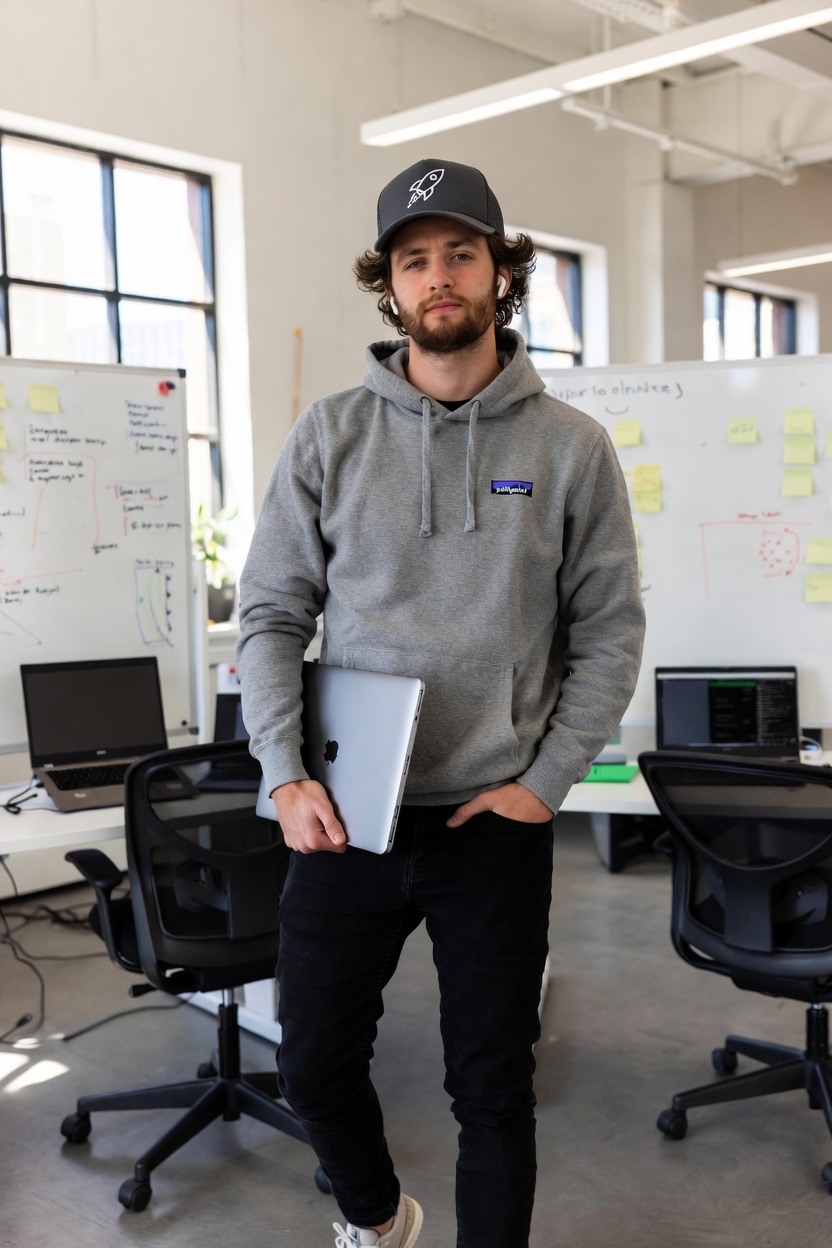
Silicon Valley cosplay has travelled far. In the US, it’s founder uniform. In Europe, it’s giving “just raised a pre-seed and immediately became mysterious”. We have centuries of cultural fashion heritage and somehow landed on… Palo Alto starter pack.
3. Free tote bags with nothing good in them 👜
You went to a “curated” tech event. You got a tote. Inside: a flyer, a pen that doesn’t work, and vibes. No insight, no value, just another bag joining the pile at home. “Securing the bag” but it’s literally just storage for disappointment.
4. Everything-maxxing 📈
Growthmaxxing. Foundermaxxing. Londonmaxxing. At some point the suffix stopped being ironic and just became… exhausting. If everything is being “maxxed”, nothing actually is. We’ve optimised language into meaninglessness.
5. “Let’s definitely connect” energy 🤝
Great conversation. Strong alignment.
“Let’s catch up properly.”
And then… nothing.
No follow-up. No calendar link. Just a LinkedIn connection and occasional liking of each other’s promotions. Networking has quietly become soft theatre. Everyone performing intent, very few executing it.
(Bonus ick because it needed saying) 🎤
The “accidental diversity” panel. Topic: The Future of AI. Line-up: four experts and one Black speaker who somehow becomes the spokesperson for “representation”. Inclusion… but only when it’s convenient.
So what?
Individually, these are harmless. Together, they paint a picture of an ecosystem that’s incredibly good at looking like it’s doing something meaningful. The harder question is whether it actually is. 🧠
|
|
|
|
💀Mythos💀
TL;DR: The people running global finance are worried about an AI model they haven’t seen, don’t fully understand… and are already slightly panicking about. Meanwhile, parts of Big Tech have decided now is the perfect time to drop something that reads like a villain origin story. Cool, cool. 😬
There’s something quite telling about the fact that in a week dominated by war, energy shocks and actual real-world instability… the thing quietly spooking central bankers is an unreleased AI model called Mythos. Not a product launch. Not even a demo. Just… vibes, whispers, and the suggestion it might be able to tear through cybersecurity like it’s a warm croissant 🥐
Christine Lagarde basically summed up the mood with a very calm, very central banker way of saying “this could go terribly wrong”. The concern isn’t just incremental risk. It’s systemic. Think: automated cyber attacks, financial systems wobbling, trust evaporating. Light stuff. And the real issue? No one quite knows how real any of this is yet. Which somehow makes it worse 🤖
Because this is the new AI dynamic. It’s not just what the models can do. It’s what people think they might be able to do. Mythos hasn’t even been released and it’s already managed to create a new category of anxiety: pre-emptive panic. Policymakers trying to regulate something they can’t see, banks trying to defend against threats they can’t model, and everyone quietly hoping someone else has more information than they do. They don’t 🫠
Layer onto that the geopolitics and it gets even messier. If a US company can build something like this, the assumption is others can too. And those others might not send a polite calendar invite to the IMF before deploying it. So suddenly AI risk isn’t just a tech conversation. It’s a national security one. A financial stability one. A “maybe we should’ve moved faster on governance” one. Slightly late for that now 🚨
And then, just to really round out the week, Palantir decided to drop a 22-point “mini-manifesto” that reads less like a product philosophy and more like a trailer for a dystopian series you’re not sure you want to watch. The core message? AI-powered hard power is inevitable, the West needs to wake up, and software is now basically geopolitics. Which… aligns uncomfortably well with the fears floating around about Mythos 👀
It’s a strange moment. On one side, policymakers are scrambling to understand whether AI could quietly break the financial system. On the other, companies are openly saying the future of power will be built on this technology, whether we’re ready or not. The gap between capability, understanding and governance is doing a lot of heavy lifting right now.
So what?
We’ve moved past “AI will change things” into “AI might break things before we figure out how to control it.” And the most uncomfortable part isn’t the tech itself. It’s how little visibility anyone seems to have, right at the moment when the stakes are getting very real. 😬
Read more:
https://www.bloomberg.com/news/articles/2026-04-16/mythos-ai-sparks-fear-and-confusion-among-global-finance-elite
https://www.thenational.scot/news/26035364.palantir-slammed-releasing-evil-22-point-mini-manifesto/
https://www.engadget.com/big-tech/palantir-posted-a-manifesto-that-reads-like-the-ramblings-of-a-comic-book-villain-181947361.html |
|
|
|
|
|
📈 The tools behind the tech📉
📦Product📦
📏Design📏
👩🏿💻Code👩🏿💻
🏢The business behind the tech🏢
|
|
|
|
|
|
🛍️Tech deal of the week🛍️ |
 |
|
|
|
All image credits to Amazon,
Want a BIG screen. Yes this one is over 4ft wide and under £500 quid.
Link here and check out our other deals too
And view our shop with our whole collection here
|
|
|
|
|
|
😅Meme/AI video of the week 😅 (the internet can be savage lol) |
 |
|
|
|
🌐Partner Events & Opportunties 🌐 |
|
Below are the top opportunities we want to highlight to you this week! If you want to see more, then check out our new website where we have a whole page dedicated to events and opportunities from us and our partners:
https://www.colorintech.org/events
|
|
|
|
|
|
🙌🏾The latest from the Colorintech team🙌🏾 |
|
|
|
|
|
|