|
|
 |
|
Hey
So this is our Final edition of the year so our thoughts are with you as you prepare for this tumultuous time without us😅. Don't despair We'll be back with on Jan 7 with
But before you go, we've done our community survey and we are acting immediately on your suggestions, qe'll do a deep dive in Jan but ahead of it, you wanted us to tell you about AI Tool's so scroll down for more.
But if we don't chat again before the new year. Have a good one!🎇
--- |
|
Check out the AI Podcast version of this newsletter or the Video version on our Socials
This newsletter is free, but if you do want to get us a Festive treat as a thank you for 275 + editions grab us one here🎁
Oh and if you missed an edition, you can find it here or this platform, here |
|
|
|
|
|
|
🗞️Diversity and inclusion news🗞️ |
|
|
|
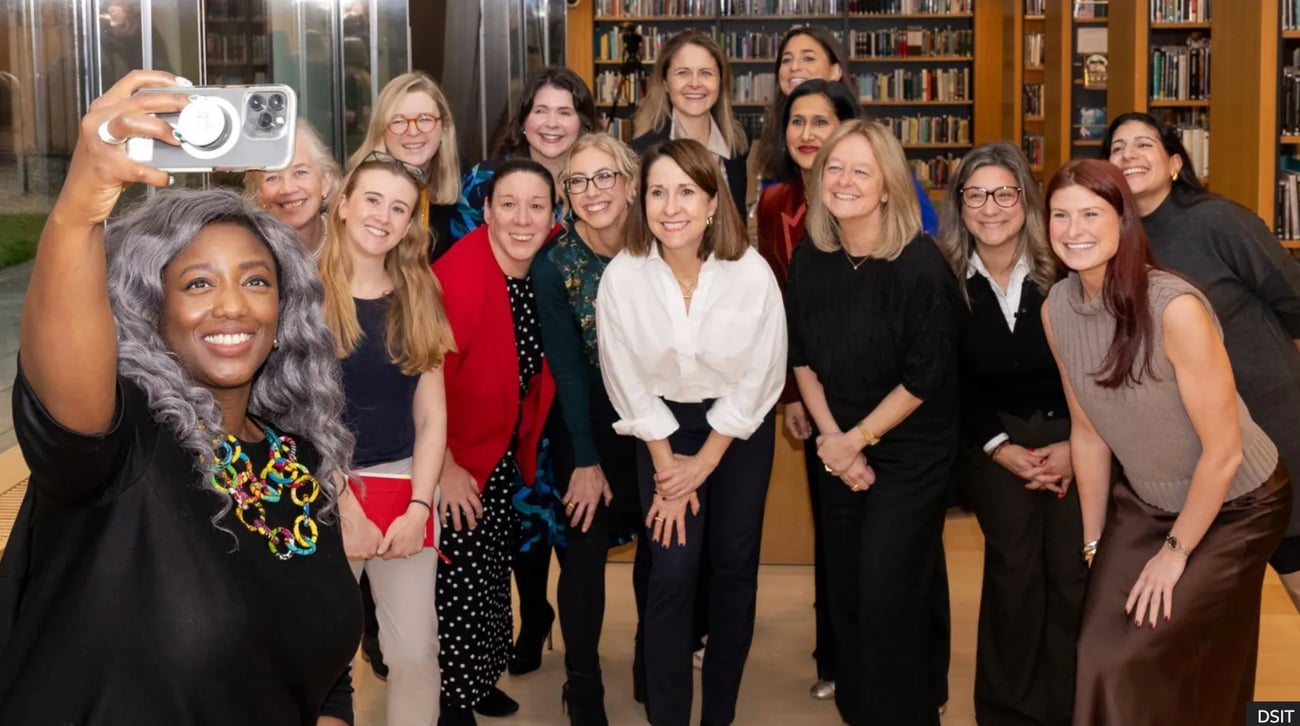
🚨 Women in Tech Taskforce: We’ve Identified the Barriers. For Years.
The government has launched a Women in Tech Taskforce. Again.😒
The language is earnest. The intent sounds like it comes from the right place . But the opening promise is to identify barriers — which raises an obvious question:
Anyone would think the Minister is new in the job🤦🏾😅
Incase anyone is new to this, the UK tech sector has spent literal years identifying these barriers. Through government reviews, industry reports, academic research and lived experience, we already know exactly where and why women are blocked — and who is most affected.
Re-diagnosing a well-documented problem doesn’t signal ambition. It signals delay.Let’s be blunt: the UK does not have an information gap.
We know:
-
where women drop out of tech careers,
-
who doesn’t get promoted,
-
where pay gaps persist,
and which groups — especially women of colour and disabled women — are most excluded. Gender equity is not possible without racial, class and disability inclusion.
So when a new taskforce opens with more exploration, it feels less like urgency and more like buying time.
Frankly the last thing the industry was calling out for was another map of the maze.
A narrow gender focus risks improving outcomes for the most privileged women, while leaving Black women, disabled women, working-class women and migrant women exactly where they are — underpaid, under-promoted, and under-represented.
Then there’s the membership itself. Noticeably absent? The so-called Magnificent Seven, Big Tech employers and Legacy tech firms💸,
Yep, the companies that make up the majority of the value of the tech economy, actually employ — or should employ —thousands of women in tech at scale and are investing billions are no where to be seen. If this taskforce is serious about women in tech, it’s reasonable to ask: Why aren’t the biggest tech employers in the sector at the table? We know they'd be keen👀
These are the organisations that:
-
shape workplace culture,
-
set industry norms,
-
influence pay benchmarks,
-
and determine who gets hired, promoted and retained.
Without them, this risks becoming a conversation about women in tech — not one capable of changing the environments where women actually work.😲
Taskforces are meant to accelerate action. Too often, they slow it down. Unlike the Invest in Women Taskforce — which mobilised ~£635m for women-led businesses — this new taskforce did not come with dedicated budget commitments or enforcement authority.😰
The pattern is familiar: months of consultation, roundtables and insight sessions, followed by a report that politely restates what everyone already knows.
If we’re lucky, in 18 months’ time, we might see a recommitment to things already on the table — like ethnicity pay gap reporting, which would immediately increase transparency for underpaid women in tech.😠
One policy lever. Immediate impact Yet still delayed.
Every year of “further work” has a human cost. it’s paid by:
-
women stuck at mid-career with no progression,
-
women pushed out after maternity or caring responsibilities,
-
women of colour whose pay gaps remain invisible,
-
and women navigating cultures that reward overwork and penalise flexibility.
None of that is solved by another discovery phase.
🧍♂️ And Still: Where Are Men?
Once again, gender inequality is framed as something women need help with — not something largely male leadership needs to fix. Men still dominate:
Yet there’s no clear expectation on them or inclusion in the work. No accountability. Not even further transparency😞
We fear this creates an adversarial dichotomy, women at the expense of men which is hardly going to galvanize men to do anything different. Frankly put, this looks to be a middle class talking shop for women — rather than a reform programme for the system.😐
⚖️ The Bottom Line
This taskforce isn’t wrong; but it probably is pointless.
It is narrow. And it is cautious to the point of inertia. If we were going to devise an initiative to look like we're doing something without actually doing something, this would be it.😤
We don’t need more time identifying barriers we already understand.
We need:
Otherwise, we’ll check back in 18 months for the next report explaining the same problems — while the people most affected continue paying the price.
But we're not just bystanders on this, since the government snubbed us at BTF we've been talking to them and writing to them to try and influence the shape of this work and to offer constructive ways to work with them on this given the size of our community of women in tech. Sadly we have little to show for this effort to date. Anyone would start to question if the actions speak louder than words and take it that this lot are at best indifferent and at worst uncaring about ethnic minorities in tech😐
So we'll give this initiative a C-.
Arguably it could be worse than doing nothing if all it does is give platitudes like conversation and press releases as markers of progress which makes us super skeptical as we've seen the likes of this before.
We know there are some good people on the taskforce so hopefully won't write it off just yet
Read more:
https://www.gov.uk/government/news/launch-of-women-in-tech-taskforce
https://www.bbc.com/news/articles/cg7vez25ly5o |
|
|
|
So when folks say policing is institutionally racist… this is what is meant.
The term comes from decades of evidence, multiple reviews, lived experience, and yes — official reports that policing leaders still seem allergic to fully owning.
And now we’ve got another example to add to the pile.
UK police forces knowingly lobbied to keep using a facial recognition system that they were told was biased against women, young people, and Black and Asian people — because fixing the bias made the tool less useful operationally.
Yes let that land.😮
When the confidence threshold was raised to reduce bias, the number of “investigative leads” dropped from 56% to 14%. By the way leads are not Police forces complained. The decision was reversed. Bias reduced = fewer leads = unacceptable trade-off for some.
The article highlights a study found the system could produce false positives for Black women almost 100 times more frequently than white women at certain settings.😣
So yes, senior officers can say the words “we take bias seriously” all they like. But when push comes to shove, operational convenience beat equality, accuracy, and basic rights.
This is exactly why many peoplr don’t buy the framing that racism in policing is just about “a few bad apples” or individual prejudice. This is structural. It’s embedded in incentives, metrics, procurement decisions, and what institutions define as “effective”.😐
A system that produces more false positives for Black women was still considered preferable — because it produced more output. And that tells you everything about whose risk counts.
When police leaders argue that facial recognition “only works” if you accept demographic bias, they’re not making a technical point. They’re making a political one. And it’s one that sits very uncomfortably alongside ongoing claims that the Met — and policing more broadly — has moved on from institutional racism.😎
So forgive us if we remain sceptical.
Forgive us if, when the same institutions pushing this tech tell us there are “safeguards” and “human oversight”, we ask why those safeguards weren’t enough until journalists exposed the paper trail.
And forgive us if we don’t accept comparisons to DNA matching at face value — when this technology can be almost 100x more likely to misidentify Black women than white women at certain settings.
If the system only works when it disproportionately harms some groups, then the problem isn’t public misunderstanding.
It’s the system.
Read more:
https://www.theguardian.com/technology/2025/dec/10/police-facial-recognition-technology-bias
|
|
|
|
|
|
🧠Things that make you go hmmm🧠 |
|
|
|
💸 Time person of the year💸
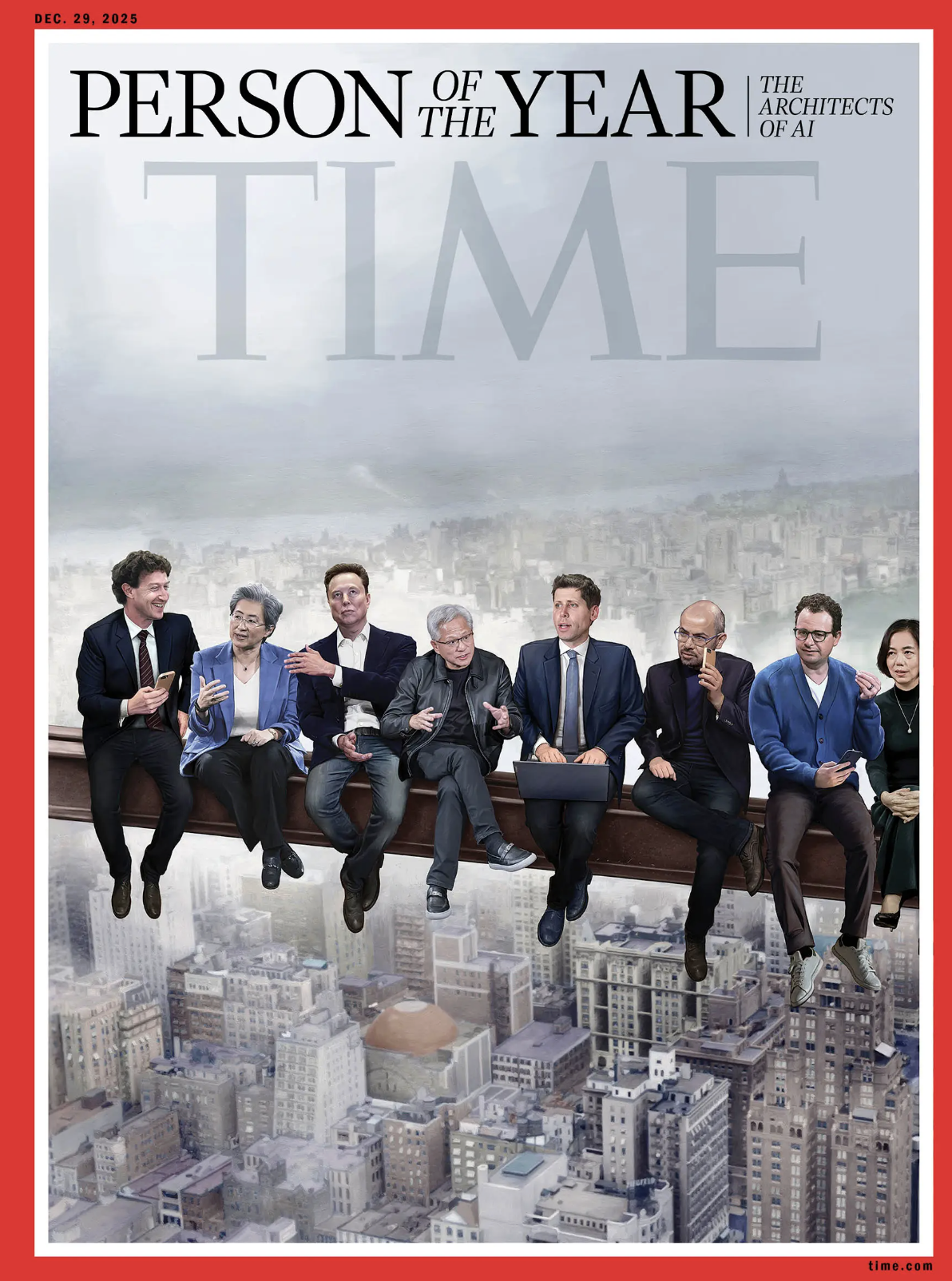
TIME has named the “Architects of AI” its 2025 Person of the Year — and honestly… yep you read that right 🤖👑
The cover lineup is basically the AI power council: Jensen Huang (Nvidia), Sam Altman (OpenAI), Demis Hassabis (DeepMind), Dario Amodei (Anthropic), Fei-Fei Li, Lisa Su (AMD), Mark Zuckerberg (Meta), and Elon Musk (xAI) 🧠💸 And to be fair, you can make a strong case that this crew did reshape the year.
TIME frames 2025 as the moment AI stopped being a “future debate” and became “the operating system” for business, geopolitics, and everyday life 🌍⚡ (with Nvidia’s chips basically becoming the pickaxes in the gold rush).
But here’s the part that should make us squint: crowning the “architects” is also a tidy way to celebrate the winners of the boom while quietly stepping over the costs 🫠🧾 TIME itself notes the trade-offs—misinformation, energy appetite, and power concentrating in a tiny circle of already-wealthy decision-makers. The Washington Post noted in a story that: AI isn’t just “innovation,” it’s a new infrastructure layer being built at speed, largely by private actors, with governments sprinting to keep up (or waving them through). 🏗️🏃♀️💨
Also: calling it “Person of the Year” when it’s essentially a handful of billionaires + a few lab leaders is an interesting and dare we say politically correct choice 😬🧑💻 Because if AI is now “inescapable,” then where’s the recognition for the people being retrained, managed, measured, replaced, nudged, flagged, or flat-out laid off by it? 👀📉 If the year’s defining force is a technology that touches everyone, awarding the architects without equal attention to accountability is like giving trophies to property developers while ignoring building safety. 🏢🔥
So what?
If you’re reading this in the UK, the takeaway isn’t just “wow, cool cover.” It’s: AI power is consolidating fast — and we should be asking who sets the rules, who benefits, who pays (energy, jobs, mental health, truth online), and what public-interest guardrails look like before “move fast and monetize” becomes the permanent constitution 📜🔍
📚 Read more:
https://time.com/7339685/person-of-the-year-2025-ai-architects/
https://www.washingtonpost.com/business/2025/12/11/times-person-year-architects-ai/
https://abcnews.go.com/Technology/wireStory/key-ai-players-cover-times-architects-ai-magazine-128317863
|
|
|
|
🎬 Taking the Mickey 🎬
Disney has quietly crossed a line Hollywood has been nervously pacing for two years: it’s signed a $1bn licensing deal with OpenAI that puts more than 200 Disney characters inside ChatGPT and Sora, letting users generate Disney-branded images and videos from early 2026 🎬🤖. Pixar, Marvel and Star Wars are all in. Mickey is, of course, leading the charge 🐭.
The company is pitching this as “responsible innovation” — no actor likenesses, no voices, strict guardrails — but make no mistake: this is the first major studio saying out loud that AI isn’t just a tool for creators anymore, it’s a distribution layer for IP 🔄. If this works, Disney characters stop being something you watch and start becoming something you prompt.
That’s why the unions are rattled. SAG-AFTRA and Equity aren’t worried about whether Mickey can swear — they’re worried about precedent. Because once studios normalise AI-generated versions of their worlds, the next negotiation isn’t about scripts or animation cycles, it’s about who gets paid when creativity becomes infrastructure 💸🧠.
The timing is doing extra work here too. Disney is reportedly sending cease-and-desist letters to Google over copyright infringement while cutting a cheque to OpenAI. Translation: unlicensed scraping is theft, licensed AI is “collaboration.” This isn’t moral clarity — it’s power picking its preferred partner ⚖️.
📉 So what?
This deal accelerates the shift from AI as a backstage tool to AI as a front-of-house content engine. Studios that don’t move will look slow. Creators who don’t secure protections will look optional. And audiences? They’re about to learn that the future of entertainment isn’t just watching stories — it’s being trained on them, then asked to remix them for free 🎭🌀.
📚 Read more:
https://www.bbc.com/news/articles/c5ydp1gdqwqo
https://www.reuters.com/business/media-telecom/disney-makes-1-billion-investment-openai-brings-characters-sora-2025-12-11/
|
|
|
|
📲Reddit sues Australia📲
This week, the platform filed a lawsuit in Australia’s High Court challenging the country’s under-16 social media ban, arguing the law threatens free political speech and shouldn’t apply to Reddit at all. The claim? That excluding teens from Reddit interferes with democratic participation because today’s 15-year-olds are tomorrow’s voters 🗳️.
It’s a bold argument — and a familiar one. When regulators tighten the screws, tech platforms tend to rediscover their deep, principled love of free expression 🥹. The Australian government is having none of it. Health minister Mark Butler compared the move to Big Tobacco fighting smoking bans, calling it profit protection dressed up as civil liberties 🚬➡️📱.
The context matters. Australia has just become the first country in the world to legally enforce a nationwide social media age minimum. Platforms face fines of up to A$49.5m if they fail to block under-16s, using age inference, selfie checks, and behavioural signals. Reddit says those systems raise privacy risks for everyone — which is not wrong — but it’s also conveniently true only once regulation actually lands 🔍.
The bigger issue isn’t Reddit’s legal theory, it’s what happens next. Reddit is worth around $44bn. If it wins, it opens the door for Meta, TikTok, YouTube and others to challenge the law piece by piece. If it loses, this becomes the global test case that proves governments can draw hard lines around youth safety online 🌍.
🧠 So what?
This isn’t really about teenagers’ access to political debate. It’s about who gets to define the rules of the internet. Australia is betting that imperfect regulation is better than none. Reddit — like many platforms before it — is betting that courts will blink first. Either way, this case will shape how far governments can go when “engagement” and “harm” finally collide in law, not just hearings.
📚 Read more:
Reuters – Reddit files lawsuit against Australia’s social media ban
https://www.reuters.com/legal/litigation/reddit-files-lawsuit-against-australias-social-media-ban-2025-12-11/
BBC – Australia’s social media ban for children leaves big tech scrambling
https://www.bbc.co.uk/news/articles/ce86381p70eo
|
|
|
|
🤖Robin AI’s fall is a reminder that being AI-adjacent is no longer enough ⚖️🤖
So we love Robin AI’s. We supported the team in the early days so it was exciting that just two years ago, Robin AI was being name-checked by then-PM Rishi Sunak as proof that the UK was “revolutionising the legal profession”. This week, the company’s core managed services arm was sold off to rival Scissero in what Sky News describes as a cut-price deal — after failed fundraising and autumn layoffs 🧊.
The headline looks like a simple acqui-hire. The reality is more uncomfortable. Robin AI raised tens of millions from SoftBank, Temasek, PayPal Ventures and others, built an impressive client list (Pfizer, PepsiCo, GE), and sat right at the intersection investors said they loved: AI + professional services. And yet, when capital markets tightened and expectations hardened, that positioning became its weakness.😰
The core problem wasn’t demand — legal teams clearly want AI support. It was the model. Robin AI leaned heavily into “AI-assisted services”: humans in the loop, offshore review teams, managed delivery. That made customers comfortable — but it also meant slower margins, labour-linked scaling, and growth curves that look suspiciously like… a services business 📉. In a market now obsessed with pure-play SaaS, agents, and software that scales without headcount, that’s a hard sell.
🧠 So what?
This isn’t the AI bubble bursting — it’s the sorting. 2025 is proving brutal for companies stuck between software narratives and services economics. Investors don’t want “AI-enabled outsourcing” anymore; they want platforms that compound, automate, and scale exponentially. The irony is that Robin AI may have built something customers trusted — but not something VCs could keep believing in. Expect more “quiet consolidations” like this as the market rewrites what counts as a real AI company.
📚 Read more:
Sky News – Stricken legal start-up Robin AI swooped on by rival
https://news.sky.com/story/stricken-legal-start-up-robin-ai-swooped-on-by-rival-13481339
36Kr – The first batch of AI companies have started to go bankrupt (Robin AI deep dive)
https://eu.36kr.com/en/p/3566918367870082
|
|
|
|
|
|
📈 The tools behind the tech📉
📦Product📦
📏Design📏
📏AI tool of the week📏
-
We'll start with an obvious one but Perplexity is much heralded as the best AI search engine out there. Some of the CIT team use it so we'll launch with this one. A more niche tool is
-
Storytell.ai - Turn your data chaos into meaningful insights
👩🏿💻Code👩🏿💻
🏢The business behind the tech🏢
|
|
|
|
|
|
🛍️Tech deal of the week🛍️ |
 |
|
|
|
All image credits to Amazon,
Ok so this one is a bit old but new but old but new. So google do smart watches and well you probably don't even know what the latest one is, but if you want a very good one that isnt the latest the Pixel 3 is now basically over half price off
Link here and check out our other deals
And view our shop with our whole collection here |
|
|
|
|
|
😅Meme/AI video of the week 😅 (the internet can be savage lol) |
 |
|
|
|
🌐Partner Events & Opportunties 🌐 |
|
Below are the top opportunities we want to highlight to you this week! If you want to see more, then check out our new website where we have a whole page dedicated to events and opportunities from us and our partners:
https://www.colorintech.org/events
|
|
|
|
🙌Resource launch🙌
We are ecstatic to share that our 2025 International Women's Day Resource is now officially published on the Colorintech website. This resource is designed to empower you with practical steps for personal and professional growth , encouraging you to celebrate your wins and embrace the power of your network. Take some time out of your week to check out our IWD resource and start charting your next steps for advancement!
Also, if you missed the IWD Resource Launch webinar or want to re-watch, the full recording of our "Accelerate Action" webinar is now available! You can hear directly from our phenomenal speakers and resource contributors:
-
@MelissaBlokland (Founder at ZERANOVA)
-
@ElisabethEweka (Founder at ENGRL & Principal Digital Consultant at Hoare Lea)
-
@AjoaAkuamoah (Programme Delivery Lead at the Department for Science Innovation and Technology)
-
@MoniqueCampbell (Strategic Account Executive at Salsify)
They discuss the strategies and personal courage required to navigate unique paths to success. Their insights are the perfect complement to the actionable steps and words of wisdom laid out in the IWD Resource.
Click below to access both the Resource and the Webinar Recording:
[ACCESS RESOURCE & WATCH RECORDING]
We’d like to give a huge thank you to our webinar panelists and every individual behind the scenes who poured their expertise and time into making the 2025 International Women's Day Resource and its launch event a massive success.
|
|
|
|
|
|
🙌🏾The latest from the Colorintech team🙌🏾 |
|
|
|
|
|
|