Share

The reaction to tech export controls, Whatsapp usernames and Guess who's got your money read more inside
 β€Œ β€Œ β€Œ β€Œ β€Œ β€Œ β€Œ β€Œ β€Œ β€Œ β€Œ β€Œ β€Œ β€Œ β€Œ β€Œ β€Œ β€Œ β€Œ β€Œ β€Œ β€Œ β€Œ β€Œ β€Œ β€Œ β€Œ β€Œ β€Œ β€Œ β€Œ β€Œ β€Œ β€Œ β€Œ β€Œ β€Œ β€Œ β€Œ β€Œ β€Œ β€Œ β€Œ β€Œ β€Œ β€Œ β€Œ β€Œ β€Œ β€Œ β€Œ β€Œ β€Œ β€Œ β€Œ β€Œ β€Œ β€Œ β€Œ β€Œ β€Œ β€Œ β€Œ β€Œ β€Œ β€Œ β€Œ β€Œ β€Œ β€Œ β€Œ β€Œ β€Œ β€Œ β€Œ β€Œ β€Œ β€Œ β€Œ β€Œ β€Œ β€Œ β€Œ β€Œ β€Œ β€Œ β€Œ β€Œ β€Œ β€Œ β€Œ β€Œ β€Œ β€Œ β€Œ β€Œ β€Œ β€Œ β€Œ β€Œ β€Œ β€Œ β€Œ β€Œ β€Œ β€Œ β€Œ β€Œ β€Œ β€Œ β€Œ β€Œ β€Œ β€Œ β€Œ β€Œ β€Œ β€Œ β€Œ β€Œ β€Œ β€Œ β€Œ β€Œ β€Œ β€Œ

Colorintech Weekly - 303

(View this version on the web)

Hey


It's London Data week next week so check it out


Check out the AI Podcast version of this newsletter or the Video version on our Socials


This newsletter is free, but if you do want to get us a summer ice cream🍦 as a thank you for 300+ editions grab us one here🎁

Oh and if you missed an edition, you can find it here or this platform, here

πŸ—žοΈDiversity and inclusion newsπŸ—žοΈ

πŸ’· The UK Just Put Β£90m Behind A New Generation Of Diverse VCs. That's Bigger Than It Sounds.


TL;DR. The British Business Bank has committed up to Β£90m to 10 first-time venture capital funds led by a diverse group of emerging investors. It won't solve venture capital's diversity problem overnight, but it tackles one of the industry's biggest bottlenecks: who gets to write the first cheque. πŸš€


Yep, The British Business Bank (the one your taxes go to to fund things) has announced the first investments from its Investor Pathways Capital programme, committing up to Β£90m across 10 first-time UK venture funds. The funds will invest at pre-seed and seed stage across AI, deeptech, climate, defence and consumer technology.

What's notable isn't just the money.

It's who's receiving it.

πŸ‘© 57% of General Partners are women.

🌍 43% come from ethnic minority backgrounds.

πŸ’Ό Every fund is a first-time institutional manager.

The British Business Bank is acting as a cornerstone investor, backing managers who have historically struggled to raise institutional capital despite strong track records and deep community networks.


We spend a lot of time talking about the diversity of founders.

Less often do we talk about the diversity of investors.

But who gets funded is largely determined by who gets to make investment decisions.

For decades, venture capital has operated through networks, pattern matching and warm introductions. The result? Investors tend to back people who look like founders they've backed before.

Changing that means changing who sits on the other side of the table.

Backing first-time fund managers isn't charity.

It's infrastructure.


The Β£90m itself is meaningful.

The long-term impact could be much bigger.

Every successful emerging fund creates:

πŸ’° More capital for overlooked founders

🀝 New investor networks

πŸ“ˆ Institutional track records

πŸ”„ Future angel investors and fund managers

One investment committee can shape hundreds of startup decisions over the next decade.

That's why this announcement matters far beyond the initial cheque.


πŸ‡¬πŸ‡§ So What?

The UK often talks about becoming the world's best place to start and scale a technology company.

That ambition depends on more than founders.

It depends on who controls access to capital.

The British Business Bank won't fix venture capital on its own.

But by backing a new generation of fund managers rather than simply writing bigger cheques to the same firms, it's attempting something more structural.

Because if we want different founders to build the future, we also need different investors deciding who's worth betting on. 🎯


πŸ“š Read More
 British Business Bank: British Business Bank backs new generation of UK venture capital investors with first Investor Pathways Capital commitment of up to Β£90m

https://www.british-business-bank.co.uk/news-and-events/news/british-business-bank-backs-new-generation-uk-venture-capital-investors-first-investor-pathways

πŸ’Ό Sifted: Exclusive: British Business Bank backs 10 VC funds with Β£90m pot

https://sifted.eu/articles/exclusive-bbb-10-vc-funds-90m


🧠Things that make you go hmmm🧠

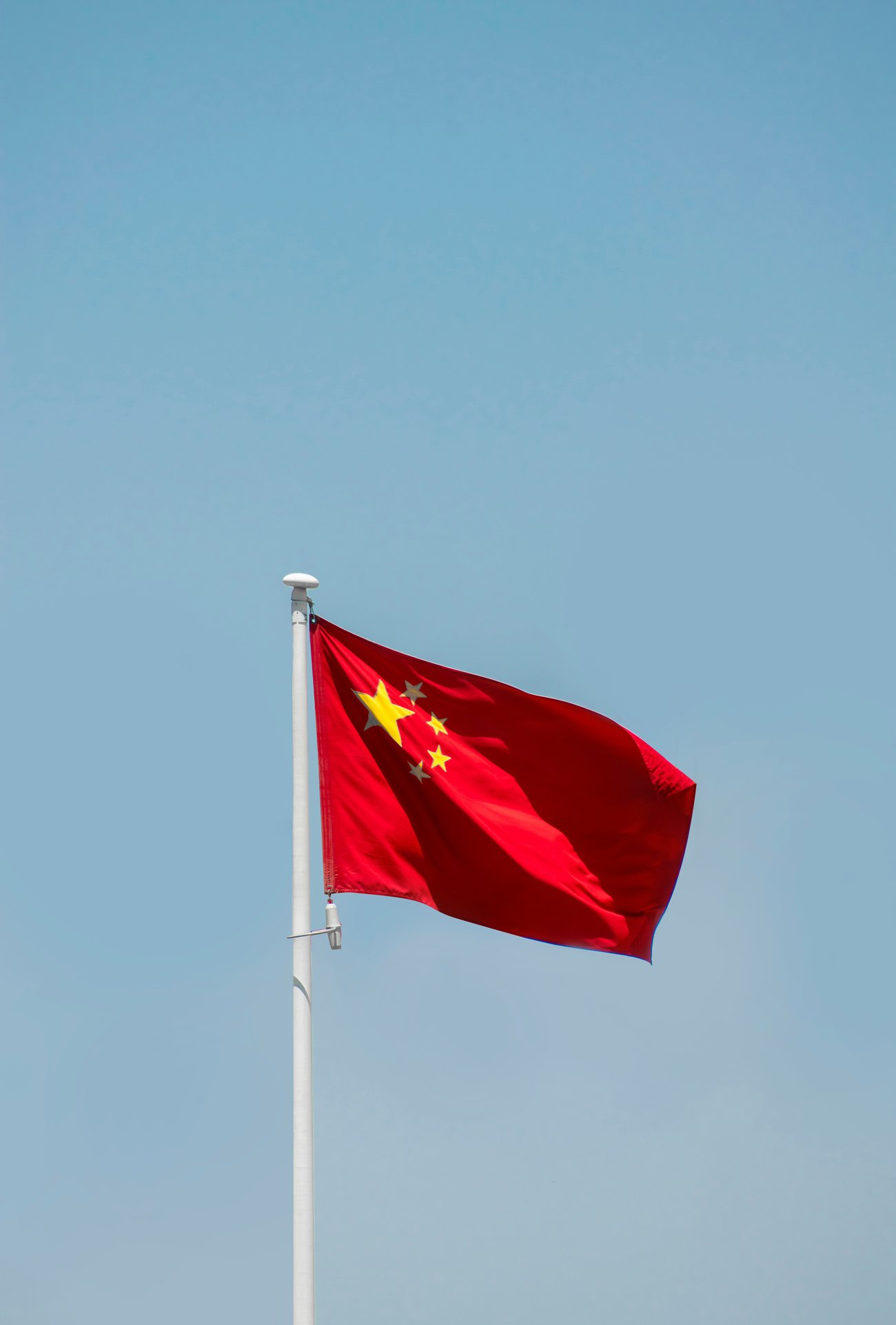
πŸŒπŸ€– The AI Cold War Just Went Global


TL;DR The US is restricting access to its most powerful AI models in the name of national security. China has responded by releasing cheaper, open models that are rapidly closing the gap. The race is no longer just about building the best AI. It's about deciding who gets access to it. 🌎


What Happened? Over the past two weeks, the AI landscape has shifted dramatically.

The US government forced Anthropic to suspend access to its most advanced models, Fable 5 and Mythos 5, before partially restoring access to trusted US organisations. OpenAI has reportedly also been asked to launch its next frontier model, GPT-5.6, in a controlled rollout with government oversight rather than a public release.

Meanwhile, Chinese AI companies didn't wait.

Z.ai launched GLM-5.2, an open-weight model that's approaching the performance of America's best systems in coding and cybersecurity while costing a fraction of the price. Other Chinese firms, including 360 Security, have launched competing security-focused models too.
The result?

The AI race has gone from building bigger models to controlling who can use them.

πŸ‡ΊπŸ‡ΈπŸ‡¨πŸ‡³ 

The logic behind US restrictions is understandable.

If frontier AI could reshape cyber warfare, defence and national security, governments don't want their most powerful systems ending up in the wrong hands.

But software doesn't behave like missiles.

When you restrict access to a popular product, people don't simply stop using it.

They look for alternatives.

And increasingly, those alternatives are Chinese.

As one researcher put it: "Right now there are more restrictions on Anthropic than there are on Z.ai."

That's a remarkable place to find ourselves.


There's another twist.

Many of China's strongest models are open-weight, meaning organisations can download, modify and run them on their own infrastructure.

That makes them:

πŸ’Έ Cheaper

⚑ More flexible

πŸ”“ Less vulnerable to geopolitical restrictions

If American companies become harder to access because of export controls while Chinese models remain widely available, businesses may simply optimise for cost and certainty rather than nationality.

Ironically, attempts to preserve America's AI lead could accelerate adoption of Chinese alternatives.


πŸ‡¬πŸ‡§ Why Europe Should Care
Europe β€” including the UK β€” is largely watching this unfold from the sidelines.

We don't own the frontier models. We don't manufacture the frontier chips. And increasingly, we may not control access to either.

For governments and businesses building on foundation models, this raises a fundamental question:

What happens if the AI your company depends on becomes unavailable because of another country's foreign policy?

That's no longer hypothetical. It's already happened.


🍿 So What?
For years, people compared AI to electricity.

That analogy no longer works.

A better comparison might be semiconductors.

  1. Strategic.

  2. Restricted.

  3. Geopolitical.

The companies building frontier AI are increasingly behaving less like software firms and more like defence contractors.

The biggest risk isn't that America loses the AI race.

It's that, by limiting access to its own technology while China rapidly closes the capability gap, it accidentally encourages the rest of the world to build on someone else's.

Because in technology, the platform that wins isn't always the most powerful.

It's often the one that's simply available. πŸ€”


πŸ“š Read MoreπŸ€– Mashable: White House wants OpenAI to limit the launch of its next model

https://mashable.com/tech/white-house-openai-slow-down

πŸ“° The New York Times: Chinese AI models close the gap with Anthropic and OpenAI

https://www.nytimes.com/2026/06/25/technology/zai-china-artificial-intelligence-models.html

πŸ” The Wall Street Journal: China has matched Anthropic in cybersecurity, resetting the AI race

https://www.wsj.com/tech/ai/chinese-ai-anthropic-mythos-cybersecurity-574b02c2

🌏 TechCrunch: Asian AI startups launch Mythos-like models as Anthropic's export ban drags on

https://techcrunch.com/2026/06/27/asian-ai-startups-launch-mythos-like-models-as-anthropics-export-ban-drags-on/

πŸ“© Enjoying the newsletter? Subscribe for weekly insights on AI, geopolitics, startups and the future of technology:

https://colorintech.org/newsletter


πŸš– Who Needs A Brake Pedal Anyway?


TL;DR The Us government administration wants to remove the requirement for autonomous vehicles to have brake pedals or steering wheels. It's a win for Tesla's long-awaited Cybercab, but it also marks a bigger shift: regulators are no longer asking "Can humans take over?" They're asking "Do humans need controls at all?" πŸ‘€


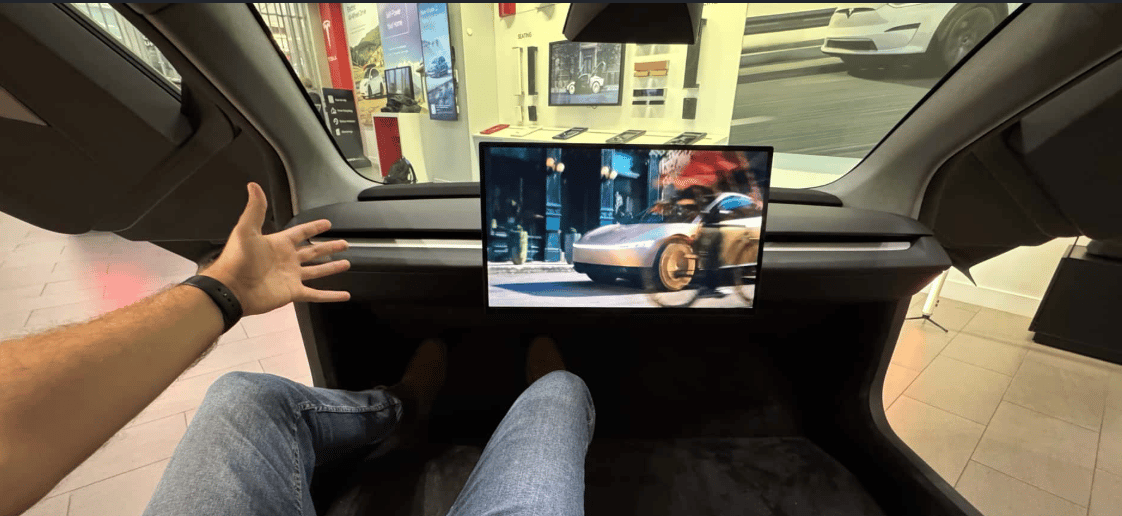
So The US Department of Transportation has proposed scrapping federal rules requiring brake pedals in vehicles designed to be driven entirely by AI.

If approved, companies like Tesla and Zoox could finally put purpose-built robotaxis on public roads without applying for exemptions every time. πŸš—

Tesla has been waiting for exactly this moment. Elon Musk has repeatedly said the Cybercab β€” a vehicle with no steering wheel and no pedals β€” would only launch once regulations caught up.

Looks like they're catching up.


The proposal isn't saying autonomous vehicles should be less safe. It's saying safety should be measured by outcomes, not whether a human has something to grab when things go wrong.That's a huge philosophical shift.

For more than a century, the brake pedal has been the ultimate fallback. The assumption was simple:

If the technology fails, the human takes over.

Now regulators are starting to ask whether the human should exist in the loop at all and its understandable, if you're in the passenger seat, and an urgent emergency occurs, how often would you be able to use this "break pedal"


This isn't really about brake pedals. It's about trust.

Every major autonomous vehicle company ultimately wants the same thing:

πŸš• No steering wheel.

πŸš• No pedals.

πŸš• No human driver.

Because, well all those things require extra engineering and cost.

The irony?

For years regulators slowed autonomous vehicles because humans needed to stay in control.

Now they're preparing regulations based on the opposite assumption: humans may actually be the weakest link.


🧠So What? Whether you're excited or terrified probably depends on whether you've ever shouted at another driver.

The reality is that autonomous vehicles will only become commercially viable once regulators stop treating them like modified cars and start treating them like entirely new machines.

Removing the brake pedal requirement is symbolic as much as pragmatic.

It says governments are becoming comfortable regulating AI performance rather than human control.

That's a much bigger shift than removing one piece of hardware.

Because once we accept that an AI doesn't need a brake pedal...

...it's not a huge leap to ask what other human controls become optional next. πŸ€–


πŸ“š Read More TechCrunch: Trump administration proposes axing brake-pedal requirement for AVs in a boost for Tesla

https://techcrunch.com/2026/06/25/trump-admin-proposes-axing-brake-pedal-requirement-for-avs-in-a-boost-for-tesla/

πŸ“±πŸ‘‹ Your Phone Number Is going


TL:DR WhatsApp is finally introducing usernames, meaning you'll soon be able to message people without handing over your phone number. It's one of the biggest privacy upgrades in the app's historyβ€”and another sign that the humble phone number is slowly becoming a relic of the internet's past. πŸ”’


After years of rumours, WhatsApp is finally rolling out usernames.

Instead of swapping phone numbers with someone you've just met, you'll be able to connect using a unique usernameβ€”much like Instagram, Signal or Telegram. Reservations open this week, with the feature rolling out globally over the coming months. πŸ“²

Your phone number will still power your account behind the scenes, but strangers, marketplace buyers, community members and new contacts won't automatically see it anymore.

Meta is even reserving usernames for celebrities, politicians and major organisations to stop impersonation before the rollout begins.😦


Why It Matters; Let's be honest sharing your phone number has always felt slightly... weird.πŸ˜“

You meet someone at a conference.

Sell something on Marketplace.

Join a running club.

Suddenly they've got one of the most permanent pieces of personal information you own.

Unlike an email address, changing your phone number is a pain. Unlike a username, you can't simply pick a new one if it ends up on a spam list.

WhatsApp is finally catching up to something competitors like Signal and Telegram figured out years ago: your phone number shouldn't have to be your public identity.πŸ“±


 This isn't just about privacy.

It's about how we identify ourselves online.

For decades, your mobile number has quietly become the internet's passport.

  • It's how you log into banks.

  • Verify accounts.

  • Recover passwords.

  • Receive one-time codes.

But increasingly, companies are trying to separate identity from authentication.

You might still use your phone number to prove who you areβ€”but that doesn't mean everyone else needs to know it.

That's a subtle but important distinction.


πŸ’Ό Good News for Businesses Too There's another winner here.

Businesses, creators and communities will be able to use memorable usernames instead of asking customers to save yet another phone number they'll never remember.

Think:

πŸ‘‰ @colorintech

πŸ‘‰ @joinbtf

πŸ‘‰ @yourfavouritecoffee

Much easier than "Hi, can you save this +44 number first..." β˜•


🍿 So What? It's funny how long this took.

Telegram launched usernames back in 2013. Signal added them in 2024.

WhatsAppβ€”despite having more than 3 billion usersβ€”is only getting around to it now.

Still, better late than never.

Sometimes the biggest tech upgrades aren't flashy AI models or futuristic gadgets.

Sometimes it's simply making sure you no longer have to give a stranger your phone number just to say hello. πŸ‘‹

πŸ“š Read MoreπŸ“± BBC News: WhatsApp introduces usernames to improve privacy

https://www.bbc.co.uk/news/articles/c1dykk3135xo

πŸ’¬ The Verge: WhatsApp is launching usernames β€” here's how to reserve yours

https://www.theverge.com/tech/958832/whatsapp-usernames-rollout-reservation-availability

πŸ‘©πŸΏβ€πŸ’»For the creatorsπŸ‘©πŸΏβ€πŸ’»

πŸ“ˆ The tools behind the techπŸ“‰

πŸ“¦ProductπŸ“¦

πŸ“DesignπŸ“ 

πŸ‘©πŸΏβ€πŸ’»CodeπŸ‘©πŸΏβ€πŸ’»

🏒The business behind the tech🏒

πŸ›οΈTech deal of the weekπŸ›οΈ

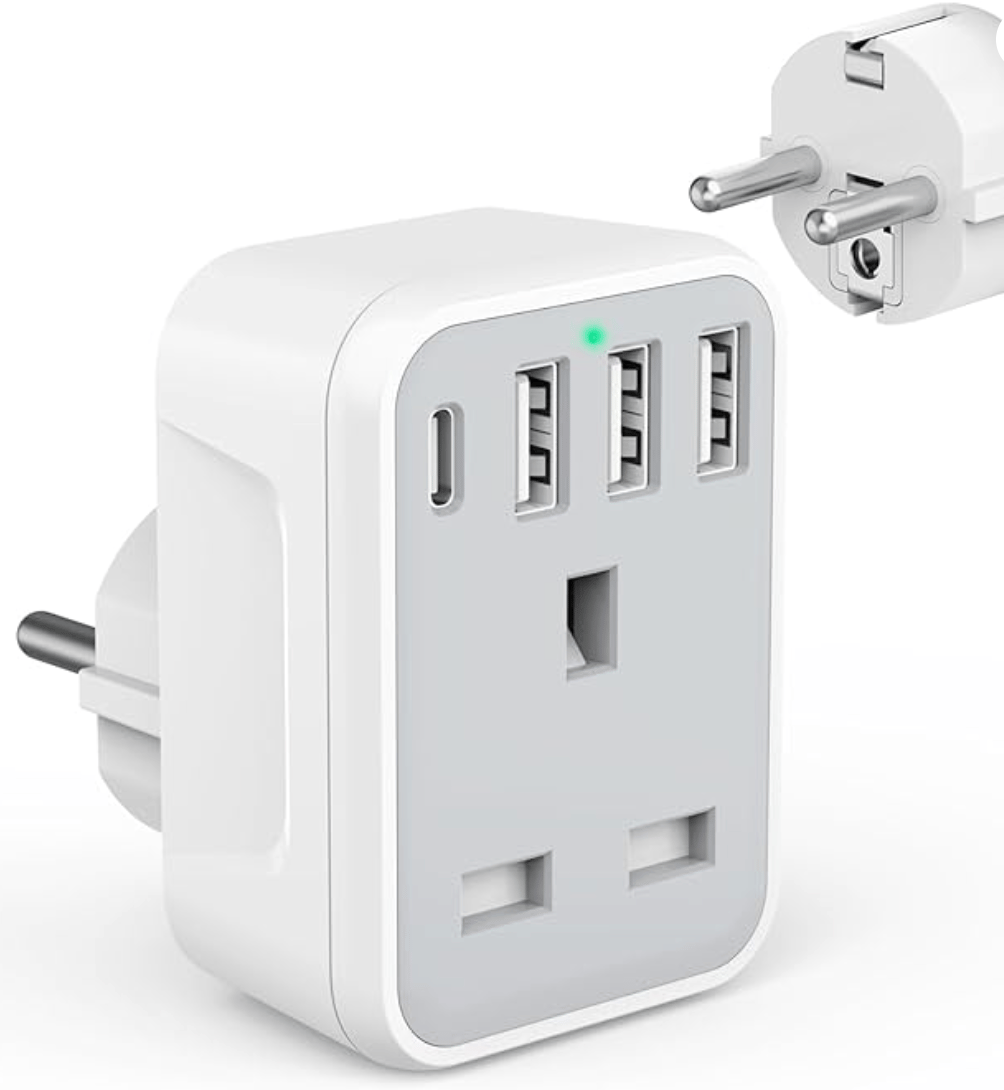
Holiday season is coming so if you need a compact adaptor, coming in at less than Β£10 quid it's out pick this week


Link here and check out our other deals too


And view our shop with our whole collection here


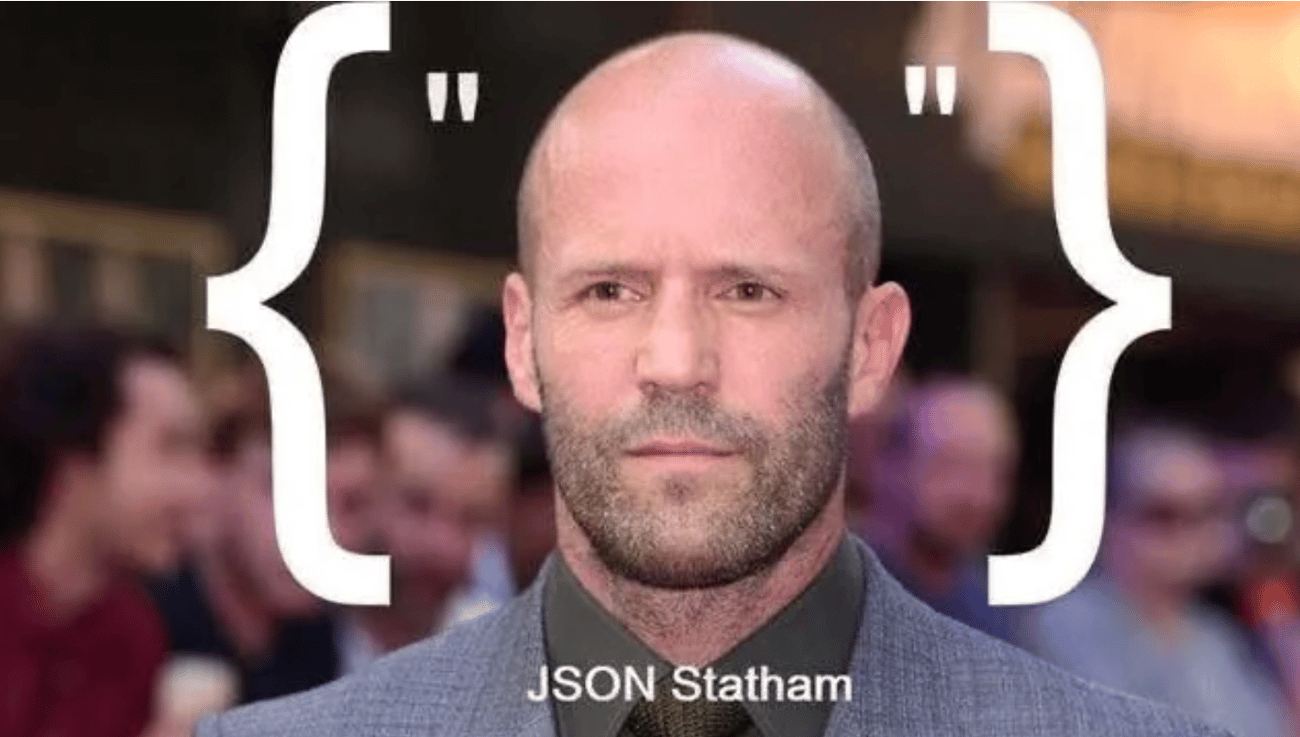
πŸ˜…Meme/AI video of the week πŸ˜… (the internet can be savage lol)

🌐Partner Events & Opportunties 🌐

Below are the top opportunities we want to highlight to you this week! If you want to see more, then check out our new website where we have a whole page dedicated to events and opportunities from us and our partners:


https://www.colorintech.org/events

πŸ˜ƒLondon Data weekπŸ˜ƒ


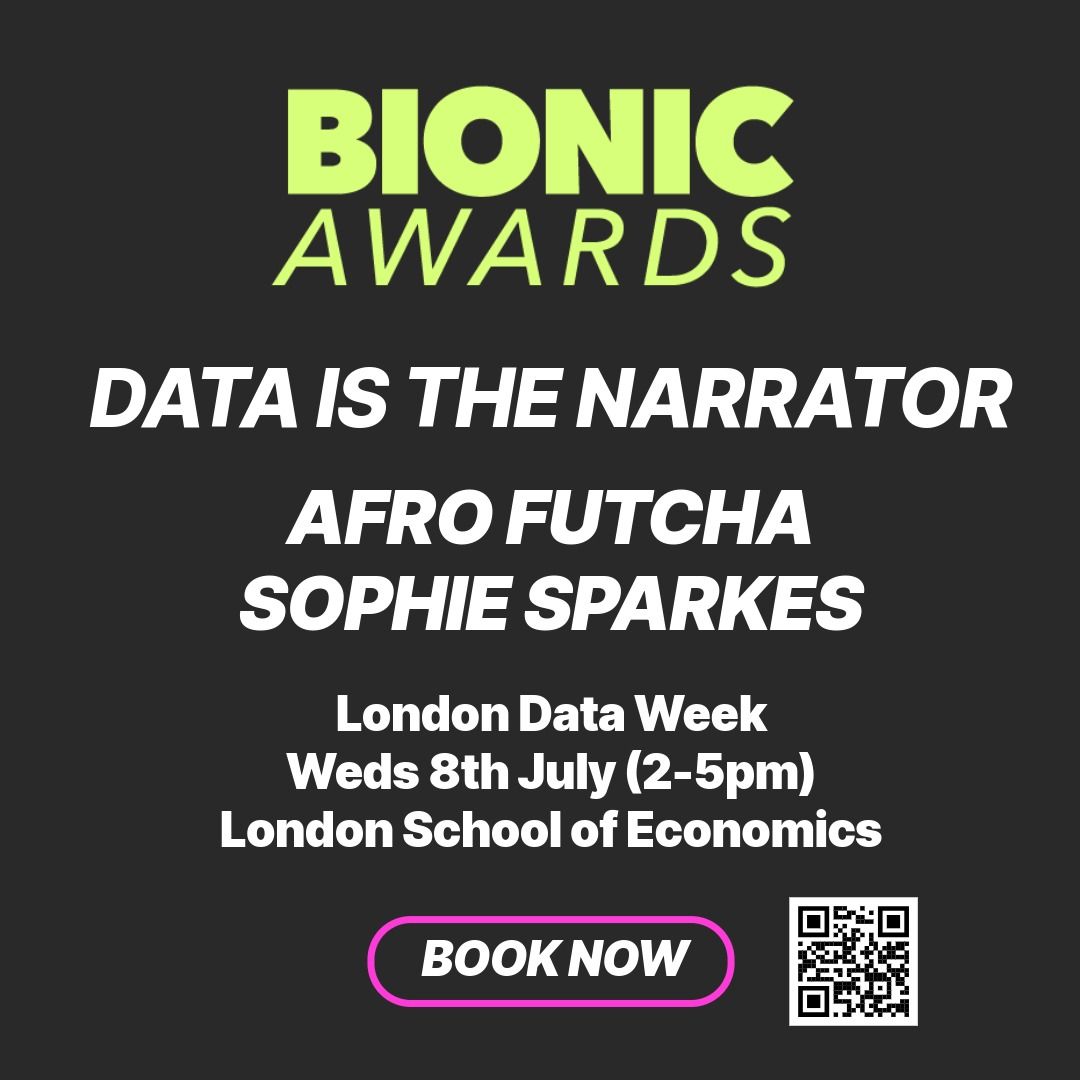
🎨 Data, Film & AI: Join the London Data Week Workshop!

Want to learn how to take a single dataset, uncover a compelling story, and turn it into a cinematic videoβ€”all in one afternoon?

As part of London Data Week, Bionic Awards is hosting a public workshop that brings together three cutting-edge disciplines: data analysis, illustration, and AI filmmaking.

Colorintech is proud to partner with Bionic on this initiative to ensure a more inclusive, diverse space for innovation. Whether you are a creator, tech enthusiast, or simply curious about the intersection of data and AI, this workshop is designed to help you transform data into visual stories that deliver real emotional impact.

  • πŸ“… Date: Wednesday, July 8th

  • πŸ•’ Time: 2:00 PM – 5:00 PM BST

  • πŸ“ Location: London School of Economics (LSE)

  • 🎟️ Cost: Free (Places are strictly limited!)

  • πŸ’» Experience: None needed! This is open to all skill levels.

Who you’ll learn from: The workshop will be co-led by expert data storyteller Sophie Sparkes alongside Afro Futcha (Diane Laidlaw), an award-winning AI filmmaker and Bionic Awards judge.

This event is kindly hosted by The London School of Economics and Political Science (LSE) and the King’s Institute for Artificial Intelligence at King's College London, and is part of a wider AI film hackathon collaboration between EAST2046 and the Bionic Awards.

Don’t miss out on this chance to experiment with new creative AI tools and connect with the community.

πŸ‘‰ Register and secure your free ticket here

(Interested in exploring a creative skills workshop like this specifically for your company or team? Reach out directly to hello@bionictribes.com!)


πŸ™ŒπŸΎThe latest from the Colorintech teamπŸ™ŒπŸΎ

πŸ˜ƒWhat we are consumingπŸ˜ƒ


🏒Revolut wants Junior staff in the office

πŸ’ΉThe State of the AI economy

πŸ“ˆHacker news trends

πŸ’€AI Is Making Silicon Valley Productive, Anxious and Afraid to Log Off 

πŸ’°Open Ai's IPO

πŸ‘©πŸΏβ€πŸ¦±Halobraid Rasies $7m

πŸͺ™Google caps Meta’s Gemini use as AI demand strains capacity

πŸŒ‹Earthquake alerts


Email Marketing by ActiveCampaign