|
|
 |
|
Hey
Fancy a FREE PHD? No it really is as good as it sounds (you still have to do the work after all), but check it our below
|
|
Check out the AI Podcast version of this newsletter or the Video version on our Socials
This newsletter is free, but if you do want to get us a New year's treat as a thank you for 275 + editions grab us one here🎁
Oh and if you missed an edition, you can find it here or this platform, here |
|
|
|
|
|
|
🗞️Diversity and inclusion news🗞️ |
|
|
|
🤖 Women in tech & finance face higher AI job risk — and it’s not because of skills
In news that will surprise absolutely no one who’s been paying attention, a new report says women working in tech and financial services are more exposed to AI-driven job losses than men — and are also being quietly locked out of new digital roles at the same time and guess who makes most of those decisions - Men
According to research from the City of London Corporation, it’s not just automation doing the damage. It’s how companies hire.
The report highlights a double bind facing women — particularly mid-career women with 5+ years’ experience:
-
🤖 Automation risk: Around 119,000 clerical roles in tech, finance and professional services are expected to be displaced over the next decade. These roles are predominantly held by women.
-
📄 Rigid CV screening: Automated and inflexible hiring processes are filtering out women whose CVs don’t look “perfect” — especially those with career breaks linked to caring responsibilities.
-
🚪 Talent waste: While women are being overlooked, over 12,000 digital roles went unfilled in 2024 due to so-called “skills shortages”.
In other words: companies say they can’t find talent, while actively filtering it out.
The report isn’t just a moral argument — it’s a financial one:
-
Reskilling women at risk of displacement could save employers up to £757m in redundancy costs
-
Failure to close the digital talent gap could cost the UK £10bn+ in lost economic growth
-
The skills shortage is forecast to last until at least 2035 — meaning this problem isn’t going away on its own
Higher wages alone won’t fix it. The issue isn’t supply — it’s how demand is defined.
This isn’t an AI problem. It’s a systems problem.
AI is accelerating change, but:
-
hiring filters are still built around linear, uninterrupted careers
-
“potential” is still code for “looks like us already”
-
and reskilling is treated as a nice-to-have instead of core infrastructure
If companies don’t redesign hiring and progression alongside automation, AI won’t just reshape work — it will entrench inequality at speed.
Read more
Women in tech and finance at higher risk from AI job losses — The Guardian
https://www.theguardian.com/business/2026/feb/04/women-tech-finance-higher-risk-ai-job-losses-report |
|
|
|
🥜 “Peanut butter raises” are back — and no, this isn’t a compliment
In case you were wondering why your pay rise feels… underwhelming, there’s now a name for it. Employers are increasingly handing out “peanut butter raises” — small, evenly spread increases given to everyone, regardless of performance. Same slice, same spread, no questions asked. 🥪
📊 The trend, in numbers
A new report from Payscale says over 40% of organisations are already using — or actively considering — across-the-board pay rises in 2026. That jumps to 56% among “top-performing” companies, which is… ironic. 📈
Most of these raises sit around 3.5%, roughly matching inflation. So technically, you’re not going backwards — but you’re not exactly moving forward either. 🧮
🤷 Why companies are doing it
The honest answer? It’s easier.
Peanut butter raises avoid awkward conversations, messy performance reviews, and the time it takes to actually manage people. Instead of asking who’s growing, who’s coasting, and who needs support, everyone gets the same polite nod and we move on. 😌
Which would be fine — if performance management actually worked. Spoiler: it doesn’t.
This is the quiet part out loud: most workplaces are terrible at feedback.
-
A majority of employees say reviews feel irrelevant or unfair
-
Fewer than 1 in 3 workers trust their performance ratings
-
Managers don’t like the process either — they see it as box-ticking
So rather than fix the system, many employers are opting out altogether. Equal raises become a shortcut for avoiding accountability. 📄
Millennials and Gen Z expect regular feedback, transparency, and progression — not a once-a-year mystery score followed by a modest raise. When everyone gets the same increase, it:
For workers already under-recognised — women, people of colour, career switchers — this is how pay gaps quietly persist. 🔍
💸 Raises are feedback, whether employers admit it or not
Pay isn’t just compensation — it’s a signal.
When high performers get the same raise as everyone else, the message is: extra effort doesn’t really matter here. And when low performance is never addressed, it sticks around longer than it should. 🪙
As harsh as it sounds, money is one of the clearest forms of workplace communication.
Across-the-board raises feel kind, but they’re often a symptom of lazy people management. And in a labour market already shaped by AI, automation, and inequality, that laziness costs trust, motivation, and talent over time. 🧠
Workers don’t just want more money. They want to know where they stand — and whether effort actually leads somewhere.
🔗 Read more
Employers are spreading raises like peanut butter – and workers are paying the price
https://www.theguardian.com/business/2026/feb/01/peanut-butter-raises-lazy-practice |
|
|
|
|
|
🧠Things that make you go hmmm🧠 |
|
|
|
📉 Corporate DEI
In news that will surprise absolutely no one who’s been paying attention, corporate enthusiasm for publicly measurable DEI has collapsed.
According to new data from the Human Rights Campaign, participation by Fortune 500 companies in its Corporate Equality Index dropped 65% year-on-year.
In 2025, 377 Fortune 500 firms took part.
In 2026? Just 131.
Same index. Same scoring system. Very different appetite for disclosure.
You tell us what you make of it, Read more here
https://www.cnbc.com/2026/02/04/corporate-dei-index-hrc.html
|
|
|
|
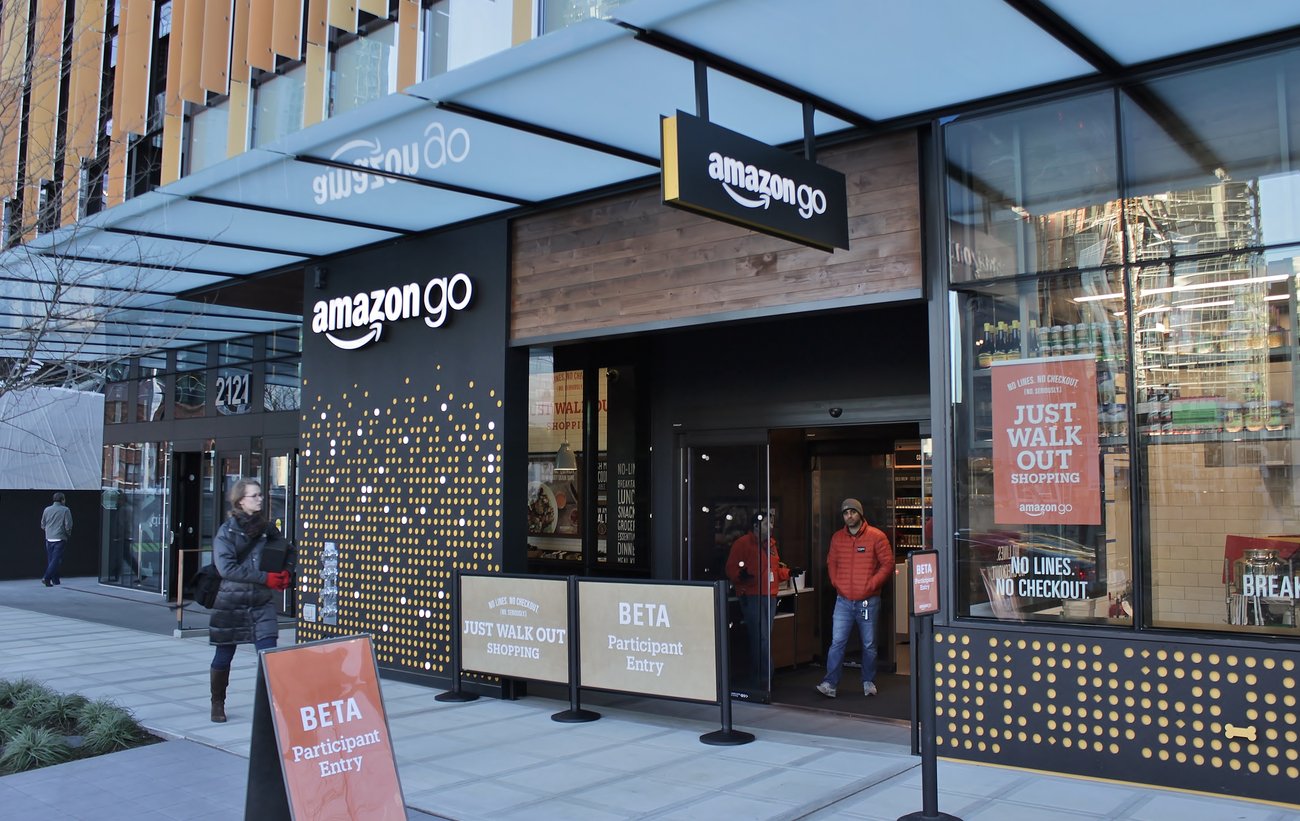
💰 Amazon just dropped $200bn on AI —
In news that makes “going all in” look timid, Amazon has announced plans to spend $200bn on AI and infrastructure. That’s nearly double what it spent last year — and enough to make even hardened investors flinch.
They did. Amazon’s share price slid almost 9% after the announcement. 📉
🧮 This isn’t just Amazon — it’s Big Tech collectively emptying the vault, Over the past week, the AI arms race went from intense to outright absurd:
That’s $650bn in AI spend this year alone. For context: that’s more than the GDP of some countries. 🫠
🧠 “Every customer experience will be reinvented by AI”
Amazon CEO Andy Jassy was clear (borderline evangelical) on the earnings call:
“Every customer experience we have today will be reinvented by AI.”
The money is going into AI models, chips, robotics, data centres, and low-Earth orbit satellites. Yes, satellites. Because why not? 🛰️
From Amazon’s perspective, this is a once-in-a-generation platform shift. Miss it, and you’re Nokia. Hit it, and you own the rails.
😬 So why are investors nervous? Because history exists.
Several heavyweight voices are now openly asking whether this looks… familiar:
-
The Bank of England has warned Big Tech valuations are starting to resemble pre-dotcom bubble levels
-
Jamie Dimon says a chunk of AI investment will “probably be lost”
-
Cisco’s CEO says AI will be “bigger than the internet” — but with “carnage along the way”
Translation: everyone agrees AI is massive. No one agrees who survives the bill. 💸
Here’s the part that’s not accidental.
As Amazon ramps up AI investment, it’s also:
Meta has said similar things. So has Google. AI isn’t just a growth story — it’s a workforce reshaping story.
So what
This isn’t about whether AI “works”. It does.
This is about who can afford to wait for returns.
Big Tech is betting that:
-
short-term market pain is survivable
-
long-term AI dominance is existential
-
and everyone else — startups, workers, governments — will have to adapt around their infrastructure choices
Some of this money will be wasted. Some of it will build the next internet. Both can be true.
When four companies decide the future of compute, data, labour and productivity — at this scale — the question isn’t is there a bubble?
It’s who gets crushed if it pops.
🔗 Read more
BBC News – Amazon to spend $200bn on AI as investors grow jittery
https://www.bbc.co.uk/news/articles/c150e144we3o |
|
|
📵 The EU just told TikTok: it’s not the content — it’s the design
In news that will surprise absolutely no one who’s ever said “one more video” and then lost 45 minutes, the EU has told TikTok it must change its addictive design — or face fines running into the billions.
This follows a long-running investigation by the European Commission, which concluded that TikTok failed to properly assess or mitigate the risks of features like autoplay, infinite scroll, and algorithmic feeds — particularly for children.
TikTok, unsurprisingly, says the findings are “categorically false” and plans to fight them. ⚖️
🧠 What’s different this time?
This isn’t another “please moderate your content better” telling-off.
Under the Digital Services Act, the EU is making a much sharper argument:
The design itself may be causing harm.
That’s a big shift.
EU tech chief Henna Virkkunen put it bluntly: if TikTok wants to avoid fines of up to 6% of global annual turnover, it needs to redesign the product in Europe.
🔄 What might TikTok be forced to change?
The Commission didn’t just wag a finger — it got specific. Suggestions included:
-
⏰ Screen-time breaks, especially late at night
-
🧮 Changes to recommendation algorithms
-
📜 Disabling or limiting infinite scroll
-
⚠️ Stronger safeguards for children and teens
In other words: fewer dopamine slot machines, more friction.
🧪 “Toxic design”, not just toxic content
This is where things get interesting.
Social media analyst Matt Navarra described the move as seismic, because regulators are no longer just policing what appears on platforms — they’re interrogating how platforms are engineered to keep us hooked.
Professor Sonia Livingstone summed up the mood well: young people want these changes, but platforms have historically prioritised engagement over wellbeing.
For the first time, a major regulator is saying:
👉 maximising engagement might itself be the problem.
TikTok isn’t alone.
The EU has:
-
investigated election interference on TikTok
-
fined X over misleading blue ticks
-
opened probes into AI tools like Grok
As analyst Paolo Pescatore put it:
“The market is shifting from ‘maximise engagement’ to ‘engineer responsibility’ — and regulators now have the tools to enforce it.”
That’s the real headline.
So What
For years, social platforms argued:
The EU is now saying:
If your product is designed to be compulsive, you’re responsible for the consequences.
That’s a profound change — for tech policy, platform design, and anyone building consumer-facing AI or social products.
🔗 Read more
BBC News – EU tells TikTok to change ‘addictive design’ or face fines
https://www.bbc.com/news/articles/cr7j7n315lmo |
|
|
|
🧠 From AI slop to industrial-scale fraud:
There was a time when spotting fake content online required a bit of scepticism and maybe a reverse image search. That era is over.
This week’s reporting from the BBC and The Guardian shows how generative AI has pushed us into a new phase of the internet — one where volume, speed and plausibility matter more than truth, and where the consequences are no longer just “annoying content”, but real financial and societal harm.
Let’s break down what’s actually happening.
🗑️ What people mean by “AI slop”
“AI slop” is the catch-all term for low-effort, mass-produced AI content: uncanny images, bizarre videos, fake heart-warming stories, shock clips, and algorithm-bait designed purely to farm engagement.
Think:
-
poor children doing impossible feats
-
animals in surreal rescue scenarios
-
hyper-emotional stories that don’t quite make sense
-
videos that feel off, but not obviously fake
According to the BBC, this content now regularly goes viral, pulling in millions of likes on platforms like Facebook, YouTube, Instagram and TikTok — often without scrutiny.
A 20-year-old student in Paris even built a large following by mocking how absurd this content has become. But the joke, increasingly, isn’t funny.
Because slop isn’t just noise — it’s training people to stop caring what’s real.
📉 The attention cost: brain rot, fatigue and disengagement
Researchers quoted by the BBC warn that constantly consuming obviously fake or meaningless AI content creates a “brain rot” effect:
-
it lowers expectations of quality
-
it discourages verification (“what’s the point?”)
-
it reduces attention spans
-
it makes people emotionally numb to manipulation
When everything feels fake, people stop checking — and that’s exactly where the real damage begins.
🏭 When slop turns into scams
This is where the second story matters.
According to new analysis covered by The Guardian, deepfake fraud has gone industrial.
Not experimental. Not niche. Industrial.
Key shifts:
-
deepfake tools are now cheap, fast and widely available
-
scams can be personalised at scale
-
fake videos, voices and identities are convincing enough to pass initial scrutiny
Real examples include:
-
finance staff transferring hundreds of thousands of pounds after video calls with “executives” who weren’t real
-
deepfake doctors selling fake medical products
-
fake journalists, politicians and CEOs endorsing scams
-
job applicants using AI-generated faces and voices in interviews
UK consumers alone lost an estimated £9.4bn to fraud in just nine months.
This isn’t sloppy content anymore — it’s weaponised plausibility.
The important point isn’t that AI slop and deepfake fraud are different problems.
It’s that they’re part of the same pipeline.
AI slop:
Deepfake fraud:
-
exploits that disengagement
-
inserts high-stakes deception
-
monetises confusion and trust erosion
Once people can no longer reliably tell what’s real — or stop trying — fraud doesn’t need to be perfect. It just needs to be good enough.
🧩 Platform response: more engagement, less responsibility
The reporting also highlights a structural issue.
Most major platforms:
-
reward engagement regardless of quality
-
have reduced moderation teams
-
rely on users to flag fake content
-
continue to roll out AI creation tools at scale
Executives frame this as “creative empowerment”. Users increasingly experience it as pollution.
As one researcher put it: instead of detecting fake content, we may need systems that allow real content to prove its authenticity — because visual inspection no longer works.
⚠️ The real risk
This isn’t about people being tricked by a weird video.
The long-term risk is:
-
loss of trust in digital media
-
breakdown of hiring, verification and news
-
increased financial exploitation
-
erosion of shared reality
When everything is questionable, bad actors gain the advantage.
🧭 Why this matters for tech, policy and society
AI isn’t just changing what we see online — it’s changing how much effort we’re willing to put into believing anything at all.
That’s a problem no algorithm can solve alone.
Because once trust collapses, rebuilding it is far harder than breaking it.
🔗 Read more
BBC InDepth – AI ‘slop’ is transforming social media – and a backlash is brewing
https://www.bbc.co.uk/news/articles/c150e144we3o
The Guardian – Deepfake fraud taking place on an industrial scale
https://www.theguardian.com/technology/2026/feb/06/deepfake-taking-place-on-an-industrial-scale-study-finds
BBC News – Deepfake scams are accelerating
https://www.bbc.co.uk/news/articles/c9wx2dz2v44o |
|
|
|
|
|
📈 The tools behind the tech📉
📦Product📦
📏Design📏
👩🏿💻Code👩🏿💻
🏢The business behind the tech🏢
|
|
|
|
|
|
🛍️Tech deal of the week🛍️ |
 |
|
|
|
All image credits to Amazon,
A Fitbit with 6 months free premium tracking and 31% off, £58.99, Check it out
Link here and check out our other deals too
And view our shop with our whole collection here
|
|
|
|
|
|
😅Meme/AI video of the week 😅 (the internet can be savage lol) |
 |
|
|
|
🌐Partner Events & Opportunties 🌐 |
|
Below are the top opportunities we want to highlight to you this week! If you want to see more, then check out our new website where we have a whole page dedicated to events and opportunities from us and our partners:
https://www.colorintech.org/events
|
|
|
|
🙌Amplify with Bloomberg🙌
Discover Innovative and Exciting Insights from Bloomberg’s Data and Engineering Teams
On Feb 25th, Bloomberg is joining forces with Colorintech for another installment Amplify, an event dedicated to amplifying diverse voices in the world of tech!
The evening will feature a series of dynamic lightning talks and a special panel discussion with leading voices at Bloomberg showcasing innovation and insights from Bloomberg’s Data and Engineering teams.
Additionally, the team are expecting to have roles in the following areas:
Software Engineers: 4+ years experience with proficiency in a high level language like C++ or Python and interest in systems design;
Data Management professionals: (including Data Engineers and Data Quality) with 4+ years experience
Technical Account Manager: 3+ years experience.
So if you’re also interested in speaking to someone about your next career step at Bloomberg, I’d strongly advise registering your interest.
Check out the key details below:
Date: Wednesday 25th Feb 2026
Time: 17:30 - 20:30 UK Time
Where: Central London
As this event has limited spaces, you’ll need to register your interest to attend using the form below:
Application Link: https://bloomberg.avature.net/su/0cab465ddb1412ae
Application Deadline: 18th Feb 2026
After applying, the Bloomberg team will reach out to you and provide you with next steps if they have invited you along.
This is a great opportunity for anyone who wants to learn, be inspired, and build connections with Bloomberg Professionals who are shaping the future of technology!
|
|
|
|
😏Fully funded PhD in Data Visualization😎
What Is Data Vis?
Key info:
Thursday 5th March
15:00-17:00 (GMT)
City St George’s, Clerkenwell, London
This free event is being run in partnership with Colorintech by Diverse CDT – a joint venture between City St George’s, University of London, and University of Warwick.
There is a real shortage of data vis specialists, and this is what Diverse CDT (the Centre for Doctoral Training in Diversity in Data Visualization) was set up to address.
Through fully-funded PhDs, Diverse CDT is training the next generation of data visualization pioneers, with a strong emphasis on diversity and inclusion.
This event is your opportunity to learn about how data visualization can shape the world and how you can be a part of it.
You can also talk to current students and discover whether a PhD in Data Vis may be right for you.
Registration form
Diverse CDT is mostly funded by the EPSRC (The Engineering and Physical Sciences Research Council), as well as contributions from a wide range of public and private sector organisations and charities.
|
|
|
|
|
|
🙌🏾The latest from the Colorintech team🙌🏾 |
|
|
|
|
|
|