|
|
|
🗞️Diversity and inclusion news🗞️ |
|
|
|
⚖️Britain’s DEI backlash has entered its “suing internships” era. ⚖️
TL;DR: A GB News commentator is taking a diversity internship charity to court because its programme focused on underrepresented ethnic minority talent didn’t include white applicants. And regardless of the legal outcome, the bigger story is the growing attempt to make organisations afraid of running inclusion programmes at all. 🎯
Sophie Corcoran, a GB News commentator and influencer, is reportedly planning legal action against the 10,000 Interns Foundation after being unable to apply for a legal internship programme aimed at Black and minority ethnic candidates.
The foundation, which has placed interns at organisations including Bloomberg, HSBC, the NHS and the Royal Academy, says its programmes are designed to tackle documented underrepresentation in industries where access has historically been unequal.
Which is where the conversation usually splits in two.
One side frames this as:
👉 “racial discrimination against white applicants”
The other frames it as:
👉 “lawful positive action designed to address structural inequality”
And under UK law, those are not automatically the same thing.
The Bar Council has already pointed to sections 158 and 159 of the Equality Act, which allow for certain forms of positive action where there is evidence of disadvantage or underrepresentation. In simple terms: UK equality law doesn’t just prohibit discrimination — it also allows organisations to try to correct persistent imbalance in some circumstances.
But legally, this case is almost secondary to the cultural and political moment around it.
Because what’s really happening here is the UK importing parts of the American anti-DEI playbook almost wholesale 🇺🇸➡️🇬🇧
You can already see the pattern:
- public pressure campaigns
- legal threats
- social media outrage cycles
- organisations quietly watering down programmes to avoid becoming targets
The Guardian reports some organisations have already changed internship language, removed references to ethnicity, or shortened schemes to reduce legal risk. That’s the real impact of these cases — even before anyone steps inside a courtroom.
And let’s be honest about the broader context here.
Programmes like this didn’t appear because Britain suddenly became obsessed with helping minorities for fun. They emerged because access to industries like law, finance, media and tech has historically been shaped by:
- race
- class
- networks
- unpaid internships
- “people like us” hiring culture
The uncomfortable truth underneath a lot of these debates is that many people only notice “identity-based opportunity” once marginalised groups are included in it. Generational privilege, nepotism and old boys’ networks somehow rarely trigger the same national emergency 🚶♂️☕
That doesn’t mean every DEI programme is perfectly designed. Some organisations absolutely got lazy during the post-2020 boom and treated inclusion like branding. But there’s a difference between critiquing implementation and trying to make inclusion work legally radioactive altogether.
And that’s the fear many charities and employers now have: not necessarily losing in court, but the reputational and financial cost of defending themselves at all.
So what?
This case matters far beyond one internship programme.
Because if organisations conclude that targeted diversity initiatives are more trouble than they’re worth, many will quietly retreat to “neutral” hiring approaches that sound fair on paper… while reproducing the exact same inequalities they always did.
And in sectors already struggling with representation, that has real consequences for who gets access, who builds networks, and ultimately who ends up shaping industries.
The irony? Britain’s loudest anti-DEI voices often frame themselves as defending meritocracy — while ignoring that many industries were never particularly meritocratic to begin with.
The fight now isn’t really about internships. It’s about whether companies and institutions still feel confident enough to acknowledge structural inequality out loud. 🧠
Read more:
https://www.theguardian.com/law/2026/apr/29/sophie-corcoran-gb-news-sue-charity-not-offering-internships-white-people-legal-action |
|
|
|
Graduates are doing emergency degrees now. The job market really said: “try again next year.” 🎓
TL;DR: Young people are rushing into master’s degrees to ride out a brutal jobs market — but if postgraduate study becomes the new waiting room for employment, we have a much bigger problem than “skills gaps”. 😬
The graduate jobs market is looking rough. Youth unemployment in the UK is at its highest since 2015, entry-level roles are shrinking, and employers are cutting back hiring while they “explore AI efficiencies” — corporate poetry for “we might need fewer juniors”. So graduates are doing what generations have done in downturns: going back to university and hoping the storm passes 📚
Demand for postgraduate courses is rising. UK taught postgraduate enrolments rose 8% in 2024–25, US law school applications are up 32% against the recent average, and business master’s programmes across Europe are seeing stronger demand. Basically, the emergency master’s degree is back. Very financial crisis coded, but with more AI anxiety this time 🤖
On one level, it makes sense. A master’s can buy time, add skills, and keep people attached to career support, internships and networks. When the market won’t give you a foot in the door, another credential can feel like a sensible upgrade. Or, less generously, a very expensive way of hiding from LinkedIn rejection emails 🫠
But here’s the catch: more education does not automatically create more jobs. If everyone gets an extra degree just to compete for the same shrinking entry-level roles, the bar moves up, debt increases, and access gets even more unequal. Because we know who can more easily afford to “wait out” a bad market: people with family support, savings, networks and fewer immediate financial pressures. Everyone else gets told to upskill while paying rent. Lovely system 💸
AI makes the whole thing sharper. The roles graduates used to learn in — admin, research, junior analysis, basic legal and marketing work — are exactly the tasks companies are trying to automate first. So the ladder is getting pulled up at the bottom, while young people are told to come back with more qualifications. Experience required. Experience unavailable. Please reapply after £15k of tuition 🧾
So what?
For students, postgraduate study can still be a smart move — but only if it has a clear route to work: placements, industry links, practical skills, and a realistic salary outcome. For universities, this is a moment to be honest: employability can’t just be a brochure word. For employers, if you stop hiring juniors, don’t act shocked in five years when you have no mid-level talent.
And for policymakers, this is the real warning: a generation delaying work because the entry-level market is broken is not resilience. It’s a system asking young people to pay for the privilege of waiting. 🧠
Read more:
https://www.bloomberg.com/news/features/2026-04-28/uk-graduates-turn-to-emergency-degrees-to-ride-out-jobs-crisis |
|
|
|
|
|
🧠Things that make you go hmmm🧠 |
|
|
|
Big Tech’s AI spending spree is starting to scare investors. 💸🤖
TL;DR: Meta, Google, Microsoft and Amazon are collectively spending more than $650bn on AI this year alone. Yep thats about the GPD of Singapore, Argentina or the UAE. Investors are now asking the obvious question: cool… but where’s the money? 📉
And right now, the market’s answer seems to be:
“Google? Fair enough.”
“Meta? Absolutely not.” 😭
Meta got punished hardest after revealing it plans to increase AI spending again — lifting projected capital expenditure to as much as $145bn. Investors immediately wiped around 7% off the stock in after-hours trading.
The problem wasn’t just the size of the spend. It was the vibe.
When asked how all this investment would actually turn into business growth, Mark Zuckerberg essentially said:
🧠 we don’t have a super precise plan yet but trust the process
Which is… not always what investors want to hear after you casually announce spending equivalent to the GDP of a small country.
Meta’s strategy increasingly feels like:
- Build the biggest AI infrastructure possible
- Hope dominance arrives later
- Fire enough people in the meantime to keep margins alive
And yes — buried in the earnings call was another signal about jobs. Zuckerberg openly talked about AI allowing “one or two people” to do work that previously required “dozens”. Meta’s CFO added they don’t know what the “optimal size” of the company is anymore. Which is corporate speak for: more layoffs are probably coming 🫠
Meanwhile, Google came out looking like the class swot who actually did the homework.
Unlike Meta, Alphabet could point to tangible returns:
- profits up 30%
- cloud growth up 63%
- enterprise AI demand clearly rising
Investors basically said:
👉 “Okay, this AI thing might actually be a business.”
A huge part of Google’s confidence comes from owning more of the stack — models, chips, cloud infrastructure, distribution. Sundar Pichai’s message was essentially: we’re not just buying the AI boom, we’re supplying it too.
Microsoft sat awkwardly in the middle.
The company posted strong numbers, and its AI business apparently hit a $37bn annualised run rate. But investors are still nervous about how much money is flowing out the door — especially given its enormous bets on OpenAI.
And then there’s Amazon, quietly becoming the “everyone rents from us anyway” player in the race. While others battle for model supremacy, Amazon Web Services is happily selling the infrastructure underneath the entire AI economy. A very landlord-core strategy 🏢
The bigger story here?
We’re entering the next phase of the AI boom:
not “can AI change everything?”
but
“can anyone make enough money from it to justify the cost?”
Because right now the economics are slightly absurd:
- hundreds of billions in infrastructure spend
- massive energy demands
- layoffs to offset costs
- and executives openly admitting they’re still figuring out the business model
This is starting to look less like a normal tech cycle and more like an arms race where nobody can afford to stop running.
And the labour implications are becoming impossible to ignore. These companies are spending historic sums on AI while simultaneously shrinking headcount and redesigning work around smaller, AI-augmented teams.
Which means the future of work is increasingly being shaped by a handful of executives essentially saying:
👉 “We think fewer humans will be needed.”
Comforting! 😀
So what?
The market is starting to separate AI companies into two buckets:
✅ companies proving AI drives real revenue
❌ companies still running on vibes, vision decks and “trust me bro” energy
Meta, for now, is firmly in the second category.
But underneath all of this is the same shared belief across Silicon Valley: whoever wins the AI race could dominate the next decade of the internet.
And apparently that possibility is worth burning through hundreds of billions of dollars — and quite a few jobs — to find out. 💻🔥
Read more:
https://ca.finance.yahoo.com/news/big-us-tech-stocks-swing-214147047.html |
|
|
|
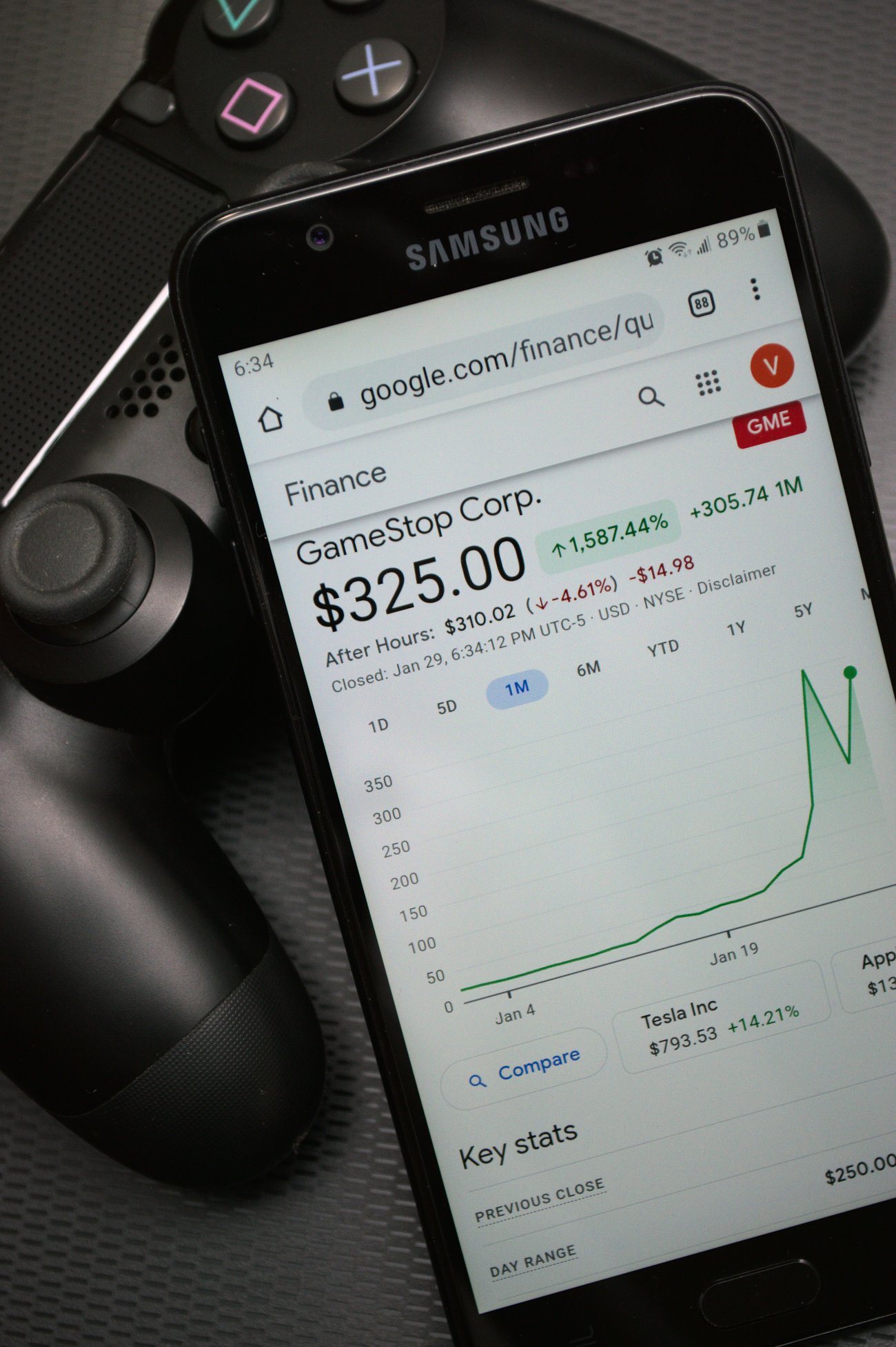
GameStop wants to buy eBay. Yes, that GameStop. 🎮
TL;DR: GameStop has made a $55.5bn bid for eBay, which is either a bold retail reinvention… or the meme-stock era refusing to log off. 🫠
GameStop, the video game retailer best known for becoming the main character of the 2021 meme-stock frenzy, has offered to buy eBay for $55.5bn. That is not a typo. A company worth roughly $12bn wants to buy a company worth about four times more, using cash, stock, debt, and what appears to be a spiritually high tolerance for chaos 💸
Ryan Cohen, GameStop’s CEO and retail-trader icon, says eBay could be worth “hundreds of billions” under his leadership and even become a proper Amazon competitor. Which is ambitious, in the same way saying your local corner shop could become Tesco if you just really believed in collectibles is ambitious 😭
The logic isn’t completely random. GameStop still has around 1,600 stores, and Cohen argues they could become drop-off, authentication, fulfilment and live-commerce hubs for eBay sellers. Given eBay is leaning into collectibles, secondhand goods and livestream auctions, there is at least a business idea hiding under the meme energy 🧠
But the numbers are doing a lot of side-eye. GameStop says it can cut $2bn in annual costs from eBay within a year, mostly from sales, marketing, product and admin. Translation: this is not just a growth story. It is also a “we think you are spending too much to grow too little” story 📉
Investors seem unconvinced. eBay shares rose, but stayed well below the offer price, while GameStop fell. That usually means the market thinks the deal is more “interesting” than “likely”. Analysts have also pointed out that the two businesses are very different, and that the financing would add plenty of debt to a company that is hardly strolling into this from a position of boring stability ⚖️
Still, this tells us something about where retail is heading. Collectibles, resale, authentication and community-led commerce are suddenly strategic again. eBay has users and marketplace infrastructure. GameStop has stores, fandom, meme capital and a CEO who clearly did not come here to quietly optimise shelf space for Funko Pops 🎯
So what?
This is the weird new world of retail and tech: old brands trying to reassemble relevance from communities, marketplaces, physical footprints and internet mythology. If Cohen pulls it off, it’s a wild reinvention play. If he doesn’t, it’s another reminder that not every meme-stock glow-up becomes a business model.
Either way, GameStop trying to buy eBay is the kind of sentence that makes you check the date, the market, and possibly your blood pressure. 🧩
Read more:
https://www.bbc.co.uk/news/articles/cn0p8yled1do
https://www.bloomberg.com/news/articles/2026-05-03/gamestop-making-56-billion-offer-to-acquire-ebay-wsj-says
https://www.theguardian.com/technology/2026/may/04/gamestop-takeover-offer-ebay-bid
|
|
|
|
China just blocked Meta’s AI shopping trip. The AI arms race is getting less subtle. 🌍
TL;DR: China has blocked Meta’s reported $2bn acquisition of AI agent startup Manus, making one thing very clear: frontier AI talent is now a national security asset, not just M&A bait. 🤖
Meta wanted Manus because AI agents are the next big platform bet. Not chatbots that politely answer questions, but systems that can actually do things: code apps, run research, prepare budgets, execute workflows. Basically, the intern, analyst and ops assistant rolled into one — minus the Pret habit and Slack anxiety 😬
But China said no. Regulators blocked the deal, citing foreign investment and national security rules, even though Manus is now based in Singapore and Meta says the transaction complied with the law. The issue is simple: Manus may have moved, but its roots, talent and technology still sit close enough to China for Beijing to care. And in 2026, AI agents are not something countries casually let walk out the door 🧠
This is where the story gets bigger than Meta. For years, the US has restricted China’s access to advanced chips, models and strategic tech. Now China is showing it can play the same game in reverse: if a company has Chinese-linked AI capability, Beijing may decide it is too important to be absorbed by an American platform giant. Globalisation had a good run, but apparently AI did not get the memo 🫠
For Meta, this is awkward. The company is spending billions on AI, cutting staff, tracking workers’ clicks to train models, and trying very hard to look like it has caught up. Losing access to Manus — or being forced to unwind the deal — complicates that story. Especially when everyone is racing to own the agent layer before it becomes the next interface for work, shopping, search and social media 📱
The irony is delicious. Big Tech spent years treating global talent and startups like a buffet. Now governments are standing by the table saying: actually, that one’s not for you. And the more AI becomes tied to productivity, defence, data and economic power, the more common this will become. The future of AI M&A may look less like “strategic acquisition” and more like “geopolitical clearance process with vibes” ⚖️
So what?
The AI race is no longer just companies competing for models, users and compute. It is states deciding which capabilities are allowed to move, who gets to own them, and what counts as strategic technology. For founders, that means your buyer might not just be a company — it might be a diplomatic incident. For Big Tech, it means the days of buying your way out of an AI gap may be getting harder. And for everyone else, it’s another reminder that AI is not just a product category. It’s power, wrapped in software. 🧩
Read more:
https://apnews.com/article/china-meta-manus-ai-acquisition-5f8012791f86f719a24a3ebac06d9b0a
https://www.bbc.co.uk/news/articles/cj0v0gr2yz7o |
|
|
|
💔Ask Jeeves walked so ChatGPT could hallucinate with confidence. 🫡
TL;DR: Ask.com has officially shut down after 25 years, ending the era of the internet’s favourite digital butler — and reminding us that “asking questions in natural language” was cool long before AI made it expensive. 🤖
Ask.com, formerly Ask Jeeves, has closed its search business. For anyone under 25: yes, there was once a search engine where a polite butler helped you ask the internet questions. Very quaint. Very dial-up. Very “please wait while the page loads” 🕯️
Launched in 1996, Ask Jeeves was built around a simple idea: people don’t always search in keywords, they ask full questions. Sound familiar? Before ChatGPT, Gemini, Claude and every chatbot trying to become your unpaid therapist, Jeeves was already trying to make the web conversational. The difference is he wore a waistcoat and didn’t confidently fabricate legal citations 😭
Of course, Google ate the search market, Ask Jeeves became Ask.com, and the butler was eventually shown the door. IAC bought the company in 2005, dropped “Jeeves” shortly after, and the product spent years being more internet relic than serious Google rival. Now, as of 1 May 2026, the site says the search business is officially done. “Jeeves’ spirit endures,” apparently. Lovely. Put that on a tote bag 👜
There’s a neat irony here. Ask.com dies just as the internet is swinging back toward its original promise: ask a question, get an answer. Only now the answer comes from a giant AI model trained on half the web, wrapped in a subscription plan, and possibly consuming the electricity of a small town. Progress! ⚡
So what?
Ask.com’s shutdown isn’t just nostalgia bait. It’s a reminder that tech ideas often arrive before the infrastructure is ready. Natural-language search wasn’t wrong — it was early. The butler had the right instinct, just not the compute, data or business model to survive the Google era.
And now, 30 years later, Big Tech is rediscovering conversational answers like it invented asking questions. Jeeves, sweetie, you deserved better. 🧠
Read more:
https://techcrunch.com/2026/05/02/farewell-jeeves-ask-com-shuts-down/
https://www.engadget.com/2163129/ask-com-has-shut-down-marking-official-farewell-to-internet-favorite-butler/ |
|
|
|
|
|
|
|
|
|
🛍️Tech deal of the week🛍️ |
 |
|
|
|
All image credits to Amazon,
OK so you need Prime to access this deal but if you do they have 4.9* on the review a 75% discount and can be used at work for under £30, Deal, Deal, Deal!
Link here and check out our other deals too
And view our shop with our whole collection here
|
|
|
|
|
|
😅Meme/AI video of the week 😅 (the internet can be savage lol) |
 |
|
|
|
🌐Partner Events & Opportunties 🌐 |
|
Below are the top opportunities we want to highlight to you this week! If you want to see more, then check out our new website where we have a whole page dedicated to events and opportunities from us and our partners:
https://www.colorintech.org/events
|
|
|
|
😃BTF is back😃
Yep we're going to call this the "best tech festival" is back
Check it out. Joinbtf.com
|
|
|
|
|
|
🙌🏾The latest from the Colorintech team🙌🏾 |
|
|
|
|
|
|