Share

Reverse - That's your clue, or open the email. Plus some meta woes and the MSFT CEO saying the quiet part loudly
 ‌ ‌ ‌ ‌ ‌ ‌ ‌ ‌ ‌ ‌ ‌ ‌ ‌ ‌ ‌ ‌ ‌ ‌ ‌ ‌ ‌ ‌ ‌ ‌ ‌ ‌ ‌ ‌ ‌ ‌ ‌ ‌ ‌ ‌ ‌ ‌ ‌ ‌ ‌ ‌ ‌ ‌ ‌ ‌ ‌ ‌ ‌ ‌ ‌ ‌ ‌ ‌ ‌ ‌ ‌ ‌ ‌ ‌ ‌ ‌ ‌ ‌ ‌ ‌ ‌ ‌ ‌ ‌ ‌ ‌ ‌ ‌ ‌ ‌ ‌ ‌ ‌ ‌ ‌ ‌ ‌ ‌ ‌ ‌ ‌ ‌ ‌ ‌ ‌ ‌ ‌ ‌ ‌ ‌ ‌ ‌ ‌ ‌ ‌ ‌ ‌ ‌ ‌ ‌ ‌ ‌ ‌ ‌ ‌ ‌ ‌ ‌ ‌ ‌ ‌ ‌ ‌ ‌ ‌ ‌ ‌ ‌ ‌ ‌ ‌ ‌

Colorintech Weekly - 305

(View this version on the web)

Hey


A Colorintech event with a celebrity - Yes scroll down to see more

Summer is well and truly here. If you're currently in the 3rd week of the heatwave, stay cool 🚿


Check out the AI Podcast version of this newsletter or the Video version on our Socials


This newsletter is free, but if you do want to get us a summer ice cream🍦 as a thank you for 300+ editions grab us one here🎁

Oh and if you missed an edition, you can find it here or this platform, here

🗞️Diversity and inclusion news🗞️

💷Leave me alone - The Office Amenity That Actually Improves Teamwork.


TLDR: A study of more than 6,000 knowledge workers found that the workplace amenity most closely associated with high-performing teams was not free lunch, a gym or a suspiciously competitive ping-pong table. It was somewhere quiet enough to actually finish your work. Revolutionary. 🧠


What happened?

Researchers surveyed more than 6,000 knowledge workers to understand what separates high-performing “superteams” from everyone else.

They examined more than 20 workplace amenities, including:

☕ Free coffee and food

🏋️ Office gyms

🏓 Ping-pong tables

🤝 Collaborative spaces

🚪 Private meeting rooms

Only one consistently stood out.

Members of high-performing teams were 52% more likely to have access to a quiet place where they could concentrate without interruption.

So after years of office redesigns, beanbags, breakout zones and increasingly elaborate reasons to put neon signs on walls, the killer workplace innovation is… silence.


Modern workplaces often confuse collaboration with constant communication.

More meetings.

More messages.

More “quick questions” that are neither quick nor questions.

More people tapping you on Slack while sitting three desks away. 💬

But teamwork does not only happen when people are together.

It also depends on individuals having enough uninterrupted time to think, analyse, write, solve problems and complete the work everyone spent the meeting discussing.

The best teams do not collaborate every minute.

They collaborate well, then leave each other alone long enough to deliver.

The research found that high-performing teams were just as likely to be fully remote, hybrid or office-based.

In other words, there is no single location with a monopoly on productivity.

The real issue is not necessarily where people work.

It is whether they are allowed to work when they get there.

Offices bring background conversations, interruptions and the expectation of being permanently available.

Remote work brings endless notifications, video calls and the occasional calendar invite that could have been an email.

Hybrid work can deliver the best of both worlds.

Unfortunately, it can also deliver the commute of office work combined with the Zoom schedule of remote work. 🚆💻


The bigger picture

High-performing teams were more likely to deliberately protect concentration through:

🧠 Dedicated focus blocks

📅 Meeting-free days

🔕 Reduced expectations of immediate replies

📚 Clear documentation

✅ Task-management systems that make progress visible without requiring another status meeting

The lesson is fairly simple.

If employees need to interrupt someone every time they want information, the problem may not be communication.

It may be that the company has not documented anything properly.

Constant availability can look like collaboration, but often it is just organisational inefficiency wearing a headset. 🎧

There is also a useful lesson for leaders planning return-to-office policies.

Bringing people together can be valuable for discussion, relationships and decision-making.

But forcing employees into an open-plan office only for them to spend the day wearing noise-cancelling headphones and joining virtual meetings is not workplace culture.

It is remote work with travel expenses.


So what?

Companies have spent years asking whether people should work from the office, from home or somewhere in between.

The better question is:

Have we created an environment where people can actually think?

The answer does not require a total office redesign.

Teams can start with a protected 60-minute focus block, a meeting-free afternoon or quiet zones where people are not expected to respond immediately.

Because the best workplace amenity may not be another snack bar, wellness room or creatively named collaboration hub.

It may simply be the radical freedom to complete one task without someone saying:

“Have you got five minutes?” 😭


📚 Read More
🧠 Harvard Business Review: The Office Amenity That Actually Improves Teamwork

https://hbr.org/2026/07/the-office-amenity-that-actually-improves-teamwork

🧠Things that make you go hmmm🧠

📸 Meta has another got to market nightmare


TL;DR Meta launched an Instagram AI feature that let people generate altered images from public users’ photos without notifying them, then removed it days later after a completely unforeseeable (We're being ironic😅) backlash. At the same time, regulators are questioning Instagram’s addictive design and workers have reportedly reviewed intimate footage captured by Meta’s smart glasses. Different products. Strangely familiar problem. 👀


What happened? Meta launched Muse Image, a new generative AI tool that allowed users to reference public Instagram accounts and create altered images using their content.

Instagram users were opted in by default.

The people whose photos were used would not necessarily be notified.

Meta described it as a creative feature.

Users, privacy campaigners and talent agencies described it more along the lines of: “You let strangers do what with my face?” 😬

The backlash was immediate, particularly given the rise of non-consensual AI images and deepfakes targeting women and public figures.

Within days, Meta removed the feature, admitting it had “missed the mark”.

Which is corporate language for:

“Apparently consent was important. Noted for the next product meeting.” 🤦🏾‍♂️


This was not just another slightly chaotic product launch.

It exposed a fundamental disagreement between technology companies and users over what public content actually means.

Meta’s apparent starting point was:

If your account is public, your content is available for AI experimentation unless you find the setting and opt out.

Many users’ starting point was:

I posted a photo on Instagram. I did not donate my face to a synthetic media laboratory.

Those are not quite the same thing.

And once again, the burden was placed on users to discover a separate setting buried inside Instagram’s menus and switch the feature off themselves.

Nothing says meaningful consent like an opt-out button you only learn about after a news article explains where Meta hid it. 🔍


The bigger picture The awkward part for Meta is that this is not an isolated incident.

On the same week it pulled Muse Image, the European Commission warned that Facebook and Instagram’s design may encourage compulsive use, particularly among children and teenagers.

Regulators highlighted features including:

♾️ Infinite scroll

▶️ Autoplay

🎯 Personalised recommendations

🌙 Weak protections against late-night use

Meta argues it has introduced Teen Accounts, parental controls and screen-time restrictions.

The EU’s response is essentially that safeguards are not especially useful when the entire product is still designed to keep people scrolling. 📱


And then there are the glasses.

Meta has been expanding its wearable ambitions beyond Ray-Ban, launching its own branded smart-glasses range as it attempts to make AI eyewear both useful and, crucially, something people will wear voluntarily.

That may prove difficult when the devices increasingly arrive with the aesthetic of sunglasses and the social energy of CCTV.😬


Earlier this year, the UK’s data watchdog contacted Meta after reports that outsourced workers could view sensitive footage submitted through its AI glasses, including people undressing, using the toilet or having sex. Meta said human reviewers sometimes assess shared content to improve its systems and that privacy filters are applied.

So the wider Meta AI proposition currently looks something like this:

👓 Wear a camera on your face.

📸 Let AI remix other people’s Instagram photos.

🧠 Keep scrolling until your brain enters autopilot.

🔒 Trust that the privacy policy has everything covered.

A flawless consumer pitch.


Why creators should care? The Instagram controversy is particularly significant for creators, models, artists and anyone whose image forms part of their livelihood.

A public account does not mean a public-domain identity.

Creators may publish images for audiences to view, not for strangers to transform, commercialise or place into fabricated situations.

Once synthetic content begins circulating, the original person may have little control over how it is used, interpreted or monetised.

And as AI tools become embedded directly inside social platforms, generating that content becomes easier, faster and more socially acceptable.

The danger is not only that someone can create a fake image.

It is that the platform has removed almost all the friction that might previously have made them pause before doing it.


Meta’s fashion problem There is another challenge hiding underneath all of this: trust affects whether people will actually buy Meta’s next generation of products.

Meta’s partnership with Ray-Ban helped smart glasses escape the fate of Google Glass because the devices looked like normal eyewear rather than a laptop strapped to your forehead.

Now Meta is launching glasses under its own brand, with prices starting at $299 and designs including a Kylie Jenner collaboration.

But selling technology is one thing.

Selling something people wear on their face is another.


Meta itself has acknowledged it is on a difficult path towards becoming culturally relevant in fashion and eyewear. Without the Ray-Ban name doing some of the aesthetic heavy lifting, consumers are being asked to trust Meta not only with their social lives, but with a device that sees what they see.

And trust is considerably harder to accessorise than a pair of frames.


So what?🧠 Meta’s problem is not that it lacks innovation.

It is that many of its most innovative ideas seem to reach the public before someone in the room asks:

“How badly could this be misused?”

The company keeps framing these controversies as individual features that missed the mark.

But eventually, enough missed marks form a pattern.

The future Meta is building involves AI that can see through our glasses, learn from our photos, reshape our images and decide what keeps us watching.

That could be genuinely useful.

It could also be genuinely invasive.

The distinction depends on consent, transparency and whether users have meaningful control before the product launches—not three days later, after everyone starts shouting. 🚨

Because “move fast and break things” becomes a little less charming when the thing being broken is someone’s privacy.


📚 Read More

🤖 TechCrunch: Meta removes controversial AI feature on Instagram after backlash

https://techcrunch.com/2026/07/10/meta-removes-controversial-ai-feature-on-instagram-after-backlash/

📸 BBC News: Meta pulls new AI image feature after days of backlash

https://www.bbc.co.uk/news/articles/c8j2dje3pldo

🚨 BBC News: Outcry as Meta lets users make AI images from public Instagram profile pics

https://www.bbc.co.uk/news/articles/c0q33nvj0qpo

📱 BBC News: EU threatens Meta with fines over ‘addictive’ Facebook and Instagram

https://www.bbc.co.uk/news/articles/c2dy6e8klw0o

👓 BBC News: Regulator contacts Meta over workers watching intimate AI glasses videos

https://www.bbc.co.uk/news/articles/cp9lee19y1yo

🕶️ Business of Fashion: Can Meta Sell Smart Glasses Without Ray-Ban?

https://www.businessoffashion.com/briefings/technology/can-meta-sell-smart-glasses-without-ray-ban/

🧠 Your AI Supplier (and next competitor) Might Be Learning Your Business Plan


TLDR: Microsoft CEO Satya Nadella has warned that companies using proprietary AI are paying twice: once for the tokens, and again by feeding models their most valuable internal knowledge. A slightly awkward warning from one of OpenAI’s biggest backers but a useful one nonetheless. 👀


What happened? Satya Nadella has warned companies to think carefully about what they hand over when using AI systems from providers such as OpenAI and Anthropic.

Businesses knowingly pay for prompts and tokens.

What they may not fully appreciate is that they are also supplying the context that makes those models useful:

  • 📊 Internal data

  • 💻 Source code

  • 🏢 Company processes

  • 🧠 Employee corrections

  • 📈 Sales and operating knowledge

Every time an employee tells a model, “No, that’s not how our business works,” they may be converting years of institutional knowledge into training material.

As Nadella put it:

“You essentially pay for intelligence twice, once with money, and again with something even more valuable: the proprietary knowledge you must reveal to make that intelligence useful.”

So the AI invoice may be the cheaper part. 💸


Why it matters?
The more useful companies want AI to become, the more of themselves they need to reveal.

Generic prompts produce generic answers.

To get genuinely valuable outputs, businesses must provide detailed information about their customers, workflows, products, strategy and decision-making.

That creates an uncomfortable possibility: companies may be teaching external AI providers things their competitors could never legally buy.

The AI model is not merely processing the work.

It is observing how the work gets done.

And potentially learning from every correction along the way. 🤖


The bigger picture

Enterprise AI is entering its second phase.

The first phase was:

“Give everyone access to ChatGPT.”

The second is:

“Wait—what exactly did everyone upload to ChatGPT?” 😬

That is why businesses are increasingly exploring:

🔓 Open models they can control

🏢 AI systems running on their own infrastructure

🔀 Gateways that let them switch between providers

🔒 Private environments for prompts, data and feedback

Open models reportedly represented 29% of traffic through Vercel’s AI gateway last month, suggesting businesses are already looking beyond a permanent dependency on the largest proprietary platforms.

The lesson is not that every company needs to train a frontier model from scratch.

It is that no company should become so dependent on one provider that it cannot move its data, workflows or applications elsewhere.

Vendor lock-in was annoying with workplace software.

It becomes rather more serious when the vendor is slowly learning how your entire organisation operates. 🔐


And then, well what about when it becomes your competitor, We've sort of seen it with Figma and Antrhopic and design but with the rise of autonomious AI agents, the leap of faith in that concept isnt too hard to make👀


The irony

The messenger is almost as interesting as the message.

Microsoft has invested heavily in both OpenAI and Anthropic.

Now its CEO is warning enterprises about becoming too dependent on proprietary AI providers.

That is a bit like your landlord warning you about the dangers of renting.

Nadella’s solution is for companies to build private learning environments and orchestration systems that preserve ownership of their data.

And where might a business purchase the cloud infrastructure required to do all that?

Microsoft Azure, perhaps.

A stunning coincidence. 😏

Still, the underlying point holds.

AI labs cannot argue that scraping the public internet is essential for innovation, then become deeply offended when others use their model outputs to train cheaper alternatives.

Apparently, learning from everyone else’s data is innovation.

Learning from theirs is theft.

Silicon Valley’s commitment to openness remains admirably flexible. 🤷🏾‍♂️


So what?

Companies should not stop using powerful AI models.

They should stop assuming the cheapest or smartest model is automatically the safest long-term choice.

Leaders need to ask:

🔍 Is our data used to improve the provider’s models?

📝 Who owns prompts, feedback and generated outputs?

🚪 Can we switch providers without rebuilding everything?

🏠 Could sensitive workloads run privately or on-premise?

💡 Are employees trained on what they should never upload?

The biggest competitive advantage in AI may not be access to the smartest model.

Everyone can buy that.

It may be protecting the knowledge that makes your company different.

Because when you ask an external AI to learn your business, it is worth remembering:

It may be learning your business.


📚 Read More

🧠 TechCrunch: Satya Nadella has issued a shocking warning to companies using AI

https://techcrunch.com/2026/07/13/satya-nadella-has-issued-a-shocking-warning-to-companies-using-ai/

👩🏿‍💻For the creators👩🏿‍💻

📈 The tools behind the tech📉

📦Product📦

📏Design📏 

👩🏿‍💻Code👩🏿‍💻

🏢The business behind the tech🏢

🛍️Tech deal of the week🛍️

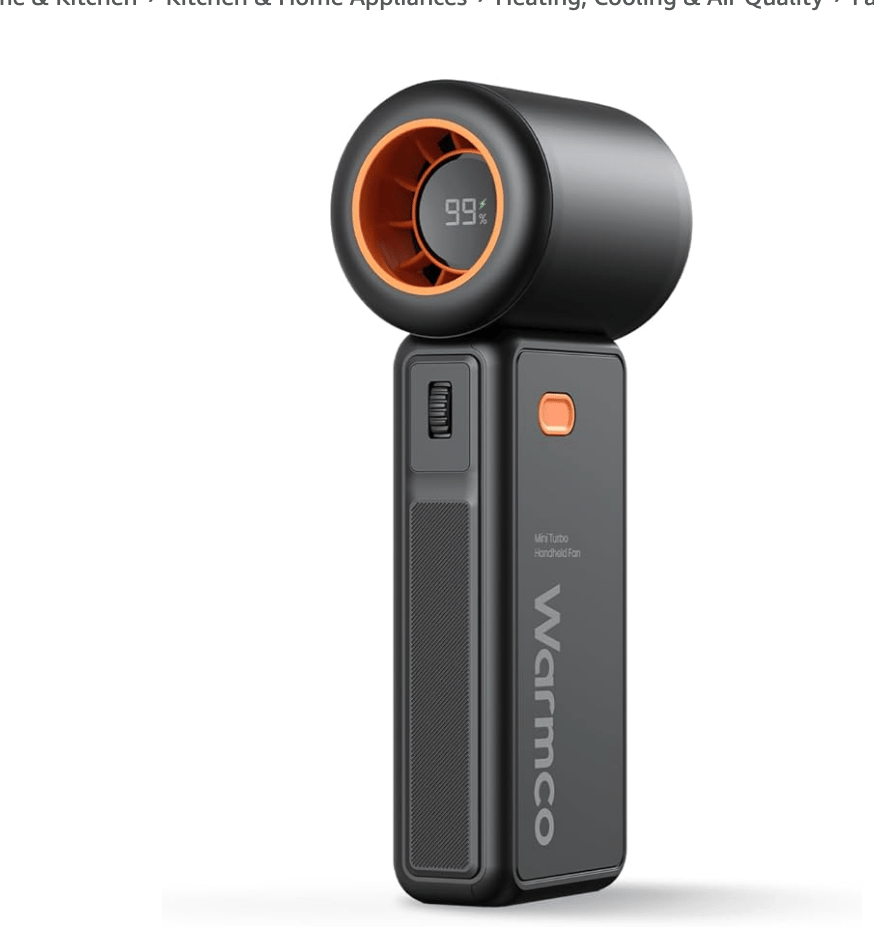
Yes its hot so here is some old school tech with an Iphone sized big battery - A fan 


Link here and check out our other deals too


And view our shop with our whole collection here


😅Meme/AI video of the week 😅 (the internet can be savage lol)

🌐Partner Events & Opportunties 🌐

Below are the top opportunities we want to highlight to you this week! If you want to see more, then check out our new website where we have a whole page dedicated to events and opportunities from us and our partners:


https://www.colorintech.org/events

Did somebody say... LGBTQ+ inclusion? 


Well, we did! We are collaborating with Just Eat Takeaway to celebrate the LGBTQ+ community through a panel discussion and workshops designed to help you challenge limiting thoughts so you can become your most fearless self.
We have an incredible panel lined up including: 


 MNEK: Music artist with over 3.8 billion streams and written for superstars like Beyoncé, Zara Larsson and Flo.


 Belton Flournoy: Managing Director of Protiviti and named Top 10 Inspirational Business Leaders at the British LGBT Awards 2020


 Malika: Female popstar who has written for superstars like Leigh-Anne Pinnock and Ayra Starr


The event will also feature workshops, giveaways and time to network with people from Just Eat and the Colorintech community.


Date: Thursday 6th August
Time: 15:30 - 18:30 (with time for networking) UK Time
Where: Central London


 Register to secure your free ticket here (spaces are limited and subject to availability) 


Whether you identify as LGBTQ+ or are an ally who believes in the power of inclusive spaces, you don't want to miss this event! 🌈


🙌🏾The latest from the Colorintech team🙌🏾

😃What we are consuming😃


💰Tom Blomfield (formerly of Monzo) joins Anthropic

📱Pokemon go @ 10

🦄Almost 90 new unicorns

📺Netflix Tv Channels


Email Marketing by ActiveCampaign